News Summary
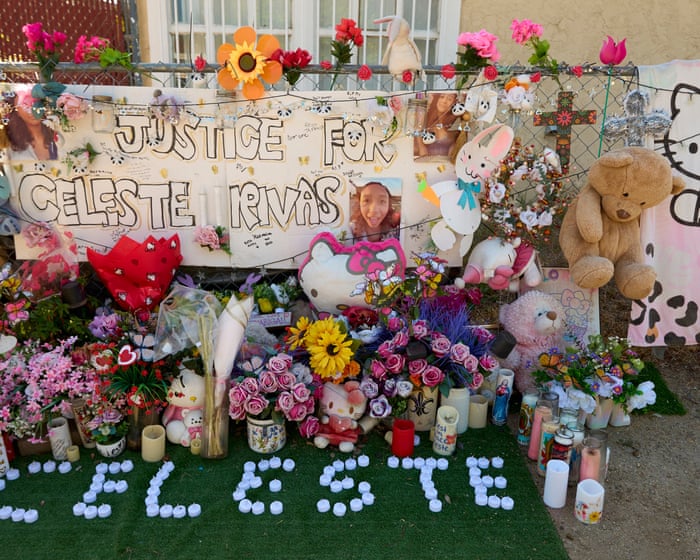
Reported facts: Prosecutors in Los Angeles presented a detailed account of the last night of 14-year-old Celeste Rivas Hernandez, showing courtroom evidence of text messages exchanged with the singer D4vd and indicating her phone went silent after arriving at his home. The presentation occurred during a multi-day hearing to decide whether the singer should be bound over for trial in her killing. Attributed claims: The Guardian describes the day as the fifth and 'probably final' day of the hearing; PBS reports the same core details about the texts and the phone going silent. Uncertainty: The defense presentation or response is not reported here, forensic details about the death are not in the supplied articles, and outcomes from the hearing (e.g., whether the judge will order a trial) are not included in these reports.
Source and Framing Analysis
Both The Guardian and PBS reported the prosecutors’ presentation; PBS corroborates the central factual points. The stories center prosecutorial evidence shown at a pretrial hearing, which naturally emphasizes the prosecution’s narrative and available exhibits. Material uncertainty remains because the defense perspective, detailed forensic findings, and the full court record were not provided in the supplied reports. The language 'probably final day' in one report signals a degree of editorial interpretation about court scheduling rather than a settled legal outcome.
Biblical Reflection
This reporting describes a tragic criminal investigation into the death of a minor and a pretrial proceeding in which prosecutors presented evidence. Christians should hold two convictions at once: a desire for truth and justice for the vulnerable, and a commitment to procedural fairness. The details reported — including a sequence of texts and the phone going silent at the singer’s home — matter greatly to establishing fact in court, but a hearing is not a conviction. Christians should avoid premature moral certainty while still taking seriously the reality that a child has died and a family is grieving.
The article also highlights broader cultural dynamics: the power imbalance between a public figure and a minor, how intimacy can be mediated through technology, and how grief and suspicion play out in public forums. A Christian response recognizes the sorrow and outrage such a case provokes, supports careful legal inquiry, and resists sensationalizing human pain for entertainment. We are called to seek justice for the vulnerable, to speak truth in love, and to protect children in our communities.
At the same time, the piece leaves important uncertainties: the defense case and factual corroboration beyond the prosecutors’ presentation are not reported here. Christians aiming for faithful civic engagement should press for full information from reliable sources, hold public officials and legal processes to account, and care pastorally for those harmed while upholding the principle that an accused person is entitled to a fair process.
Scripture in context
- 1Matthew 18:6 — In Matthew 18 Jesus addresses care for the vulnerable and warns sharply against causing 'little ones' to stumble; the chapter includes teachings on humility, care for children, and accountability within the community. — This passage presses Christians to protect children and to take seriously harm done toward the vulnerable; it calls the church to advocate for safeguards, pastoral care for victims, and responsible accountability where adults have abused power.
- 2Isaiah 1:17 — In Isaiah 1 the prophet condemns empty ritual and calls for concrete action: seeking justice, defending the oppressed, and caring for the vulnerable as marks of faithful life. — Applied here, the passage reminds Christians that worship without action is deficient: seeking justice and protecting the oppressed—especially children—are essential responses that should shape both private compassion and public engagement.
Faithful Response
Pray for the victim’s family, the accused, investigators, and the court — seeking truth, justice, and healing rather than gossip or headline-driven outrage.
Support local and national organizations that work to prevent exploitation of minors and to provide counseling for victims and their families.
Avoid spreading unverified details; rely on court records and reputable reporting while acknowledging uncertainties.
If you are a parent, educator, or youth worker, review and strengthen boundaries, supervision, and digital-safety practices with young people you care for.
Reflection and Discussion
- 1How does this story challenge us to protect children and young people in our communities, especially in relationships involving adults with influence?
- 2In what ways should Christians balance the pursuit of justice for victims with the biblical call to fair process and mercy toward the accused until guilt is proven?
- 3What signs of celebrity culture, power imbalance, or technological intimacy should we notice and address to keep young people safer?
Sources
Reporting links are evidence inputs; Sanctuary News' biblical reflection is commentary.
- 1.Court told of slain girl’s final texts as she approached singer D4vd’s homeprimary_reporting
- 2.Final texts from 14-year-old girl to singer D4vd shown in court at hearing on her killingadditional_reporting