News Summary
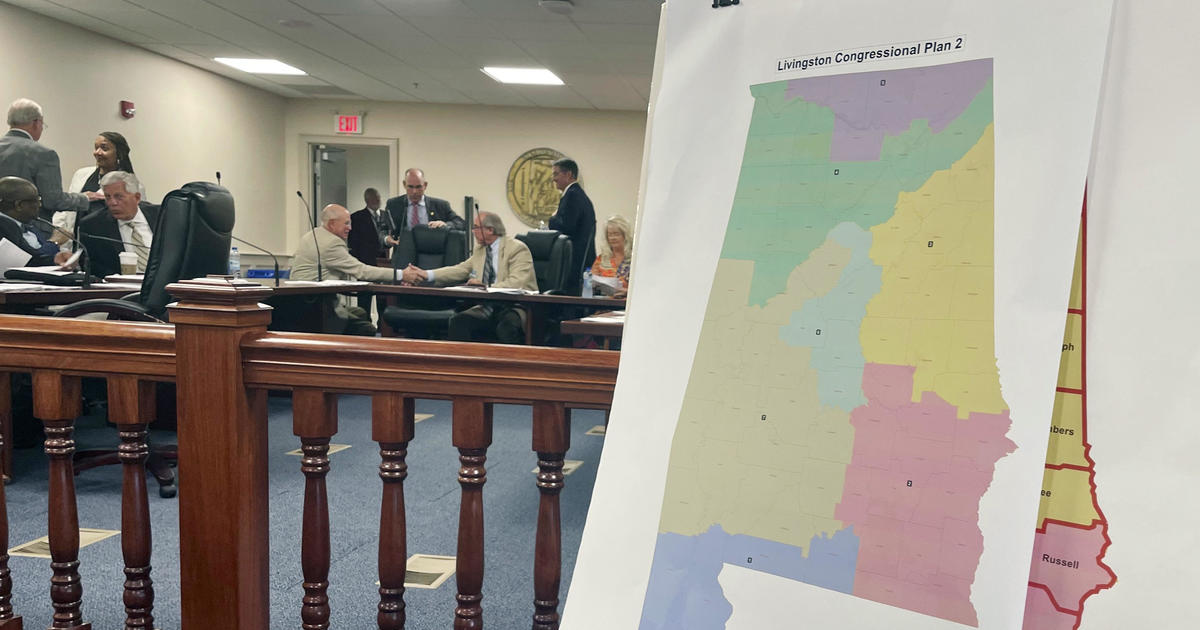
A three-judge federal district court panel temporarily blocked Alabama from using the congressional map adopted by the state legislature in 2023 for the upcoming 2026 midterm elections. The court found the 2023 plan — which created one majority-Black district — intentionally discriminated on the basis of race in violation of the 14th Amendment. The judges ordered Alabama to continue using a court-drawn remedial map that includes two majority-Black districts (the same map used in the 2024 elections) unless the state enacts a new, lawful map before the election. Circuit Judge Stanley Marcus and District Judges Anna Manasco and Terry Moorer issued the ruling, rejecting the state's contention that the mapmakers acted primarily for partisan reasons and finding that lawmakers distributed Black voters across districts to dilute their votes in part because they were Black. The state may appeal to the U.S. Supreme Court. The decision follows the Supreme Court's recent ruling in a Louisiana case that narrowed a key provision of the Voting Rights Act and led some states to move quickly to redraw maps. Alabama Gov. Kay Ivey had already scheduled a special primary for Aug. 11 for four House districts that would be affected; statewide primaries for other seats were held last week. Alabama's current U.S. House delegation is five Republicans and two Democrats; state GOP leaders had hoped the 2023 map would enable them to flip the district held by Rep. Shomari Figures. The district court noted its order would expire if the legislature enacted a new districting plan before the election.
Biblical Reflection
This ruling centers on competing responsibilities Christians should care about: the rule of law and the defense of the vulnerable. The court concluded that racial considerations, not mere partisan strategy, tainted the 2023 map — a finding that raises justice concerns because diluting a racial group's voting power undermines equal treatment under the law. From a biblical perspective, the protection of marginalized voices is not a partisan issue but a moral one: institutions should seek fairness and equitable access to civic participation. At the same time, Christians should be cautious about rapid politicized narratives on either side; courts exist to weigh evidence and intent, and the legal process — including appeals — must be respected. The article is largely factual and centers on the court's findings and procedural posture; however, readers should notice underlying frames: references to the Supreme Court's recent decisions and to partisan aims signal that legal outcomes are influencing electoral power. Christians should pay attention to how legal technicalities affect real people’s ability to be heard, resist reducing the story to team politics, and advocate for remedies that restore both fairness and civic peace.
Scripture in context
This outlook does not yet include contextual Scripture citations. Do not treat a general biblical theme as an exegetical conclusion.
Faithful Response
No prescribed response is offered. Consider the reflection prompts below in your own church context.
Reflection and Discussion
- 1How does concern for equal political voice shape our response to redistricting disputes, beyond partisan loyalty?
- 2Are we attentive to whether legal changes protect the vulnerable or simply serve political advantage, and how would we tell the difference?
- 3How can Christians encourage civic processes that pursue justice while also promoting peaceable and lawful resolution of disputes?
Sources
Reporting links are evidence inputs; Sanctuary News' biblical reflection is commentary.
This outlook currently relies on fewer than two linked sources. Broaden verification before teaching from it.
- 1.Original reportprimary