News Summary
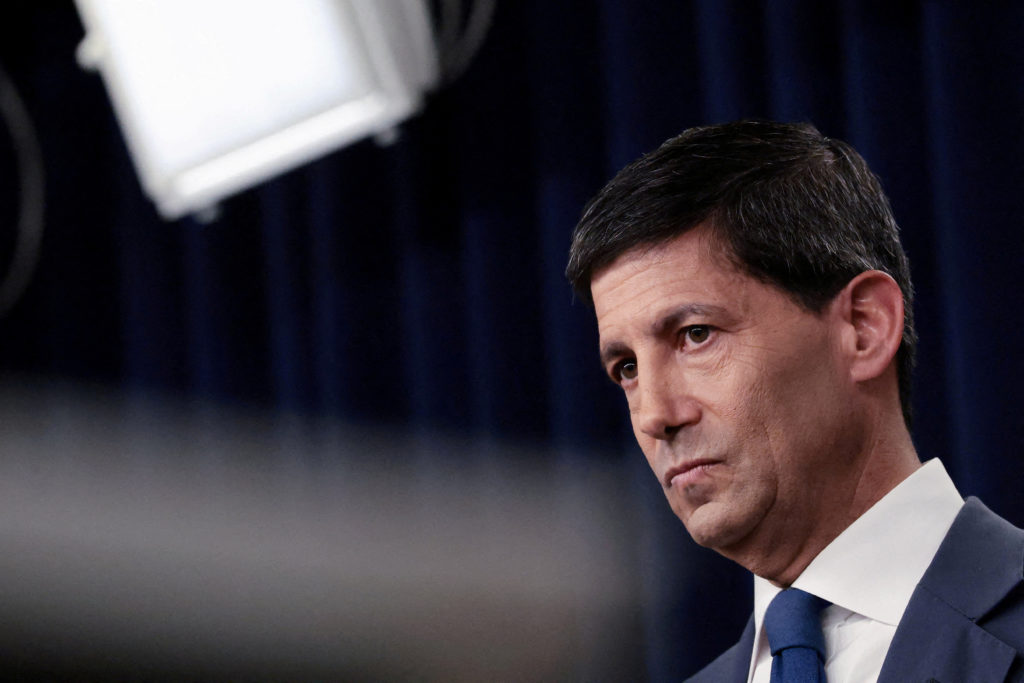
PBS NewsHour reported that Federal Reserve Chair Kevin Warsh said inflation remains too high and signaled the central bank may need to raise interest rates in the coming months. The piece frames the remark as a forward-looking signal rather than an immediate policy decision and characterizes Warsh’s tone as a "clearer signal" than he had given previously. The report is concise and does not include direct quotations, a full transcript, data cited by Warsh, reactions from other Fed officials or markets, or specifics on timing or magnitude of any potential hikes.
Source and Framing Analysis
Source: PBS NewsHour (single supplied report). The item responsibly attributes the view to a named Fed official and uses hedged language (for example, characterizing the comments as a signal and using phrasing like "may have to"). The article’s editorial observation that this was a "clearer signal" is interpretive and would be strengthened by transcript evidence or corroborating reporting. Key omissions: no direct quotes from Warsh, no transcript link, no economic data or rationale cited, no reactions from other Fed officials or markets, and no specifics on timing or size. Because monetary policy is collective and data-driven, a single speech should not be treated as determinative; the piece signals an important change in tone from one policymaker but leaves many policy and impact questions open.
How sources covered this story
Sanctuary separately assesses reporting quality and alignment with Christian virtues. The virtues assessment considers truthfulness, dignity, compassion, justice, peacemaking, humility, and care for vulnerable people. It does not assess a publisher's faith or reward religious language.
Compare 1 reports
Reporting 75/100Virtues 75/100
- Distinctive contribution
- States that Warsh provided a clearer signal than previously about potentially raising rates, indicating a change in tone or emphasis compared with his earlier remarks.
- Framing
- Concise, neutral attribution of a policy stance to an identified official. Uses cautious language ('suggested', 'may have to') and places the remark as a signal rather than a definitive policy decision.
- Omissions or uncertainty
- No direct quotation from Warsh, no context about the Jackson Hole event beyond implication, no timing beyond 'Friday', no detail on the size or timing of potential hikes, no supporting data or reactions (markets, other Fed officials), and no information about why his signal is 'clearer' than before.
- Why these scores
- The excerpt is a clear, responsibly worded brief: it attributes the claim to a named official and uses hedged language appropriate to a signal. It lacks depth (quotes, context, data, alternative perspectives), but for a short news blurb or video teaser it responsibly conveys the key point without sensationalism or unsupported detail. The excerpt is fact-focused, non-inflammatory, and respectful in tone. It avoids dehumanizing language or exploitation of individuals' suffering; it attributes statements properly and does not make moral judgments. The score reflects a solid alignment with virtues like truthfulness, humility, and respect, while noting the limited scope prevents a higher score for explicit concern for vulnerable populations or justice context.
Biblical Reflection
This report describes a signal from a Fed official, not an enacted policy change. Christians should hold a posture of sober realism: controlling inflation protects purchasing power and the poor, while higher rates can strain borrowers, slow hiring, and hurt vulnerable households. Practically, the news calls for two parallel responses from faith communities: 1) pray for wisdom for public leaders weighing complex tradeoffs, and 2) prepare concrete care for neighbors likely to be exposed to higher borrowing costs or slower job markets. Avoid treating a single speech as fate; instead, watch developments responsibly and prioritize mercy, justice, humility, and care for vulnerable neighbors in planning and ministry.
Scripture in context
- 1Matthew 6:25-34 — Jesus speaks to disciples in the Sermon on the Mount about anxiety, urging trust in God's provision while calling for single-minded devotion to God's kingdom rather than worry over daily needs. — When economic reports and policy signals stir anxiety, Christians are called to avoid anxious paralysis—trusting God while practicing prudent care and serving those whose needs increase.
- 2Proverbs 21:5 — A wisdom proverb contrasting the outcomes of careful planning versus quick schemes in the social and economic life of Israel; it highlights the value of steady, prudent preparation. — Individuals and congregations should plan and steward resources carefully in uncertain economic times, supporting vulnerable people rather than reacting impulsively.
Faithful Response
Pray for policymakers weighing monetary tradeoffs and for those most at risk from economic shifts.
Review personal and congregational budgets: reduce unnecessary risk, build modest reserves, and counsel members with high-interest or variable-rate debt.
Mobilize practical care: expand benevolence funds, connect people with nonpartisan financial counseling, and coordinate community support for those facing housing or job instability.
Avoid alarmism or partisan posturing; emphasize pastoral presence, practical assistance, and hope rooted in Christ.
Reflection and Discussion
- 1What assumptions am I making about who wins or loses from tighter monetary policy, and how do those assumptions align with kingdom values?
- 2How can my local church translate concern about national economic policy into concrete, sustained care for the poorest and most exposed?
- 3What small steps can our household or congregation take now to reduce financial vulnerability if borrowing costs rise?
Sources
Reporting links are evidence inputs; Sanctuary News' biblical reflection is commentary.
This outlook currently relies on fewer than two linked sources. Broaden verification before teaching from it.
- 1.WATCH: Fed Chair Warsh signals stubborn inflation may require rate hikes in Jackson Hole speechprimary_reporting