News Summary
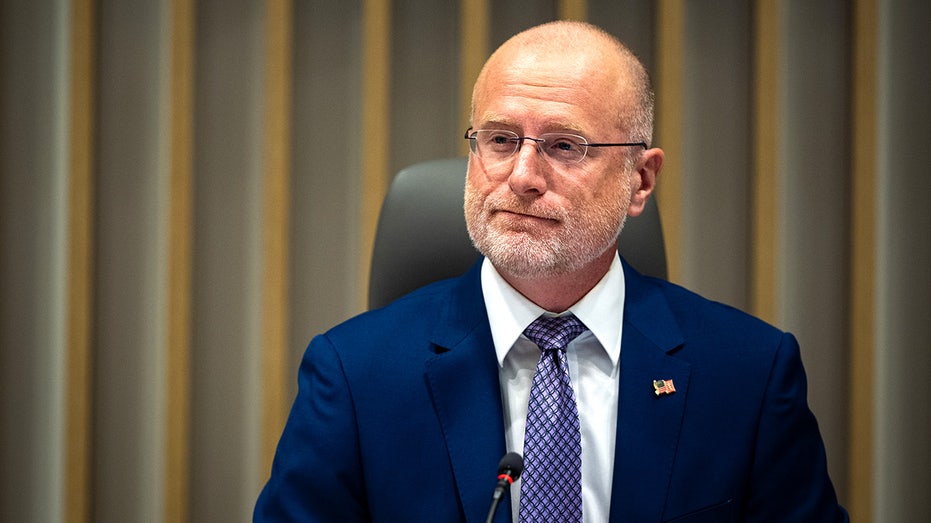
Reported facts: Fox News reports that FCC Chairman Brendan Carr suggested ABC's choice not to air President Trump's primetime address could be considered in the network's broadcast license renewal reviews. The article identifies Carr as FCC chairman and states ABC skipped the address. Attributed claims: the piece attributes the suggestion to Carr but does not provide his full remarks, legal analysis, or ABC's response. Uncertainty: the report does not establish whether the FCC has taken formal action, how license reviews would concretely incorporate a programming decision, or whether other officials concur.
Source and Framing Analysis
This account relies on a single news source (Fox News) and provides a brief summary rather than a transcript or detailed legal analysis. Key uncertainties that materially affect the story include whether Carr's comment was descriptive, rhetorical, or a statement of intended policy; whether the FCC actually has legal grounds to condition licensing on specific programming choices; and whether ABC's decision fits any statutory standard for regulatory action. The framing emphasizes potential consequences without documenting legal processes or presenting ABC's perspective.
Biblical Reflection
This report raises questions about the use and limits of regulatory power over media. Christians should attend to two concerns: truth and the proper exercise of authority. If regulators condition licensing decisions on networks' editorial choices, that risks weaponizing public authority against free speech and press independence, which serve the public good by enabling accountability and truth-seeking. At the same time, public officials are responsible for enforcing laws and ensuring broadcasters meet legal and public-interest obligations.
We ought to resist simple partisan readings that treat every regulatory remark as purely political theater; still, we must also call leaders to act justly and transparently. Christian reflection asks whether power is being wielded to protect the vulnerable and the common good or to intimidate dissenting voices. The faithful response is to pursue truth, defend just institutions, and pray for humility in those who hold authority, urging systems that protect both free expression and responsible stewardship of public airwaves.
Practically, Christians should pursue informed discernment: press for clarity about legal authority and process, resist alarmist conclusions without evidence, and advocate for accountability that is even-handed rather than retaliatory. We should also model civil engagement, speaking truth with love when calling leaders to ethical conduct.
Scripture in context
- 1Romans 13:1-7 — Paul addresses the role of governing authorities in maintaining order in society, urging Christians to recognize that authorities are instituted to serve the common good and to punish wrongdoing. Historically this passage has been read as a call to respect lawful governance while also subjecting leaders to moral accountability. — This passage calls Christians to pray for and respect legitimate authority while also expecting that those authorities exercise their power justly; it warns believers to weigh government actions against the demands of righteousness and neighbor-love.
- 2Proverbs 31:8-9 — These verses are part of wisdom literature urging advocates to speak for those who cannot speak for themselves and to defend the rights of the poor and needy. The context is social justice and ethical speech within the community. — The instruction encourages Christians to speak up for fair processes and the vulnerable in public systems—urging advocacy for transparency and justice when power threatens to silence or punish those who serve the public.
Faithful Response
Pray for transparency and justice from regulators and integrity from media organizations.
Seek reliable reporting and avoid amplifying claims not substantiated by multiple sources; encourage others to do the same.
Contact elected representatives to ask for clear explanations of policy and legal limits on regulatory discretion, framing concerns in terms of justice and public good.
Support local, independent journalism and media literacy programs that help communities evaluate claims and protect public discourse.
Reflection and Discussion
- 1How should Christians weigh the competing goods of free expression and responsible regulation when public officials make ambiguous statements?
- 2When a leader hints at using regulatory power against media outlets, what evidence should we require before concluding policy change is occurring?
- 3How can the church model civil engagement that seeks both truth and mercy in polarized public debates?
Sources
Reporting links are evidence inputs; Sanctuary News' biblical reflection is commentary.
This outlook currently relies on fewer than two linked sources. Broaden verification before teaching from it.
- 1.FCC chair suggests ABC skipping Trump's speech will factor in license renewal decisionprimary_reporting