News Summary
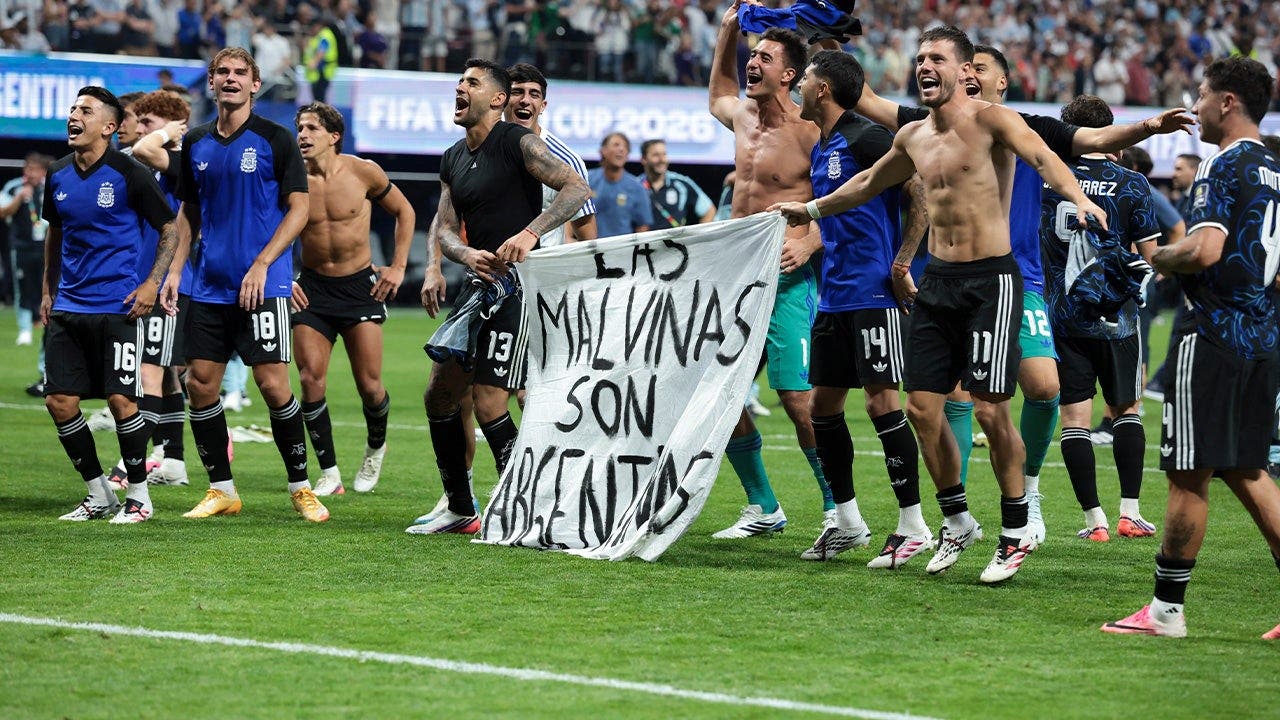
Reported facts: Fox News reports that Argentine players displayed a banner reading "Las Malvinas son Argentinas" during the World Cup semifinal against England and that, according to other outlets cited by the Fox piece, a fan named Santiago said he smuggled the banner into Mercedes‑Benz Stadium by concealing it in his underwear; the banner was reportedly a painted hotel bedsheet. Attributed claims and uncertainty: Fox attributes the smuggling account to The Daily Star and Argentina’s Todo Noticias as quoted by the fan; the article reports UK political reaction (a call from Liberal Democrat leader Ed Davey to ban involved players) but does not cite direct statements from FIFA, the Argentine federation, or independent verification of the fan’s account; some characterizations (e.g., players being unaware of the banner’s prior condition) are inferred rather than independently substantiated.
Source and Framing Analysis
Source role: The only supplied source is a Fox News opinion/column piece that mixes event reporting with commentary. The article relies on secondary attribution (The Daily Star, Todo Noticias) for the smuggling claim but does not provide direct primary documents, official statements, or independent verification (e.g., stadium security statements, FIFA comment, or interview with Argentine players). Missing voices: no quotes from FIFA, Mercedes‑Benz Stadium security, the Argentine Football Association, the UK government or Falklands residents, or independent eyewitness corroboration. Incentives and framing: the piece is framed as sports commentary, which may prioritize narrative color and cultural judgments over neutral sourcing; it includes editorializing about unrelated U.S. sports controversies (Caitlin Clark) that shifts focus. What needs verification: the fan’s identity and account, chain of custody of the banner, any official disciplinary or security responses, and direct quotes from parties reported to have reacted (e.g., Ed Davey).
Biblical Reflection
This story mixes sport, nationalism, and a security breach. The factual core—a political banner was smuggled into a stadium and displayed—raises legitimate questions about stadium security and the ethics of using a sporting event to advance a contested territorial claim. The piece, however, leans into sensational detail (how the sheet was hidden) and treats a sensitive international dispute as an amusing anecdote, which can trivialize real wounds on both sides and make it easier for audiences to cheer or mock without understanding consequences. From a Christian perspective, political or nationalistic provocation displayed in a public, celebratory setting can conflict with the call to love neighbors and seek peace: it risks escalating tensions, insulting people directly affected by the dispute, and using others (players, stadium staff, international viewers) as props for protest. At the same time, Christians should guard against quick judgments: the article gives only one person’s account about how the banner entered the stadium, and it’s unclear what the players knew or intended. Truth demands careful fact-checking; mercy and humility demand restraint in interpreting motives and responding with shaming or triumphalism. Practically, this episode invites Christians to favor peacemaking over nationalistic spectacle, to hold institutions (event organizers and security) accountable for safety and neutrality, and to remember that historical conflicts are complex and carry human cost beyond a headline.
Scripture in context
- 1Matthew 5:9 — In the Sermon on the Mount, Jesus enumerates blessings that describe the character of his followers; 'peacemakers' are those who actively pursue reconciliation and right relationships in a world of conflict. — This passage challenges Christians to prefer peacemaking over public displays that provoke or humiliate others; before endorsing or celebrating a provocative political banner, ask whether it advances understanding and repair or merely intensifies division.
Faithful Response
Pray for wisdom and for those affected by the provocation (players, islanders, fans, and diplomats).
Discern fact from opinion: verify reports before repeating second‑hand claims and avoid amplifying salacious details that serve only spectacle.
Speak and act in ways that prioritize reconciliation: publicly discourage demeaning displays and privately support peaceful channels for addressing historic grievances.
Reflection and Discussion
- 1Which parts of this report are direct reporting and which are second‑hand attribution, and how does that affect your trust in the claims?
- 2What are the likely emotional and diplomatic consequences of staging political claims at a major sporting event, and who is most vulnerable to harm?
- 3How might a Christian public witness look different if it prioritized listening to affected communities (e.g., island residents) over theatrical assertion?
Sources
Reporting links are evidence inputs; Sanctuary News' biblical reflection is commentary.
This outlook currently relies on fewer than two linked sources. Broaden verification before teaching from it.
- 1.Fan Smuggled 'Malvinas' Banner Into Stadiumprimary_reporting