News Summary
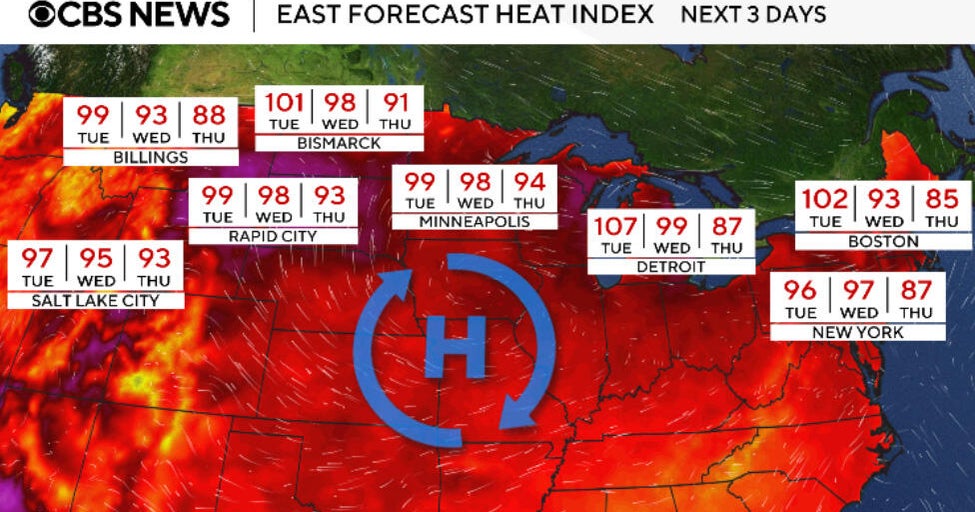
Roughly 100 million people in the United States are under extreme heat this week as a heat dome that formed over the West spreads eastward. Several locations are forecast to experience temperatures 20–30 degrees above typical values and some record highs. Examples given: Billings, Montana reached 111°F; Salt Lake City recorded 109°F, a new all-time high. Forecasters expect peak heat for the Northern Tier on Tuesday and for the Northeast on Wednesday, with heat indexes into the high 90s or over 100 and overnight lows remaining unusually warm. Officials warned of increased wildfire risk and heat-related illnesses, including heat stroke. Reported fires include the Summit Fire near Los Angeles (nearly 3,000 acres; 31% contained as of Sunday) and additional fires in Colorado; the Aspen Acres Fire previously burned more than 850 structures. Lawmakers and officials noted needs for more firefighting resources. At the same time, parts of the South saw heavy rains and flash flooding: New Orleans experienced several inches of rain and knee-deep street flooding; rescue crews airlifted more than 200 people from a Missouri children’s camp after 6–12 inches of rain; the Philadelphia area suffered powerful microbursts with gusts up to 70 mph and a disaster declaration from the mayor. The National Weather Service described the heat as “exceptionally rare” in some locations and warned of prolonged hazardous conditions through the coming days.
Biblical Reflection
The article reports concrete, verifiable hazards — extreme temperatures, heightened wildfire danger, and localized flooding — and emphasizes immediate public-safety concerns. It is fact-focused about impacts (record temperatures, evacuations, rescues) but does not explore long-term causes, mitigation strategies, or the unequal burdens these events place on vulnerable communities. From a Christian perspective, truth requires acknowledging both immediate facts and broader patterns that contribute to recurring harms. Mercy calls us to prioritize relief for those most at risk (the elderly, outdoor workers, low-income households, and evacuees). Stewardship of creation and neighbor-love prompt questions about prevention, preparedness, and public investment in emergency services and resilient infrastructure. The coverage rightly urges caution and preparedness; Christians should press for compassionate, practical responses now while engaging humbly and courageously in discussions about how to reduce future harms.
Scripture in context
This outlook does not yet include contextual Scripture citations. Do not treat a general biblical theme as an exegetical conclusion.
Faithful Response
No prescribed response is offered. Consider the reflection prompts below in your own church context.
Reflection and Discussion
- 1What important background does this report omit — for example, trends, policy choices, or infrastructure gaps — that would help explain why so many people are put at risk?
- 2Who is most vulnerable to these extremes in your community, and how are public systems and churches preparing to serve them now and prevent future harm?
- 3Does our response combine immediate compassion (relief, shelter, water, medical care) with longer-term stewardship (policy, funding, risk reduction)?
Sources
Reporting links are evidence inputs; Sanctuary News' biblical reflection is commentary.
This outlook currently relies on fewer than two linked sources. Broaden verification before teaching from it.
- 1.Original reportprimary