News Summary
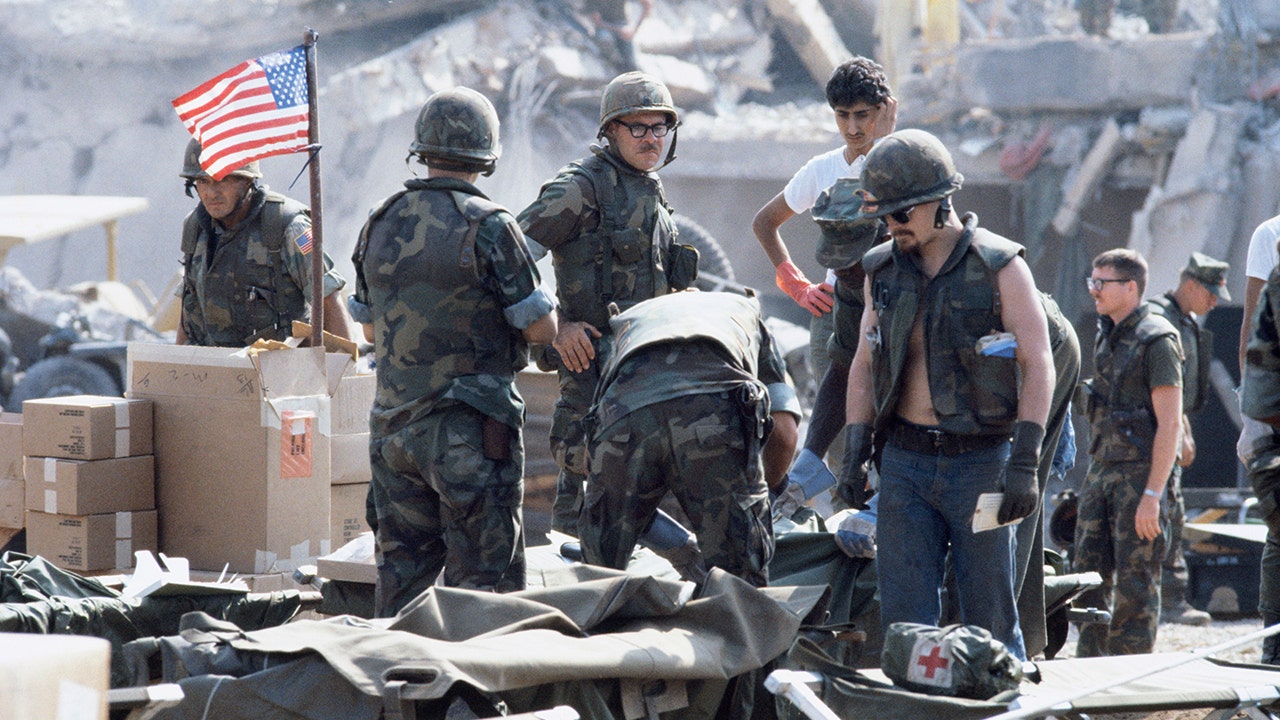
Foreign policy experts and U.S. officials told Fox News Digital that the Biden administration and its negotiating partners should carefully monitor Iran's influence over Hezbollah as U.S.-brokered talks address regional ceasefires and access to Iranian assets. The article notes that a 14-point U.S.-Iran memorandum of understanding (MOU) includes a clause calling for an end to military operations on all fronts, which commentators read as implicating Lebanon and Hezbollah. Analysts quoted—such as Lisa Daftari, Bill Roggio, Walid Phares, and Jonathan Conricus—describe Hezbollah as a central Iranian proxy with a history of attacks on Americans (citing the 1983 Beirut Marine barracks bombing, embassy attacks, and alleged militia support). The piece references a 2025 U.S. court decision linking Iran, via proxy, to the torture of Lebanese American Amer Fakhoury and includes statements from his family urging accountability. U.S. officials including Secretary of State Marco Rubio are quoted saying regional proxy activity is covered by the MOU and that the U.S. has established monitoring through U.S. Central Command; talks between Lebanon and Israel are ongoing in Washington and other discussions are taking place in Switzerland concerning Iran and regional issues.
Biblical Reflection
The article centers legitimate security and justice concerns—Americans harmed by attacks, the role of proxies in regional violence, and the stakes of any agreement that touches Lebanon. From a Christian pastoral perspective, the piece rightly insists on protecting the innocent and seeking accountability for wrongdoing. At the same time, the reporting and quoted commentators often frame Hezbollah as wholly inseparable from Iran and uniformly irredeemable, which can simplify complex political realities and make diplomatic options seem binary: capitulation or confrontation. Christians should value truth-telling about past harms and the need to defend the vulnerable while also exercising humility about geopolitical complexity, resisting fear-driven rhetoric that closes off avenues for peaceful restraint and reconciliation. Pursuing justice for victims and protecting civilians are consistent with Christian neighbor-love, but so is prudence in diplomacy, careful evaluation of sources, and concern for unintended harm to ordinary Lebanese civilians if pressure is applied without clear accountability measures.
Scripture in context
This outlook does not yet include contextual Scripture citations. Do not treat a general biblical theme as an exegetical conclusion.
Faithful Response
No prescribed response is offered. Consider the reflection prompts below in your own church context.
Reflection and Discussion
- 1Whose experiences and voices does this coverage center, and whose perspectives—especially among ordinary Lebanese civilians—are largely absent?
- 2Does the article treat Hezbollah as an independent actor or as an inseparable arm of the Iranian state, and how does that framing affect how we judge diplomatic options?
- 3How should calls for security and accountability be balanced with the Christian imperative to seek peace and avoid measures that disproportionately harm innocent people?
Sources
Reporting links are evidence inputs; Sanctuary News' biblical reflection is commentary.
This outlook currently relies on fewer than two linked sources. Broaden verification before teaching from it.
- 1.Original reportprimary