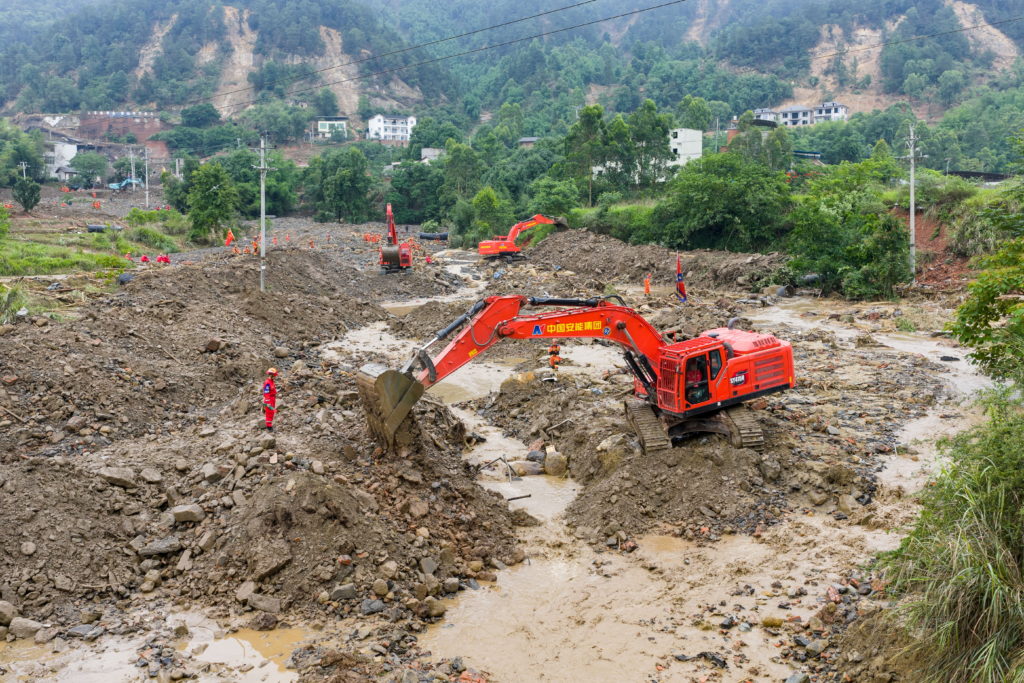
News Summary
A PBS NewsHour explainer summarizes mainstream scientific conclusions that human-caused warming is increasing the likelihood of many types of extreme weather. It links higher global temperatures to physical mechanisms — a warmer atmosphere holding more moisture, warmer oceans fueling storms, and sea-level rise increasing baseline coastal flooding — and notes that modern event-attribution science can often connect individual extremes to the background trend of human-caused warming. The piece frames human stakes with a literary vignette but does not cite specific studies or provide quantitative regional projections.
Source and Framing Analysis
The single supplied source is a PBS NewsHour general-audience explainer that synthesizes mainstream scientific conclusions rather than presenting new primary research. Its framing choice — opening with a dramatic fictional scene from Kim Stanley Robinson’s novel — aims to make the stakes immediate but can steer readers toward an emotional response and risks blurring fiction and empirical scale if not clearly separated. The article accurately describes widely accepted physical mechanisms (warmer air holds more moisture, ocean warming adds energy to storms, sea-level rise raises flood baselines) and summarizes attribution science practice, but it omits citations of specific peer‑reviewed studies, regional projections, confidence intervals, and detailed timelines. For policy, planning, or local decisions, readers should consult primary scientific reports and regional risk assessments.
How sources covered this story
Sanctuary separately assesses reporting quality and alignment with Christian virtues. The virtues assessment considers truthfulness, dignity, compassion, justice, peacemaking, humility, and care for vulnerable people. It does not assess a publisher's faith or reward religious language.
Compare 1 reports
Rank 1
PBS NewsHour: Why experts think climate change will cause more frequent and extreme weather eventsReporting 75/100Virtues 75/100
- Distinctive contribution
- Concise restatement of scientific consensus that climate change will increase the intensity and frequency of heat waves, storms, floods and droughts; includes a vivid literary example (Kim Stanley Robinson's novel) that dramatizes potential human toll.
- Framing
- Begins with a dramatic fictional vignette (a heat wave causing mass deaths) as an attention-grabbing lead, then asserts the scientific consensus. The fiction-to-fact transition frames the scientific claim in stark human-consequence terms.
- Omissions or uncertainty
- No attribution to specific studies, institutions, or scientists; no timeframe, regional breakdown, magnitudes, underlying mechanisms, or confidence intervals; the 20 million deaths figure is from a novel and not an empirical projection, but the excerpt does not explicitly separate the fictional example from likely real-world scales.
- Why these scores
- The excerpt accurately summarizes a widely accepted scientific conclusion in clear language and provides an evocative illustration. However, it is brief and lacks attribution to specific research, data, or experts and could blur fiction and empirical claims for some readers. For a short lead or overview this is solid but limited in specificity. The text is truthful in tone, not dehumanizing, and draws attention to potential large-scale human suffering (compassion-relevant). It does not exploit victims or promote fear beyond the illustrative fiction. The piece would score higher if it had more context on vulnerable populations, justice implications, or mitigation/adaptation responses.
Biblical Reflection
The scientific account that a warmer world alters weather systems coheres with well-established physical principles and peer-reviewed literature. Christians should welcome honest, clear reporting of these realities because truthful perception of risk is prerequisite to just and merciful action. When facts point to foreseeable harms, especially for the poor and marginalized, a gospel-shaped response centers both repentance for ways human activity degrades God’s good creation and practical stewardship: mitigation where possible, equitable adaptation, preparedness for emergencies, and advocacy that prioritizes vulnerable neighbors. Avoid despair that paralyzes and simplistic blame that ignores complexity; exercise humility about scientific uncertainties while acting proportionally to demonstrable risks, motivated by love, justice, and hope for restoration.
Scripture in context
- 1Genesis 2:15 — In the Genesis creation narrative, God places the first human in the garden 'to work it and keep it' — language that in its ancient Near Eastern context conveys responsibility for careful stewardship of the created order rather than absolute domination without care. — This passage supports a theological basis for environmental stewardship: humans are entrusted with caring for creation. Facing climate-driven risks, stewardship implies prudent action to preserve life and flourishing for current and future generations.
- 2Matthew 25:31-46 — Jesus’ teaching on the final judgment emphasizes care for the hungry, thirsty, stranger, sick, and imprisoned as the way his followers are identified; the passage is situated within teachings on discipleship, mercy, and communal responsibility. — Applied to climate risks, this passage underscores that responding to disasters and protecting those who are most vulnerable (the poor, displaced, and marginalized) is a central Christian obligation, not merely optional charity.
Faithful Response
Inform yourself from reputable scientific sources and regional risk assessments to understand local vulnerabilities before deciding where and how to act.
Support and participate in community preparedness and resilience efforts (evacuation planning, cooling centers, flood mitigation, mutual-aid networks).
Advocate for policies that reduce greenhouse-gas emissions and fund equitable adaptation, prioritizing protections for low-income and frontline communities.
Practice household-level mitigation where feasible (energy efficiency, reduced waste) while recognizing systemic solutions are essential.
Mobilize congregational resources for tangible aid after extreme events and maintain long-term support for affected communities; combine prayer with practical service.
Reflection and Discussion
- 1Which communities in our region are most likely to bear the highest costs from more frequent extremes, and how should that knowledge shape our church’s priorities?
- 2Are we treating scientific findings as an opportunity for stewardship and service, or allowing them to become a source of fear and paralysis?
- 3How can our congregation balance lament for present suffering with hopeful, sustained action that protects vulnerable neighbors?
Sources
Reporting links are evidence inputs; Sanctuary News' biblical reflection is commentary.
This outlook currently relies on fewer than two linked sources. Broaden verification before teaching from it.
- 1.Why experts think climate change will cause more frequent and extreme weather eventsprimary_reporting