News Summary
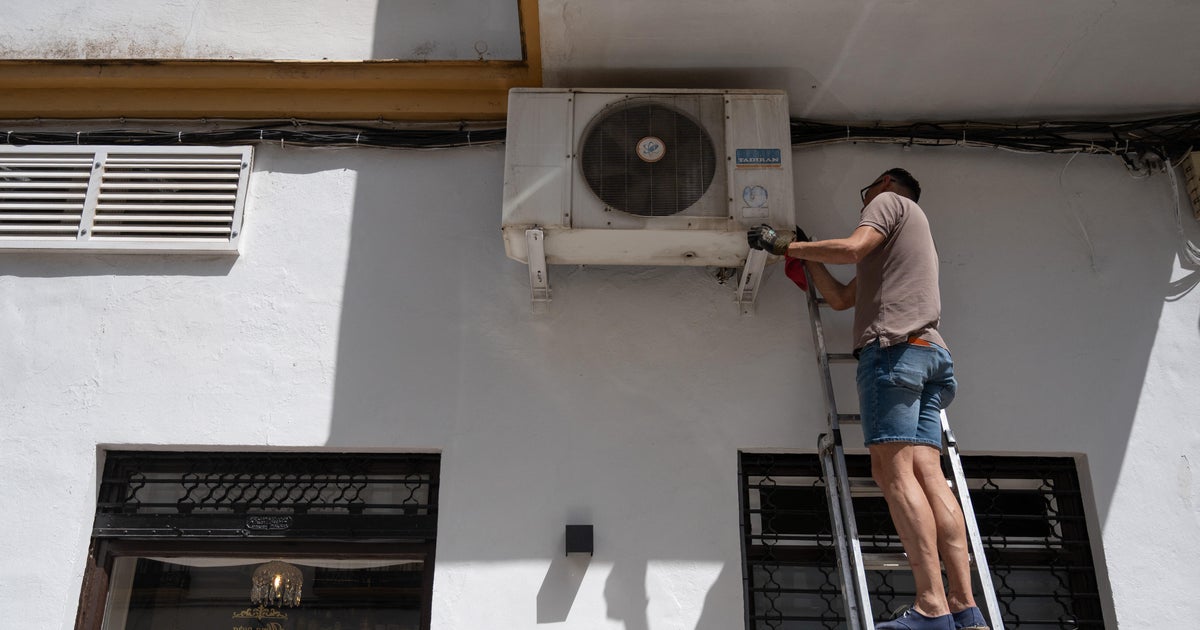
The article reports that unusually severe heat across Europe has increased demand for air conditioning (AC). It cites recent heat records in the U.K., temperatures above 111°F in Spain, and dozens of drowning deaths in France as examples. The piece notes that Europeans historically have low home AC penetration (~20%) compared with about 90% in the U.S., but that uptake is rising — for example, Italian household AC ownership rose from roughly 10–15% in 2003 to 56% by 2024, and roughly four million homes in Britain now have AC, about double three years earlier. The article references studies stating that AC can reduce heat-related deaths substantially (a 2007 study claiming a 75% reduction; a Lancet analysis estimating ~195,000 heat-related deaths among people over 65 were averted by AC in 2019) and cites the WHO estimate of an average 175,000 heat-related deaths per year across Europe. It summarizes barriers to AC adoption in Europe — historical building design, cost, higher energy prices, and climate guilt because cooling contributes to greenhouse gas emissions — and notes risks if a growing AC fleet is powered by fossil fuels. Experts quoted recommend energy-efficient units, solar power, and heat pumps as mitigations. The article also mentions policy actions in some countries to limit cooling of public buildings, and EU/UK renewable and efficiency measures intended to reduce emissions while accommodating rising cooling demand.
Biblical Reflection
This story presents a sober reality: rising heat is causing real, immediate harm, and people are responding by adopting technologies that protect life. A Christian reading should affirm the moral urgency to protect vulnerable people — the elderly, children, and the poor — from lethal heat now, while also weighing long-term stewardship of creation. The article reasonably describes both compassionate adaptation (AC to save lives) and legitimate concerns about worsening the climate through high-emission energy use. There is some framing bias toward individual consumer choices and technological fixes; less attention is given to systemic questions of justice — who pays for upgrades, how the poor are disproportionately affected, and how public policy and collective infrastructure (shade, cooling centers, grid resilience, equitable renewables deployment) could better share the burden. Truthfully, the cited statistics support the claim that AC can prevent deaths, but the piece could give more space to social equity and public solutions that embody both mercy and stewardship. Pastoral priorities from this report: protect those at immediate risk, advocate for efficient and renewable-powered solutions, and press for public policies that distribute costs and protections fairly so the poorest are not forced to choose between survival and conscience.
Scripture in context
This outlook does not yet include contextual Scripture citations. Do not treat a general biblical theme as an exegetical conclusion.
Faithful Response
No prescribed response is offered. Consider the reflection prompts below in your own church context.
Reflection and Discussion
- 1Who bears the cost of adapting to more frequent heat — individuals, communities, or governments — and how does that shape who stays safe?
- 2Does focusing mainly on consumer adoption of air conditioning obscure the need for public investments (grid resilience, cooling centers, green spaces) that protect the most vulnerable?
- 3How do we balance immediate mercy (saving lives today with AC) and long-term stewardship (reducing emissions) in ways that are just for the poor and future generations?
Sources
Reporting links are evidence inputs; Sanctuary News' biblical reflection is commentary.
This outlook currently relies on fewer than two linked sources. Broaden verification before teaching from it.
- 1.Original reportprimary