A little more detail
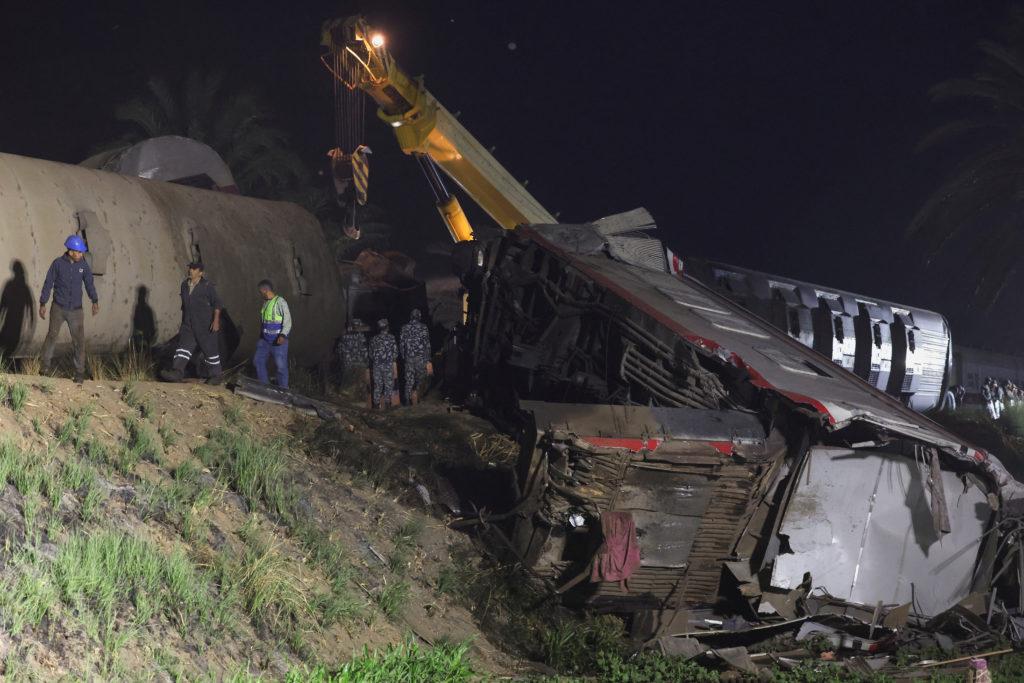
Two trains collided near the al‑Ayatt district in Giza province, Egypt, killing seven people and injuring more than 100, according to reporting by PBS NewsHour and CBS News. CBS reports a train bound for Fayoum struck the rear of another train, roughly 32 miles south of Cairo.
PBS places the crash in the context of recurring safety problems in Egypt’s rail system, citing a history of poor maintenance and mismanagement; neither outlet supplied an official investigative finding or a complete casualty list in the supplied reporting.
Source and Framing Analysis
CBS focuses on concrete incident details—location (al‑Ayatt, Giza), distance from Cairo, and that a Fayoum‑bound train rear‑ended another—helping reconstruct how the crash happened. PBS emphasizes structural context, saying derailments and crashes are common in Egypt and linking them to mismanagement and poor maintenance. That systemic framing is important for understanding risk, but PBS's supplied excerpt lacks sourced evidence or statistics. Neither report in the supplied text includes an official investigation, timeline, train operator statements, or full casualty verification, leaving material uncertainties.
How sources covered this story
This section compares the evidence and framing in linked reports. The Christian assessment above addresses the conduct described in the story; it does not grade a journalist’s faith or the morality of covering an event.
Compare 2 reports
Reporting 78/100
- Distinctive contribution
- Specifies the location and that the collision was a rear-end crash involving a train traveling to Fayoum province, which helps reconstruct the event's circumstances.
- Framing
- Presents concise, incident-focused factual detail (location and type of collision) without broader analysis in the supplied excerpt.
- Omissions or uncertainty
- The excerpt does not provide casualty figures, timing, causes, eyewitness accounts, official statements, or any attribution for the described facts; it is a brief factual line that may omit context or sourcing.
- Why these scores
- The supplied text is specific and factual in scope (location and collision type), which is useful and reasonably precise. Because the excerpt is brief and lacks attribution and additional contextual detail in what was supplied, it cannot be judged as exemplary reporting from this excerpt alone.
Reporting 68/100
- Distinctive contribution
- Offers generalized, structural context that train derailments and crashes are common in Egypt and links this to mismanagement and poor equipment maintenance.
- Framing
- Frames the incident within a broader pattern of railway system problems in Egypt, emphasizing institutional failure and maintenance issues rather than focusing only on the single crash.
- Omissions or uncertainty
- The excerpt does not cite sources or evidence for the claim that derailments and crashes are common; it provides no specific details about the particular collision (location, time, casualties, immediate cause, official statements) that would connect the general context to this event.
- Why these scores
- Provides useful context that is relevant to understanding the incident, but the statement is broad and unsourced in the supplied excerpt. The wording is assertive about systemic mismanagement without attribution or supporting detail in the excerpt, limiting evaluative reliability.
Christian commentary · About the conduct described in this story
Biblical Reflection
Scripture calls us to mourn with those who mourn () and to care practically for vulnerable people (). The Bible’s call to compassion doesn’t remove the need for truthful inquiry; seeking facts and accountability is part of loving our neighbor responsibly.
Practically: first respond with grief and practical help for survivors and families. Support transparent investigations and patient truth-seeking rather than rushing to assign blame before evidence is public.
Scripture in context
- 1 — Paul urges the Christian community to share one another's burdens—rejoicing and mourning together as an expression of mutual care. — Respond first with empathetic presence and grief for victims; let compassion shape calls for truth and accountability rather than rush to blame.
- 2 — James contrasts mere religious observance with practical, visible care for vulnerable people—widows and orphans—as evidence of pure religion. — Practical help—donations, supporting survivors, and advocacy for safer public systems—expresses faith that cares for those harmed by institutional failures.
A suggested response for readers, separate from the assessment above.
Faithful Response
Pray for victims and first responders, give to reputable relief or medical charities serving survivors, and support calls for a transparent, independent investigation.
Reflection and Discussion
- 1How should grief shape our first responses to reports of preventable public harm?
- 2What practical steps can our community take to support survivors and press for safer public systems?
Sources
Reporting links are evidence inputs; Sanctuary News' biblical reflection is commentary.
- 1.Collision between 2 trains in Egypt kills 7 and injures more than 100primary_reporting
- 2.Trains collide in Egypt, killing at least 7 and injuring more than 100additional_reporting