A little more detail
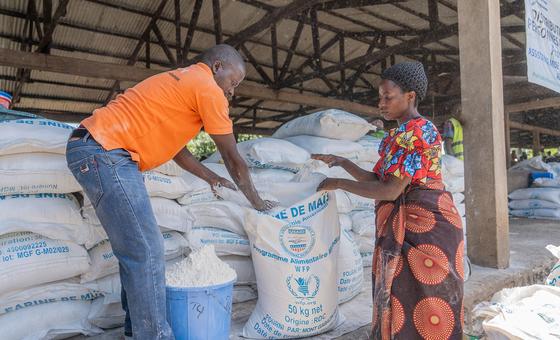
An IPC alert, reported by UN News, states that more than 28 million people in the Democratic Republic of the Congo are not getting enough to eat and that the number is expected to rise. The report cites overlapping drivers — armed conflict, recurring Ebola outbreaks, and climate shocks — that have disrupted harvests, markets, health services, and livelihoods, deepening humanitarian needs across the country.
Source and Framing Analysis
This item is based on a single published summary of an IPC (Integrated Food Security Phase Classification) alert as reported by UN News. The UN News piece supplies an aggregate figure (>28 million) and names conflict, Ebola, and climate shocks as primary drivers. That attribution to the IPC lends authoritative weight, but the published summary omits key methodological and contextual details (no geographic or provincial breakdown, no IPC phase-by-phase classification, no timeframe or thresholds, and no direct link or excerpt from the underlying IPC product). Because we currently have only that single public report in this cluster, several specifics remain singly reported and should be corroborated with the IPC alert itself, OCHA/UN agencies, humanitarian NGOs working in the DRC, and local authorities. The framing emphasizes technical drivers and urgent human need — useful for mobilizing relief — but also risks flattening local differences (regional severity, displacement patterns, access constraints) and underrepresenting local voices. Sources: UN News (reporting an IPC alert).
How sources covered this story
Sanctuary separately assesses reporting quality and alignment with Christian virtues. The virtues assessment considers truthfulness, dignity, compassion, justice, peacemaking, humility, and care for vulnerable people. It does not assess a publisher's faith or reward religious language.
Compare 1 reports
Reporting 75/100Virtues 75/100
- Distinctive contribution
- Gives a concrete magnitude (›28 million people) of food insecurity in the DRC and attributes the finding to the IPC global food security monitor; it also notes an expected near-term worsening.
- Framing
- Concise, factual framing that emphasizes the scale of hunger and signals an imminent deterioration; information is presented as coming from an established monitoring body (IPC), lending authority.
- Omissions or uncertainty
- No details on IPC phase classification or thresholds (how 'not getting enough to eat' is defined), geographic breakdown within the DRC, time period covered, methodology, underlying causes or drivers in the excerpt, or the specific months in which the increase is expected. The excerpt also lacks direct linkage to the full IPC alert or data.
- Why these scores
- The excerpt is concise, attributes the key claim to a named authoritative source (IPC), and provides a clear numeric estimate, which is good practice for brief reporting. It loses points for lack of contextual detail (methodology, timeframe, severity categories, geographic or demographic breakdown) and for not linking to the underlying IPC alert in the supplied text. The wording is truthful, non-exploitative and draws attention to large-scale human suffering, which aligns with compassion and care for vulnerable people. The excerpt shows humility by attributing the claim to a monitoring body rather than asserting unsupported conclusions. It does not, however, provide explicit context about responses, justice implications, or concrete actions to help affected populations, so it does not score higher.
Biblical Reflection
As Christians we must name the suffering plainly while resisting despair. The crisis calls for urgent mercy (feeding and medical care), just advocacy (sustained humanitarian funding, safe access for relief), and long-term peacemaking and resilience-building (support for health systems, conflict resolution, and climate adaptation). Our response should combine immediate charity with civic engagement that addresses root causes, centering the dignity of affected neighbors and humility about what outside actors can accomplish without local leadership.
Scripture in context
- 1 — A teaching of Jesus in which care for the hungry, thirsty, sick, and imprisoned is treated as care for Christ himself; it contrasts lived compassion with empty religious claims. — This passage calls Christians to practical service — feeding the hungry and visiting the sick — as central to faithful discipleship. It frames relief work not merely as optional charity but as a concrete expression of love for God and neighbor, grounding both immediate aid and attention to systemic causes in spiritual responsibility.
Faithful Response
Pray specifically for the people affected, local leaders, and humanitarian workers; name the suffering rather than abstract it.
Give to reputable, vetted relief and development organizations that operate in the DRC and that support food, health, and resilience programs.
Advocate with lawmakers, church networks, and donors for sustained humanitarian funding and policies that enable safe aid access, strengthen health systems, and reduce conflict drivers.
Educate congregations and small groups about the crisis using verified information; partner with trusted organizations for responsible, sustained engagement rather than one-off gestures.
Coordinate any collections or volunteer efforts through established partners to avoid harm and duplication; seek updates from those partners about needs and impact.
Reflection and Discussion
- 1How does Scripture shape our priorities when millions face hunger far away?
- 2Does our congregation’s giving and advocacy reflect the scale and urgency of crises like the DRC, and if not, why?
- 3How can we balance immediate mercy with commitments to peace-building, health system support, and climate resilience?
Sources
Reporting links are evidence inputs; Sanctuary News' biblical reflection is commentary.
This is a developing, single-source report. Details may change as more reporting becomes available.
Download source notes