News Summary
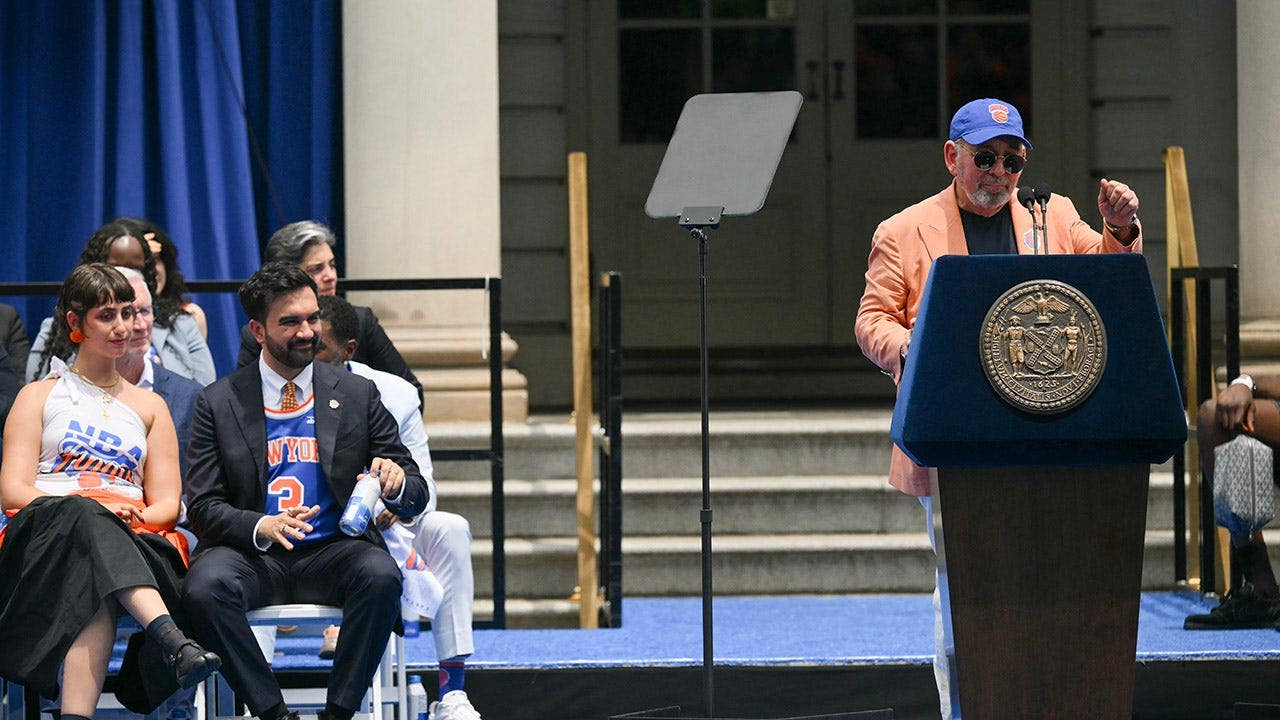
The New York Knicks' 2026 championship parade brought large crowds to Lower Manhattan and a City Hall celebration. Some fans climbed on NYPD vehicles and a sanitation truck during the parade. At City Hall, Mayor Zohran Mamdani delivered an approximately eight-minute speech recounting the team's history and gave keys to the city to staff and players. Owner James Dolan spoke briefly on stage and made a short remark including, “I don't need your vote. I don't need to quote to you what happened. If you're real Knick fans you know it already.” Dolan and his son received keys to the city and exchanged handshakes with Mamdani; observers and the article reported that they appeared uninterested in a photo opportunity. The report notes an ongoing public dispute between Dolan and Mamdani that began during the election cycle over the mayor's use of the Knicks logo and resulted in a cease-and-desist; it also references an earlier incident in 2017 between Dolan and former player Charles Oakley. The Knicks previously issued a statement that the team remains neutral on political matters. The article describes these interactions in the context of the larger parade celebration.
Biblical Reflection
Viewed through a Christian lens, this story shows how civic celebrations that could unify a city can become stages for personal and political tension. The factual events — a triumphant parade, a mayoral speech, an owner’s terse comment, and visible crowd misbehavior — are straightforward, but the article’s framing leans into conflict and spectacle. That emphasis reflects a broader media tendency to highlight discord because it draws attention, not necessarily because it alters the substance of the community moment. Christians should note two realities: public platforms amplify responsibility — leaders (owners, elected officials) model attitudes that shape communal life — and communal joy (a city celebrating a long-awaited championship) is fragile when overshadowed by posturing or poor public safety. The incident over logo use and the mayor’s campaign illustrates how political and commercial interests can collide with civic traditions. Pastoral discernment calls us to seek truth about motives (is the aim service or self-promotion?), to advocate for peace and public order, and to resist enjoying schadenfreude when leaders falter. The article appears accurate about events but uses speculative language (“appeared,” “seemed”) and editorializing about interest levels; readers should distinguish observed facts from interpretation.
Scripture in context
This outlook does not yet include contextual Scripture citations. Do not treat a general biblical theme as an exegetical conclusion.
Faithful Response
No prescribed response is offered. Consider the reflection prompts below in your own church context.
Reflection and Discussion
- 1Are we allowing the spectacle of conflict to distract us from the shared joy and civic good that prompted the celebration?
- 2How does media focus on interpersonal tension shape our view of leaders — and does that focus obscure the responsibilities those leaders still have to the community?
- 3When public figures use civic occasions for personal or political signaling, who benefits and who bears the cost in communal trust and public order?
Sources
Reporting links are evidence inputs; Sanctuary News' biblical reflection is commentary.
This outlook currently relies on fewer than two linked sources. Broaden verification before teaching from it.
- 1.Original reportprimary