News Summary
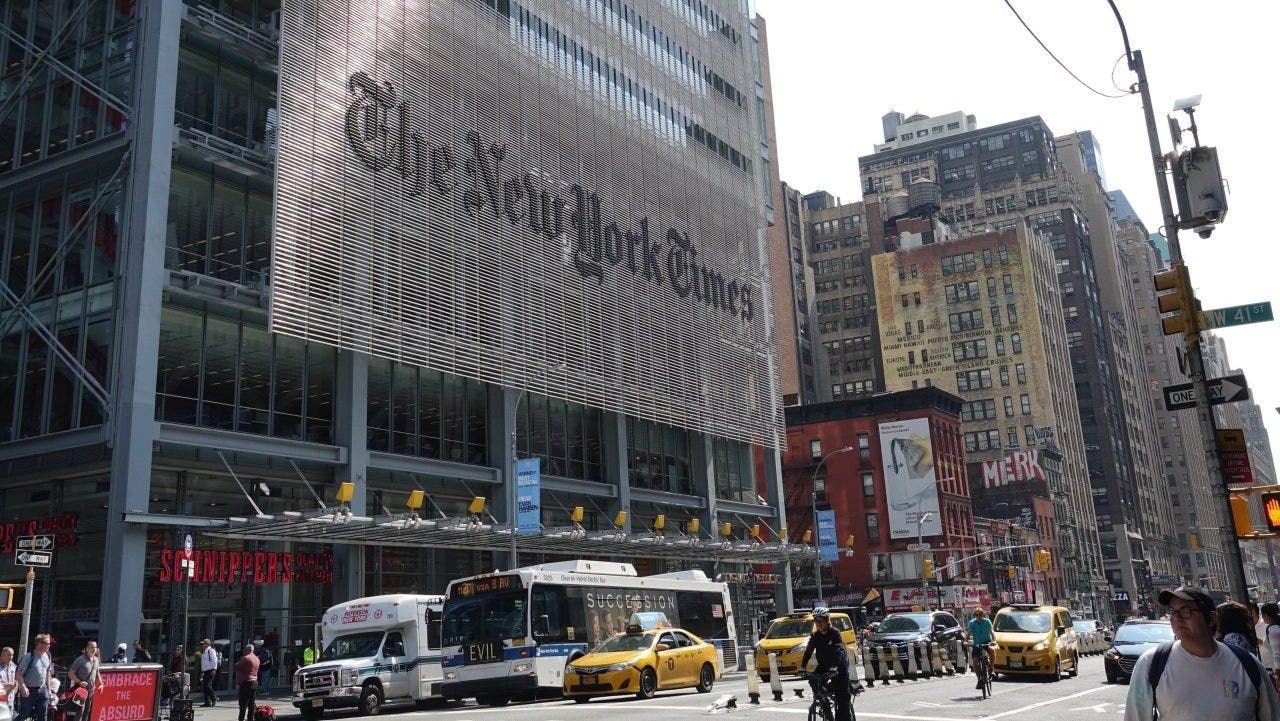
Federal prosecutors issued grand-jury subpoenas directing three New York Times reporters to testify about confidential sources in an investigation of unauthorized disclosures concerning security features of a Qatari-donated Air Force One. The subpoenas were reportedly served at reporters’ homes and directed them to appear before a Manhattan federal grand jury; the Times filed a motion in the Southern District of New York to quash the subpoenas and to unseal the related filings. The Times says the subpoenas were brought in bad faith and are an effort to punish its reporting; the Justice Department says the investigation targets government employees suspected of disclosing protected information and that reporters are material witnesses, not the subjects of the probe. The White House characterized the disclosures as potential threats to the safety of the president, staff and traveling press pool and defended efforts to find the leakers. Acting Attorney General Todd Blanche and Manhattan U.S. Attorney Jay Clayton publicly defended the subpoenas and said procedures to protect First Amendment interests were followed. The story notes that in 2025 the Justice Department restored prosecutors’ authority to use subpoenas, warrants and court orders in leak investigations, reversing prior restrictions. (The article also includes an unrelated reference to subpoenas issued by a U.S. attorney in a separate 'debanking' probe.)
Biblical Reflection
This story sits at the intersection of two legitimate public goods: national security (protecting sensitive information about presidential safety) and a free press (protecting reporters and confidential sources). Christians should welcome both truthful government stewardship of security and robust reporting that holds power to account. The reporting and responses reveal competing worldviews: one emphasizing secrecy and institutional protection, the other emphasizing transparency and accountability. Be alert to potential bias in the coverage—the piece is framed as adversarial toward the Times and includes language that can prime readers to view the subpoenas as justified; it also bundles an apparently unrelated 'debanking' paragraph that may conflate separate issues. Pastoral discernment calls us to require evidence for claims, to resist accepting power’s justification uncritically, and to defend vulnerable voices (like journalists and whistleblowers) while acknowledging legitimate limits on disclosure when real harm is at stake. Christians should press for lawful, narrow investigations that respect constitutional protections and avoid tactics that chill legitimate reporting or intimidate critics.
Scripture in context
This outlook does not yet include contextual Scripture citations. Do not treat a general biblical theme as an exegetical conclusion.
Faithful Response
No prescribed response is offered. Consider the reflection prompts below in your own church context.
Reflection and Discussion
- 1Does the official explanation for secrecy and subpoenas provide clear, specific justification for restricting reporting, or are broader interests being used to justify wide investigative powers?
- 2How might the placement and tone of facts in this article shape a reader’s judgment about press freedom versus national-security concerns?
- 3What safeguards should exist to prevent investigative tools from being used to intimidate journalists or suppress legitimate public-interest reporting?
Sources
Reporting links are evidence inputs; Sanctuary News' biblical reflection is commentary.
This outlook currently relies on fewer than two linked sources. Broaden verification before teaching from it.
- 1.Original reportprimary