News Summary
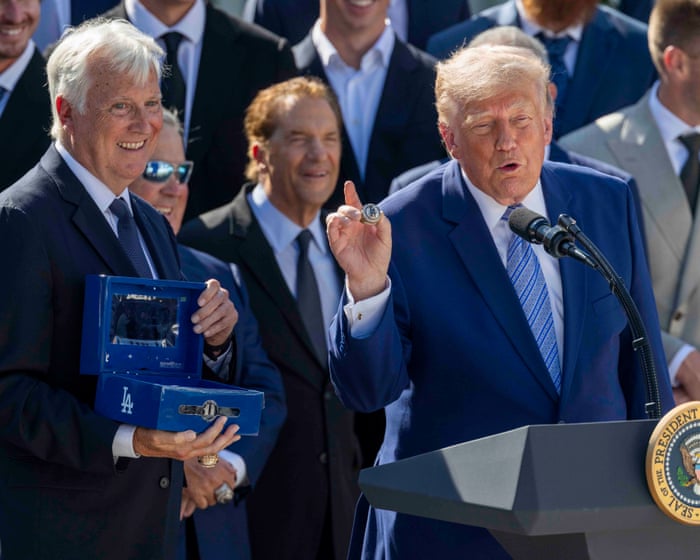
Reported facts: On 23 July 2026 President Donald Trump hosted the World Series champion Los Angeles Dodgers at the White House Rose Garden; the team presented a custom jersey and a championship ring; attendees included Shohei Ohtani, Freddie Freeman, Yoshinobu Yamamoto and manager Dave Roberts; several players, including Mookie Betts and Kiké Hernández, did not attend. Attributed claims and uncertainty: The article states the visit prompted conflicted feelings among many fans and notes it was the Dodgers’ second White House trip in two years; the reporting does not provide direct statements from the absent players explaining their reasons.
Source and Framing Analysis
The piece is a single-source news report from The Guardian focused on a ceremonial event. Framing highlights attendance and absence, and uses phrases like "conflicted feelings," which summarize public reaction but are inherently broad and subjective. Material uncertainties include the motives of players who stayed away (no direct quotes or formal statements were supplied) and the extent or representativeness of fan reactions. The account is factual about who attended and what gifts were exchanged but lacks primary-source quotes from key individuals who chose not to attend.
Biblical Reflection
This article records a public, symbolic interaction between political leadership and a high-profile sports team. Christians are asked to discern what such events mean for witness, conscience and community. The visible choices of individual players—some attending, some declining—illustrate that public honor can carry moral and civic weight and that faithful witness sometimes looks like presence and sometimes like conscientious absence.
The report contains ordinary journalism about a ceremonial visit; it also raises cultural questions about loyalty, celebrity, and the mixing of sport and partisan politics. Christians should avoid quick moralizing about the choices of players or the motives of the president; instead, we should weigh actions with humility and an eye to truth, mercy and the dignity of neighbors. That includes respecting conscience, calling for civility in public discourse, and resisting the idolizing of political or cultural figures.
Practically, followers of Christ can model humility and love in responses to political theater: speak truth where injustice or falsehood is present, show compassion toward those who disagree, and maintain a primary allegiance to the teachings and character of Jesus rather than to political identities or celebrity culture.
Scripture in context
- 1Philippians 2:1-11 — Paul urges Christians to adopt the humility and self-giving mind of Christ, contrasting worldly ambition with Christ’s obedience and humility in the earliest Christian communities. — In a public culture that often rewards status and public approval, this passage challenges Christians to prioritize humility, unity, and the welfare of others over personal prestige or alignment with powerful figures; it helps evaluate whether public appearances or absences honor God and neighbor.
Faithful Response
Pray for clarity and humility before weighing public gestures; avoid instant judgment of athletes or leaders.
Listen for the reasons behind people’s choices and respect conscience when a public figure declines a ceremonial honor.
Model civility in conversation: speak truth about injustice if present, but also practice mercy and restraint in partisan disagreements.
Use civic voice constructively—pray, engage local leaders respectfully, and encourage peaceful, lawful action rather than online vitriol.
Reflection and Discussion
- 1Does my response to this story reveal a desire for tribal victory or a deeper concern for truth and neighborly love?
- 2How should Christian convictions about justice and identity guide our judgment of public ceremonies?
- 3What practices help a church remain a reconciler when public culture is polarized by symbolic events?
Sources
Reporting links are evidence inputs; Sanctuary News' biblical reflection is commentary.
This outlook currently relies on fewer than two linked sources. Broaden verification before teaching from it.
- 1.Trump hosts champion Dodgers at White House as some players stay awayprimary_reporting