News Summary
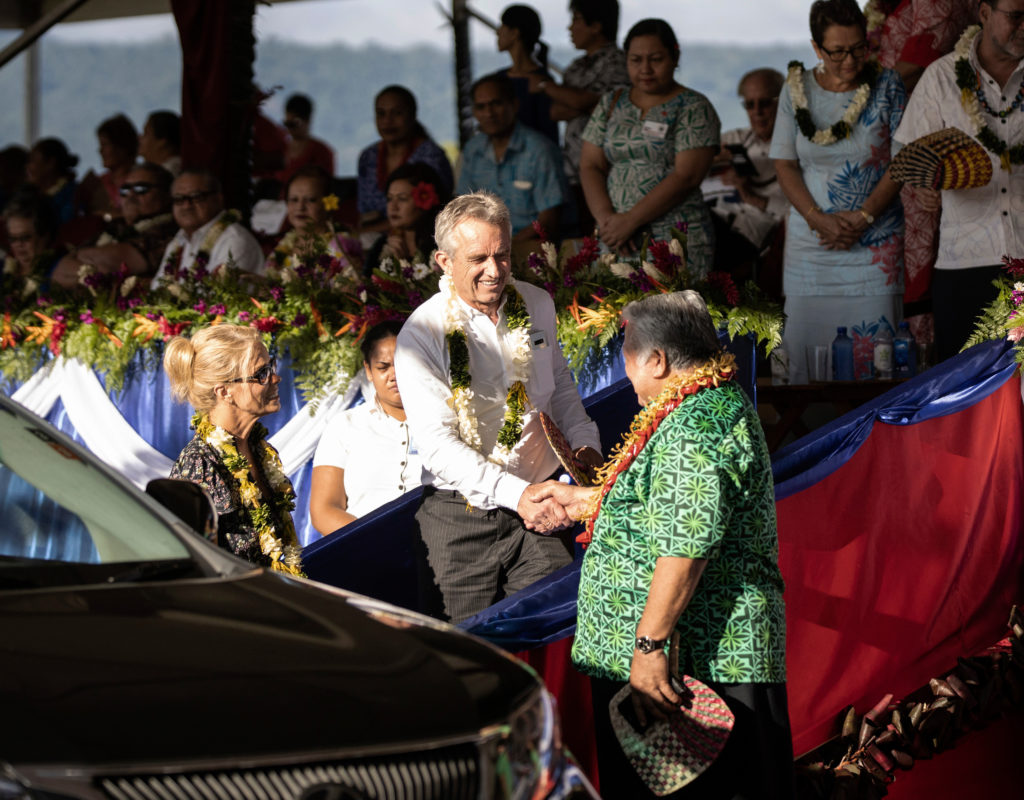
AP reporting, carried by PBS NewsHour, says Robert F. Kennedy Jr. sent a 2019 letter to Samoa's prime minister that repeatedly referenced vaccines (the report states the words "vaccine" or "vaccination" appear eight times). The story frames those documents as contradicting a public statement attributed to Kennedy that a planned Samoa trip "had nothing to do with vaccines." The report also notes that two children in Samoa died after receiving MMR vaccine doses, a detail included in the AP coverage. The published account is documentary and narrow in scope; it documents a textual discrepancy between Kennedy's public remark and the language in the letter but does not, in the material provided, establish motive, prove causation for the deaths, or publish the full letter and provenance used to verify the word count.
Source and Framing Analysis
This item is PBS NewsHour's republication of AP reporting. The reporting centers a document-based contradiction: the specific count of the words "vaccine"/"vaccination" in a 2019 letter and an apparent mismatch with a public denial. That framing is newsworthy because it bears on public honesty by a prominent figure, but it also encourages an inference about intent that the supplied material does not itself fully support. Strengths: concrete, traceable claim (numeric word-count) and identification of the two strands being compared (public statement vs. private letter). Limitations and uncertainties: the excerpt does not publish the full letter or establish who compiled/verified the word count, the provenance and completeness of the documents are not shown in this summary, the timing and full wording of Kennedy's public statement are not fully reproduced here, and no new medical evidence linking vaccines to the children's deaths is presented. The piece is best read as reporting a narrow documentary incongruity rather than as conclusive proof of motive or causation; readers should not leap from textual discrepancy to claims of malice or legal responsibility without further corroboration.
How sources covered this story
Sanctuary separately assesses reporting quality and alignment with Christian virtues. The virtues assessment considers truthfulness, dignity, compassion, justice, peacemaking, humility, and care for vulnerable people. It does not assess a publisher's faith or reward religious language.
Compare 1 reports
Reporting 68/100Virtues 76/100
- Distinctive contribution
- Provides a concrete numeric count (eight uses) of the words "vaccine"/"vaccination" in a letter, creating measurable evidence relevant to the reported contradiction.
- Framing
- The title frames the piece as an AP finding that newly released documents refute RFK Jr.'s claim that the Samoa trip was unrelated to vaccines; the excerpt itself supplies a specific textual detail intended to support that framing (the eight uses).
- Omissions or uncertainty
- The excerpt omits key context: which letter is being referenced, its recipient and date, who compiled or verified the count, the surrounding wording or context of those mentions (e.g., passing reference vs. substantive planning), and whether other documents support or nuance the claim. The supplied text alone does not show the broader documentary record or RFK Jr.'s full statement.
- Why these scores
- The excerpt is specific and concrete (a numeric count), which strengthens factual reporting. However, it lacks attribution (who made the count), contextual details (which letter, date, surrounding text), and explanation of how the count relates to the overall claim. As an isolated excerpt it is clear but incomplete; scored as adequate but limited in completeness and sourcing. The excerpt is factual and noninflammatory, showing no dehumanizing language or exploitation of suffering; it focuses on a concrete textual detail. It neither displays overt compassion or restorative framing nor does it show bias or sensationalism. The score reflects generally neutral, truthful reporting with limited moral framing.
Biblical Reflection
This report raises straightforward pastoral concerns: public leaders bear responsibility for truthful communication, especially about health matters that affect vulnerable communities. If a public figure publicly denies a motive while documents show otherwise, trust is eroded and the consequences can include increased fear, confusion, and harm to public health. Christians are called both to seek truth and to care for neighbors; those commitments together demand careful weighing of evidence and attention to the welfare of people who may be endangered by misinformation.
At the same time, the facts reported here are narrow and specific — a letter and the language it used — and they do not on their own establish motive or outcome beyond the immediate documentary record. Christian discernment requires holding both the demand for honesty and the caution against rushing to judgment: insist on accountability where evidence supports it, but also avoid assuming malice without fuller corroboration. Our response should protect the vulnerable, uplift truthful communication, and practice humble charity toward all parties while insisting on public responsibility.
Finally, this story invites congregations and Christians to consider how we talk about science and public policy. Faithfulness includes promoting accurate information, loving neighbors by supporting proven public-health measures, and modeling how to correct errors publicly and repent where harm has been caused. When leaders misrepresent intentions or facts, the burdens fall disproportionately on those least able to bear them — children, the sick, and small communities — and the church should be among the voices advocating for their protection.
Scripture in context
- 1AP report republished by PBS NewsHour (as summarized in the supplied cluster material) — AP/PBS reporting about a 2019 letter to Samoa's prime minister and a public statement by RFK Jr. — The documentary claim — that the words 'vaccine' or 'vaccination' appear eight times in a letter — is the factual hinge that the story uses to argue the documents contradict Kennedy's public denial. This supports scrutiny of public claims but does not by itself establish motive or culpability.
- 2Ephesians 4:15 (speak the truth in love); Luke 10 (Parable of the Good Samaritan) — Biblical guidance for speech and care of the vulnerable — These passages call Christians to combine honest speech with neighborly care. In practice, that means insisting on accurate public information about health while responding to those harmed with practical help, not merely rhetorical rebuke.
Faithful Response
Practical, pastoral steps Christians and congregations can take: 1) Verify before sharing — consult primary documents and reputable public-health sources before amplifying claims about vaccines or deaths. 2) Prioritize care for the vulnerable — offer practical support to affected families or communities and back evidence-based public-health measures that protect children and elders. 3) Create space for informed conversation — host a public forum or Q&A with local public-health professionals to answer questions and correct misinformation. 4) Hold leaders accountable with charity — call for public clarity and correction where warranted, but avoid imputing malice without fuller evidence. 5) Provide pastoral care — attend pastorally to anxiety and grief in the congregation, offering clear resources and compassionate listening. 6) Pray for truth, repentance where needed, and the protection of small and vulnerable communities.
Reflection and Discussion
- 1When I hear a public discrepancy between private documents and public statements, what steps do I take to verify the facts before forming or sharing a judgment?
- 2How does the command to 'speak the truth in love' shape both our demand for accountability from leaders and our pastoral sensitivity toward those harmed?
- 3What concrete ways can our congregation support public health and protect the vulnerable in our community (education, transportation to clinics, childcare for vaccine appointments, etc.)?
- 4Am I balancing the call to oppose misinformation with humility about what the available evidence actually proves?
Sources
Reporting links are evidence inputs; Sanctuary News' biblical reflection is commentary.
This outlook currently relies on fewer than two linked sources. Broaden verification before teaching from it.
- 1.AP report: RFK Jr. said a Samoa trip had nothing to do with vaccines. New documents refute thatprimary_reporting