News Summary
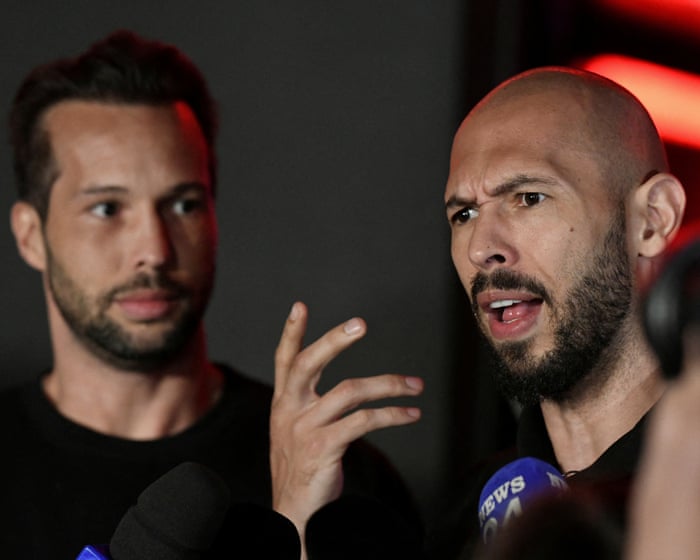
Facts reported in the article: Andrew and Tristan Tate were arrested in Miami and are awaiting extradition to the UK; they were previously charged in Romania and were under house arrest there; the article attributes a prior return to the U.S. to diplomatic actions connected to the Trump administration and quotes the Tates’ lawyer. Attributed claims and opinion: the Tates face accusations from numerous women and allegations by British prosecutors of rape, strangulation, sex trafficking, and possession of child abuse images and extreme pornography; the columnist contends that Democrats have been largely silent and argues this silence reflects male‑supremacist thinking among political strategists. Uncertainties: causal link between diplomatic moves and the Tates’ exit from Romania, and the extent and nature of Democratic silence beyond the columnist’s observation.
Source and Framing Analysis
This is a single opinion column from The Guardian combining reported developments (arrest, prior Romanian charges, extradition status) with interpretive analysis about partisan behavior and cultural attitudes. Material uncertainty stems from attributions of motive (e.g., diplomatic intervention by the Trump administration enabling the Tates’ departure) and from broad claims about the Democratic party’s intent or calculation — assertions that require independent corroboration beyond the columnist’s framing. The piece is advocacy journalism: it uses ethical critique to make a political point, so readers should separate verifiable chronologies from the columnist’s interpretive arguments.
Biblical Reflection
The article raises an important pastoral concern: how the church and Christians should respond when political actors and movements seem indifferent to or insufficiently critical of patterns of gendered violence and degradation. Christians are called to truth‑telling and to defend the vulnerable, and those commitments push against both dismissing credible allegations of harm and exploiting victims for partisan advantage.
Read honestly, the column challenges believers to notice where tolerance for misogynistic culture seeps into political calculation. There is a danger on all sides—of politicizing victims and of weaponizing sexual violence—which undermines justice and mercy. A faithful Christian response should insist on due process and factual clarity while centering the care, protection, and dignity of alleged victims rather than scoring political points.
At the same time, the article is an opinion piece that mixes reported events with interpretive claims about motives and cause (for example, attributing the Tates’ departure from Romania to specific diplomatic acts). Christians should value the column’s moral urgency about protecting the vulnerable while also testing its specific factual claims and causal inferences rather than accepting political attribution as settled fact.
Scripture in context
- 1Proverbs 31:8-9 — In its literary context, these verses exhort leaders and the capable to 'speak up for those who cannot speak' and to defend rights of the poor and needy; they appear in a collection of wisdom sayings about righteous leadership and care for the vulnerable. — The passage calls Christians to advocate for victims and to ensure public life protects the vulnerable; applied here it supports speaking truth and providing care without exploiting suffering for partisan ends.
Faithful Response
Pray for truth, victims, and just legal processes; avoid spreading unverified speculation.
Support organizations and ministries that provide practical care and legal help to survivors of sexual violence.
Hold political leaders accountable in ways that center victims’ dignity—ask for transparent investigations and condemn abusive rhetoric across the political spectrum.
Cultivate teaching in local communities and churches about healthy masculinity, consent, and the protection of the vulnerable.
Reflection and Discussion
- 1Are we more inclined to excuse or minimize abusive behavior when it benefits our political tribe, and how should the gospel shape our correction?
- 2When public figures are accused of harming others, how do we ensure our response protects victims and preserves integrity rather than punishing political opponents?
- 3What concrete steps can Christian communities take to prevent the normalization of misogyny while upholding due process?
Sources
Reporting links are evidence inputs; Sanctuary News' biblical reflection is commentary.
This outlook currently relies on fewer than two linked sources. Broaden verification before teaching from it.
- 1.Why are Democrats so quiet about the Tate brothers? | Moira Doneganprimary_reporting