News Summary
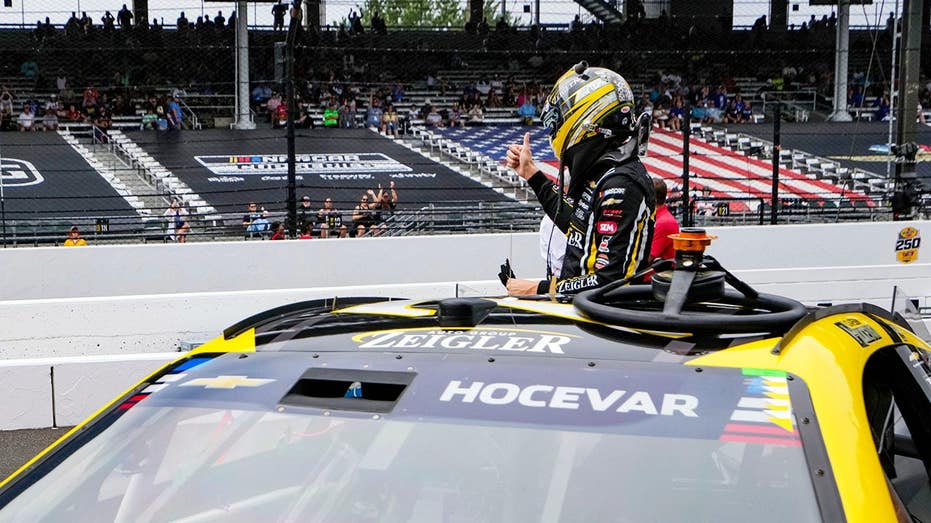
Facts: The article reports Corey Heim won the Brickyard 400. It reports Carson Hocevar made a middle-finger gesture toward the winner and that observers noted many empty seats at Indianapolis. Attributed claims: the piece says ‘NASCAR drivers slam the Cup Series car,’ attributing criticism of the car to drivers. Uncertainties: the report does not include attendance figures, direct quotes from drivers or officials, or detailed evidence for the scale or causes of empty seats or the full context of Hocevar’s gesture.
Source and Framing Analysis
The article’s headline and phrasing are editorial and designed to provoke emotional reaction (words like "pathetic," "most embarrassing"). The supplied report appears to conflate on-track incidents, crowd visuals, and driver comments into a single narrative without presenting detailed data (attendance numbers, direct quotations, or official responses). Material uncertainties that affect interpretation include absence of quantified attendance, lack of primary-source quotes from drivers or NASCAR officials about the car, and limited context for the gesture (intent, target, or provocation).
Biblical Reflection
This story is primarily a sports report amplified by sensational language. Christians should notice two things: first, public shaming or delight in another’s embarrassing moment is rarely constructive and often harms community and witness; second, there can be legitimate concerns beneath the noise — e.g., fan engagement or equipment design — that deserve calm, fact-based attention rather than only ridicule.
The article’s framing invites anger and mockery; a Christian response calls instead for humility, clear-sighted truth-telling, and mercy. Truth requires holding fast to verified facts (who won, what happened) while resisting the impulse to add moral certainty about motives or character from a short clip or an evocative photo. Mercy calls us to pray for the people involved and to avoid multiplying harm by sharing dehumanizing content.
At the structural level, when athletes criticize equipment or when attendance is low, a faithful perspective looks beyond individual behavior to ask how the sport can better serve fans and participants — balancing honest critique with constructive solutions and care for those involved.
Scripture in context
- 1Philippians 2:3-4 — Paul’s letter to the Philippians exhorts believers to humility, urging them to regard others as better than themselves and to look to the interests of others rather than merely their own. — In the context of sports and public criticism, this passage calls Christians away from boasting, petty triumphalism, or derision, and toward humility, care for others’ dignity, and seeking the common good.
Faithful Response
Avoid sharing or amplifying clips that humiliate individuals; prioritize sources and context before reposting.
Pray for the athletes, teams, and officials involved and for sports leaders to respond constructively to legitimate concerns.
When offering critique, focus on practices and systems (fan engagement, equipment design, safety) rather than personal attacks.
Model sportsmanship in speech and online behavior: give credit, correct falsehoods gently, and seek reconciliation where possible.
Reflection and Discussion
- 1How does our desire for sensational stories shape what we notice and amplify about other people’s failures?
- 2What would humility and mercy look like in our conversations about athletes and public figures involved in embarrassing moments?
- 3Where might there be legitimate structural concerns behind this coverage (fan engagement, equipment design, governance) that deserve calm, fact-based attention?
Sources
Reporting links are evidence inputs; Sanctuary News' biblical reflection is commentary.
This outlook currently relies on fewer than two linked sources. Broaden verification before teaching from it.
- 1.NASCAR race looks pathetic with empty seats, driver gives the finger & the most embarrassing command ever?primary_reporting