News Summary
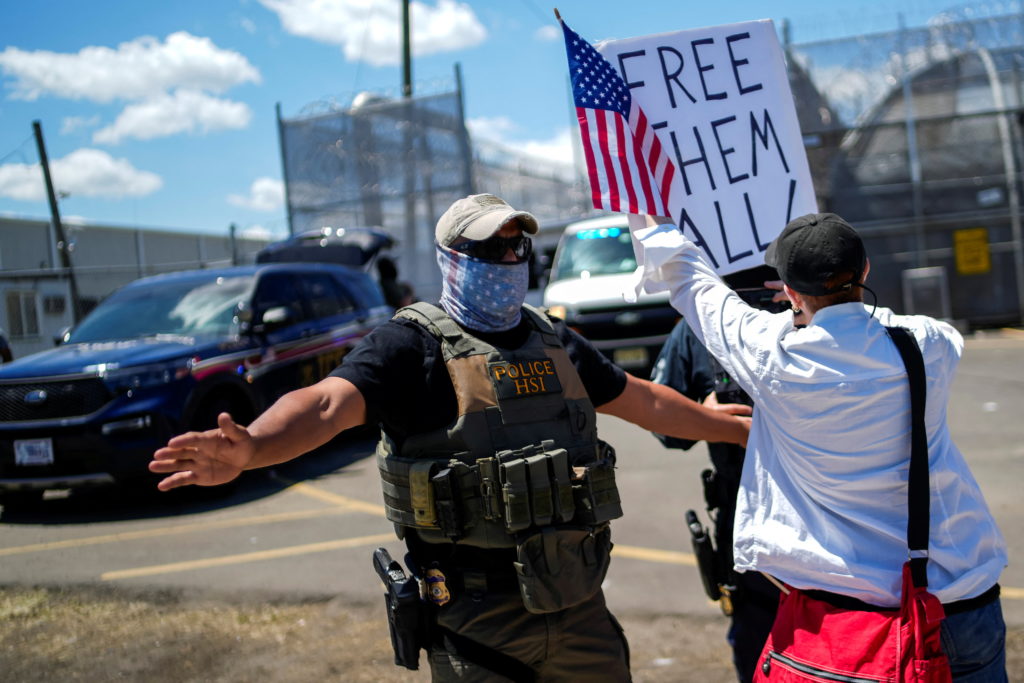
Reported facts: The House Judiciary Oversight Subcommittee scheduled a hearing about conditions at Delaney Hall, an ICE detention center in Newark, NJ. Since late May, law enforcement and protestors have clashed outside the facility. Protestors say they are demonstrating in solidarity with detainees. Detainees have alleged poor living conditions. Attributed claims and uncertainty: The article reports detainee allegations but provides no independent inspection reports, official ICE statements, law enforcement after-action reports, or details about the nature or scale of the alleged conditions or clashes.
Source and Framing Analysis
The article is brief and factual in tone but limited in detail. Material uncertainties include the specific allegations about living conditions, any official responses from ICE or facility management, the causes and extent of the clashes, and the identities or organization of the protestors. Because the report mainly announces a hearing and summarizes broad claims, it frames the issue as an oversight matter without supplying evidence that would resolve the allegations.
Biblical Reflection
This hearing brings together recurring moral and civic concerns: the dignity and safety of people in state custody, the need for transparent oversight of government facilities, and the rights of citizens to protest. Christians should welcome processes of accountable oversight: asking questions publicly and seeking documentation are consistent with pursuing truth and protecting vulnerable neighbors. At the same time, the clashes between law enforcement and protestors remind us that advocacy for justice should avoid needless escalation and preserve peace where possible.
Evaluate the narrative with humility. The report states that detainees have alleged poor conditions; allegations require follow-up evidence, testimony, and independent inspection before drawing firm conclusions. Yet the presence of protests and a congressional hearing signals that the matter has moved beyond isolated complaint into an issue requiring public scrutiny and remediation if abuses are found. Christian response should center both mercy for detained people and commitment to truthful, careful inquiry — resisting partisan simplification while pressing for humane treatment and institutional accountability.
Practically, virtue calls for caring for those behind walls while also seeking orderly, lawful channels to change abusive systems. Christians can pray, listen to affected people, support legal and visitation ministries, encourage transparent oversight, and call for nonviolent protest and de-escalation where tensions rise.
Scripture in context
- 1Matthew 25:31-46 (the judgment teaching about 'the least of these') — In a larger teaching about final judgment, Jesus identifies care for people in need — feeding the hungry, visiting prisoners — as the morally decisive actions that reflect love for him. Historically, this passage addresses concrete acts of mercy as markers of justice within the community. — The passage challenges Christians to see detainees as neighbors entitled to humane treatment and to support efforts that protect their dignity; it also calls for practical service (visitation, legal aid, advocacy) rather than mere rhetoric.
Faithful Response
Pray regularly for detainees, protestors, law enforcement, and hearing participants for truth, safety, and wisdom.
Listen to firsthand accounts and prioritize corroborated evidence before forming conclusions; support independent inspections and transparent reporting.
Support or volunteer with local ministries that provide visitation, legal assistance, or material help to detained people and their families.
Engage civic channels — contact elected representatives asking for thorough oversight, humane standards, and de-escalation plans for protests — while urging nonviolent advocacy.
Reflection and Discussion
- 1How does the church balance the pursuit of justice for vulnerable people with the call to peace and nonviolence when protests and clashes occur?
- 2What information do we still need before making moral judgments, and where can we reliably obtain it?
- 3In this situation, who are the most vulnerable neighbors and how can we practically serve them without exacerbating conflict?
Sources
Reporting links are evidence inputs; Sanctuary News' biblical reflection is commentary.
This outlook currently relies on fewer than two linked sources. Broaden verification before teaching from it.
- 1.WATCH LIVE: House panel examines Delaney Hall ICE detention center conditions and protestsprimary_reporting