A little more detail
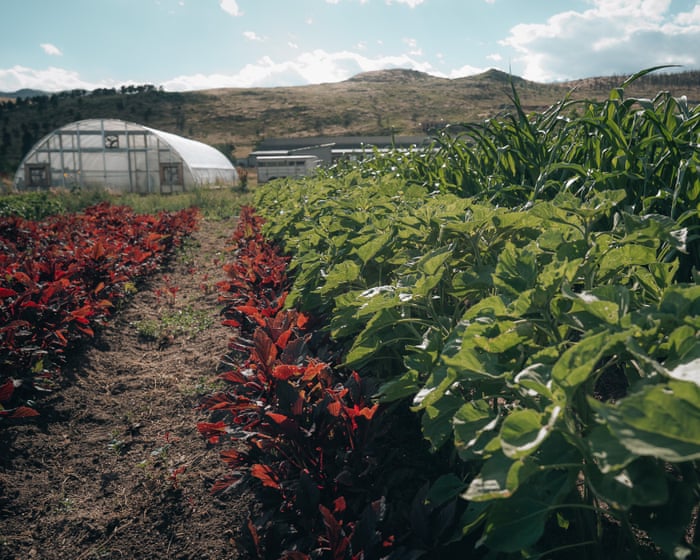
According to a Guardian report, local officials plan to use drones to apply herbicide over the Red Hill wildland in Boulder County, Colorado, to remove invasive weeds. The plan has prompted pushback from nearby residents, conservationists, and farmers who warn of potential ecological and health risks to a biodiverse area that includes elk, bighorn sheep habitat, and adjacent farms. Officials are reported to describe the plan as safe; the article does not supply technical specifics about chemicals, application rates, permits, monitoring, or independent environmental review.
Source and Framing Analysis
Primary source: The Guardian article 'Colorado community fights plan to use drones to spray weed killer.' The piece establishes the basic facts that a drone-based herbicide application is planned for Red Hill and that locals and conservationists object. Strengths: identifies location, delivery method (drones), and competing perspectives (officials asserting safety vs. local concern); highlights the area's ecological sensitivity. Limitations and framing: the article uses vivid language that emphasizes risk and community alarm without providing technical details needed to evaluate actual risk (chemical identity, concentrations, timing, permitting, who will operate, buffer zones, monitoring, or results of independent environmental or health assessments). Because those technical details are absent, the factual record remains incomplete; readers should not assume either that the plan is harmless or that it will necessarily cause the harms feared without further evidence. The core framing centers a tension between official assurances and community precaution, which is material to civic deliberation but incomplete for a definitive risk judgment.
How sources covered this story
Sanctuary separately assesses reporting quality and alignment with Christian virtues. The virtues assessment considers truthfulness, dignity, compassion, justice, peacemaking, humility, and care for vulnerable people. It does not assess a publisher's faith or reward religious language.
Compare 1 reports
Reporting 72/100Virtues 78/100
- Distinctive contribution
- Specifies the proposed delivery method (drones), the exact location (Red Hill, Boulder County, Colorado), competing perspectives (officials asserting safety vs. local concern), and highlights the area's ecological sensitivity (hundreds of important species and concentrated rare resources).
- Framing
- The excerpt is largely informative but uses vivid language ('weed-killing chemicals will start falling from the sky') that emphasizes potential drama and risk. It presents both the officials' reassurance and locals' worry but does not evaluate either claim.
- Omissions or uncertainty
- No details about which chemicals/herbicides will be used; which officials or agencies authorized the plan; specific timing or scale of spraying; evidence or studies supporting safety claims; what precisely the locals' concerns are; any legal, regulatory, or environmental review status; or mitigation measures to protect species.
- Why these scores
- As a short excerpt, it accomplishes the basic journalistic purpose of flagging a local controversy and naming stakeholders and location. It responsibly attributes claims to 'officials' and 'some locals' rather than stating unverified facts. However, it lacks critical specifics (chemical identity, responsible agency, timeline, supporting evidence), and uses mildly sensational wording that could increase perceived risk without providing supporting detail—limitations that reduce its utility for readers seeking a full, evidence-based account. The excerpt treats multiple human stakeholders without dehumanizing language and acknowledges environmental vulnerability (biodiversity), which aligns with care for the vulnerable and truthfulness. It shows balance by reporting both the officials' safety claim and local concerns. Points are withheld because the supplied text doesn't demonstrate deeper compassion (e.g., efforts to protect affected species or community welfare) or explicit pursuit of justice or remediation.
Biblical Reflection
A Christian outlook holds stewardship of creation and neighbor-love together: we are called to protect the flourishing of nonhuman life and to safeguard vulnerable neighbors whose health or livelihoods may be affected. That means pressing for transparent, evidence-based decision-making, respectful listening to local residents (including farmers and Indigenous voices where relevant), and advocating precaution and care when scientific uncertainty could produce real harms. The gospel calls for truth-telling, mercy toward those at risk, justice for communities that bear burdens, peacemaking in civic conflict, and humility before complex ecological knowledge.
Scripture in context
- 1 — In Genesis, the human role in the garden is described as tending and keeping the land, a stewardship responsibility in an agrarian and covenantal context. — This passage supports careful stewardship: decisions about land use should protect created life and sustain the resources future generations rely on.
- 2 (Good Samaritan) — Jesus tells an ethical story about who qualifies as 'neighbor,' emphasizing compassionate action across social boundaries rather than legalism. — When assessing environmental interventions, we should prioritize concrete care for neighbors—those directly harmed or vulnerable—over technical justifications offered without transparent safeguards.
Faithful Response
Pray for wisdom for local officials, protection for vulnerable neighbors and wildlife, and for civil, constructive community engagement.
Request and review written information from officials: the exact chemical(s) proposed, application rates and timing, drone altitude and flight paths, permits and authorizing agencies, operator qualifications, and monitoring plans.
Ask for independent environmental and public-health assessments or peer-reviewed studies specific to the proposed chemical(s) and landscape where they would be applied.
Advocate for precautionary measures until adequate information is available: buffer zones around farms, livestock areas, and sensitive habitats; timing to avoid wildlife breeding/migration periods; and post-application monitoring with publicly available results.
Organize or attend neutral, well-moderated public forums where officials, independent experts, farmers, conservationists, and affected residents can speak and ask questions.
Explore and press for non-chemical or less-risky alternatives for invasive-weed control where feasible, and demand a clear plan for accountability and remediation if harms occur.
Listen closely to neighbors likely to be affected (farmers, ranchers, low-income households, and Indigenous/traditional land users), and center their testimony in civic discussions.
Reflection and Discussion
- 1Who in the Red Hill area is most vulnerable to potential ecological or health harms from aerial herbicide application, and are their voices being included in decision-making?
- 2What specific chemical(s) and application protocols are proposed, and what independent evidence exists about their effects in similar habitats and weather conditions?
- 3Have less risky alternatives (mechanical removal, targeted hand-pulling, biological controls, or timed interventions) been considered and compared?
- 4Which agency authorized or proposed the drone spraying, what permits are required, and what monitoring, reporting, and enforcement mechanisms will be in place?
- 5How can congregations and faith communities offer care and constructive engagement—prayer, listening sessions, and civic participation—without escalating polarizing rhetoric?
Sources
Reporting links are evidence inputs; Sanctuary News' biblical reflection is commentary.
This is a developing, single-source report. Details may change as more reporting becomes available.
- 1.Colorado community fights plan to use drones to spray weed killerprimary_reporting