News Summary
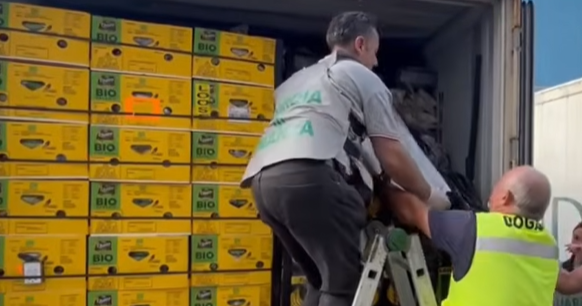
Reported facts: Police said about 1,700 pounds of cocaine were found hidden in a refrigerated container from Ecuador among pallets of bananas and estimated the drugs' worth at about $285 million. Attribution: the details come from police statements as reported by CBS News. Uncertainties: the article does not report whether arrests were made, the port of discovery, laboratory confirmation of the drugs, charges filed, intended destination or recipients, nor evidence about the trafficking organization responsible.
Source and Framing Analysis
The story is brief and relies on law-enforcement statements; its framing emphasizes weight and estimated street value, which can sensationalize without adding explanatory context. Material uncertainties that affect the story include lack of information about arrests, chain of custody, forensic confirmation, and whether this is an isolated incident or part of a larger interdiction. Because the article presents police claims without further corroboration or background, readers should treat value estimates and implications about broader trafficking networks as provisional.
Biblical Reflection
This report is straightforward: law enforcement found a large shipment of cocaine hidden among produce, and authorities quantified its weight and estimated street value. The story highlights the global scale of illicit drug trafficking and the ways criminal networks exploit ordinary commercial supply chains. From a Christian perspective, the immediate facts call for both honest appraisal and compassionate concern. Illicit drug trade causes real harm—addiction, family brokenness, violence, and exploitation—so Christians should neither trivialize its discovery nor take schadenfreude in criminal disruption.
At the same time, the report is thin on context: it does not explain why such smuggling occurs, who profits, or who will be harmed by these drugs if distributed. A pastoral reading urges us to name both personal sin and systemic failures—poverty, lack of legal opportunity, corruption, and demand-driven markets—that make trafficking profitable. Jesus’ call to care for the vulnerable and pursue justice invites the church to hold both mercy and truth together: praying for those who produce, transport, and consume drugs, advocating for victims of addiction, supporting fair enforcement that protects communities, and working toward economic and social conditions that reduce the lure of the trade.
Practically, Christians should resist sensationalism (focusing only on poundage and dollar estimates) and instead ask how the wider structures behind this seizure affect human flourishing. The story should move us to informed prayer, humble learning about trafficking’s root causes, and concrete support for ministries of recovery, social development in producing regions, and public policies that protect neighbors and rehabilitate those harmed by drugs.
Scripture in context
- 1Isaiah 1:17 — In Isaiah, a prophetic call to Israel to live out justice and righteousness amid ritual observance; the prophet challenges the community to correct injustice and care for the oppressed rather than rely on external religious forms alone. — When confronted with crimes like trafficking, Christians are reminded to pursue justice—protecting the vulnerable, supporting fair enforcement—and not be content with merely condemning sin without acting to repair harm.
- 2Luke 10:25-37 (Good Samaritan) — A parable Jesus tells in response to a question about 'neighbor' that redefines neighborliness as practical mercy across social boundaries, not merely legal or religious obligation. — The parable urges Christians to offer concrete care to those harmed by drugs—addicts, trafficked workers, families—regardless of cultural or social distance, and to prioritize compassionate action alongside calls for justice.
Faithful Response
Pray specifically for law enforcement, investigators, and for those potentially harmed by this shipment (users, families, port workers).
Learn about local and global drivers of the drug trade—poverty, lack of legal employment, and illicit demand—and support credible organizations addressing those root causes.
Support local ministries of recovery, offer nonjudgmental pastoral care to those affected by addiction, and advocate for policies that balance public safety with rehabilitation.
Reflection and Discussion
- 1What economic and social conditions in producing and transit countries fuel the global drug trade, and how should that shape our responses?
- 2How does focusing on quantity and monetary value shape our sympathy or indifference toward the human victims tied to production, distribution, and addiction?
- 3Where should the church place energy between prevention, rehabilitation, and advocacy for systemic change in response to drug trafficking?
Sources
Reporting links are evidence inputs; Sanctuary News' biblical reflection is commentary.
This outlook currently relies on fewer than two linked sources. Broaden verification before teaching from it.
- 1.Cocaine worth $285 million found hidden in banana shipmentprimary_reporting