News Summary
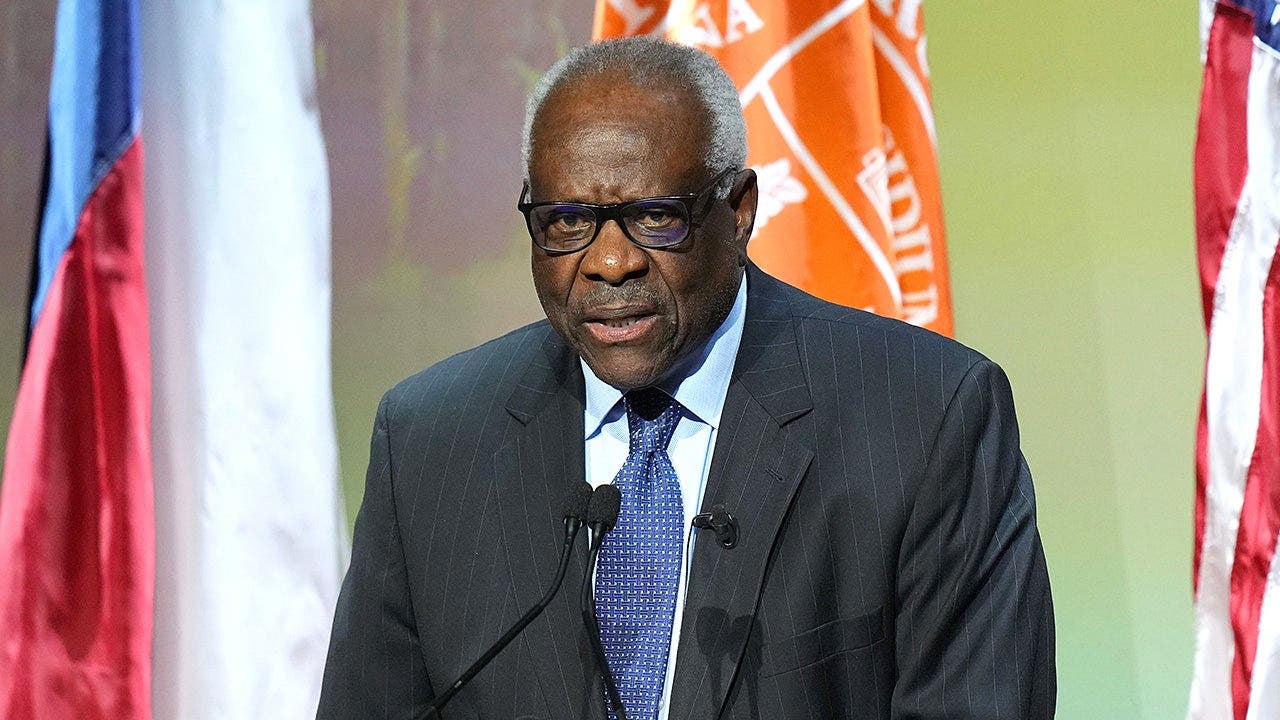
This is an opinion column published by Fox News and written by Scott Douglas Gerber, a scholar of the Declaration of Independence. The piece argues that Supreme Court Justice Clarence Thomas has, over more than three decades on the Court, consistently treated the Declaration of Independence as the United States' foundational moral statement and as a guiding interpretive lens for constitutional questions. The article cites Thomas's jurisprudence, referencing a 1995 government‑contracting case and his 2023 concurrence in the Harvard and UNC admissions cases, to illustrate his opposition to race‑based unequal treatment and his reliance on the Declaration's claims about equality and natural rights. The author urges that, as the nation marks its 250th anniversary, Americans should recover the Declaration's moral premises and follow the approach Thomas has advanced. The column is explicitly opinion and advocates a conservative, originalist interpretive stance toward American founding documents.
Biblical Reflection
From a Christian pastoral perspective, the column raises important, legitimate questions about moral foundations and the language we use to defend human dignity. The article's core claim—that the Declaration affirms inherent equality and that public life should be accountable to moral principles—resonates with Christian teaching about the equal worth of persons made in God's image. At the same time, the piece is an advocacy opinion from a conservative outlet and the author selectively highlights evidence that supports a particular legal and political framework (originalist reading of founding documents and Justice Thomas's jurisprudence) while downplaying counterarguments and historical complexity. It treats the Declaration primarily as a binding moral standard rather than as a contested text with differing legal and ethical interpretations. Christians should welcome the call to affirm human dignity and justice, but also be wary of reducing Christian commitments to partisan legal theories or using them to silence legitimate concerns about systemic injustice, mercy, and reconciliation. In short: affirm truth about human worth, seek humility in contested civic claims, and pursue neighbour‑love that balances justice and compassion rather than rigid doctrinal triumphalism.
Scripture in context
This outlook does not yet include contextual Scripture citations. Do not treat a general biblical theme as an exegetical conclusion.
Faithful Response
No prescribed response is offered. Consider the reflection prompts below in your own church context.
Reflection and Discussion
- 1Does the column clearly separate moral claims (what ought to be) from legal authority (what the Constitution requires), and how does that distinction affect the argument it advances?
- 2Whose experiences and historical complexities are emphasized or omitted when the Declaration is presented as a single, uncontested moral foundation?
- 3Are appeals to foundational texts being used to pursue the common good and mercy, or primarily to secure a particular political or legal agenda?
Sources
Reporting links are evidence inputs; Sanctuary News' biblical reflection is commentary.
This outlook currently relies on fewer than two linked sources. Broaden verification before teaching from it.
- 1.Original reportprimary