News Summary
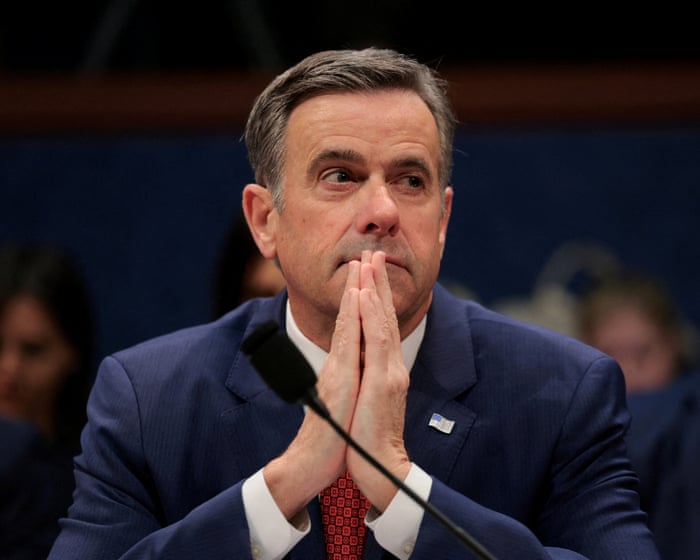
U.S. media reported that the CIA director traveled to Moscow this week and used the visit to warn Russia against attacking NATO member states. The same reporting noted that the Kremlin dismissed those media accounts as "scare stories." The claim that the CIA director issued such a warning in Moscow is presented in a short live-blog summary (The Guardian), which attributes the substance to U.S. media rather than reproducing on‑the‑record statements, transcripts, or named official sources in the supplied text. Former U.S. president Donald Trump is reported to have downplayed the visit in public comments. The supplying article is a live-blog entry and compresses the reporting into brief lines without detailed sourcing in the excerpt provided.
Source and Framing Analysis
Primary source for this cluster is a live-blog post published by The Guardian that summarizes reporting from U.S. media. The entry responsibly hedges the central claim with attribution (“U.S. media reported”), and it also records a Kremlin response labeling the coverage as “scare stories.” Strengths: the live-blog notes competing public narratives (U.S. media report versus Kremlin dismissal) and signals uncertainty rather than asserting the claim as established fact. Limits and uncertainties: the excerpt does not name which U.S. outlets reported the visit or provide on‑the‑record confirmation from the CIA, U.S. government officials, or a transcript of any meetings. The compressed live-blog format increases the risk of missing context or source details. For a high‑consequence allegation about warnings over NATO attacks, the absence of named sources or official confirmation is a material gap that reduces confidence and calls for further corroboration from primary statements or multiple independent outlets.
How sources covered this story
Sanctuary separately assesses reporting quality and alignment with Christian virtues. The virtues assessment considers truthfulness, dignity, compassion, justice, peacemaking, humility, and care for vulnerable people. It does not assess a publisher's faith or reward religious language.
Compare 1 reports
Reporting 72/100Virtues 75/100
- Distinctive contribution
- Reports that US media described the CIA director’s Moscow trip as a warning to Russia about attacking NATO states and records the Kremlin’s dismissal of those reports as “scare stories”; also notes that Donald Trump attempted to downplay the visit and briefly lists unrelated domestic political developments (lawsuit on mail voting; dispute over Fed governor residence).
- Framing
- Short live-blog style summary that hedges key claims with attribution (“US media reported”), uses a quoted Kremlin characterization, and mixes international-security reporting with quick domestic-political briefs. The wording is cautious rather than definitive but does not identify the precise US outlets or on-the-record sources for the CIA visit claim.
- Omissions or uncertainty
- Does not name which US media outlets reported the claim or provide on‑the‑record sourcing from the CIA, US officials, or Russian counterparts beyond the quoted Kremlin phrase. Lacks specifics about timing, who met whom in Moscow, the content of the warning, or any direct quotes from US officials; the domestic items are brief and lack detail or sourcing as well.
- Why these scores
- Appropriate cautious attribution and inclusion of a Kremlin response are strengths for a short live-blog entry, but the piece lacks named sources, direct on‑the‑record confirmation, and substantive detail. For its apparent purpose (brief live updates) it responsibly signals uncertainty, but it is limited in specificity and sourcing—hence a solid-but-not-exceptional score in quality. The excerpt is neutral, non‑sensational, and uses hedged attribution rather than asserting unverified claims, which aligns with truthfulness and humility. It avoids dehumanizing language or inflammatory framing and includes the opposing actor’s response, supporting fairness and peacemaking context. It does not, however, demonstrate explicit compassion, restorative-justice framing, or deeper attention to affected civilians, so it receives a moderately high but not maximal score.
Biblical Reflection
From a Christian perspective, this report calls for measured discernment and a posture shaped by truth, mercy, justice, peacemaking, humility, and care for vulnerable neighbors. Practically: (1) favor careful verification before amplifying alarming claims; (2) pray for wisdom and restraint for leaders and those in positions to prevent violence; (3) advocate for transparency where it protects civilians and for restraint where public rhetoric could escalate conflict; (4) prioritize practical care for people likely to be harmed by any escalation (refugees, displaced civilians). Scripture informs a posture that seeks peace, resists revenge, and attends to the vulnerable (see cited passages below). Christians should avoid partisan rushes to judgment, model calm and informed public engagement, and hold leaders accountable both for truthfulness and for policies that protect human life.
Scripture in context
- 1Matthew 5:9 — Jesus teaches about the character of those who are blessed and calls his followers to be peacemakers in a hostile world. — Christians are called to pursue reconciliation and de‑escalation where possible and to pray for those making decisions about war and peace, seeking ways to reduce harm rather than inflame fear.
- 2Romans 12:18-21 — Paul instructs believers on responding to enemies and injustice—live peaceably when possible and do not repay evil with evil. — Believers should advocate for just defense and protection of the vulnerable while avoiding vengeful rhetoric; public witness should aim to break cycles of violence and pursue restoration.
Faithful Response
Pray specifically for diplomatic leaders, intelligence officers, military planners, and civilians at risk—ask for wisdom that preserves life and restraint that prevents escalation.
Seek corroboration from multiple reliable, primary sources (official statements, named reporters with on‑the‑record sourcing, or transcripts) before sharing the claim as fact.
Avoid amplifying unverified or single‑source reports on social media; if sharing, clearly note the attribution and uncertainty.
Support humanitarian organizations and local ministries that assist refugees and civilians affected by international conflict.
Engage elected representatives with measured questions about civilian protection and diplomatic efforts, urging transparency where it protects life and security.
Reflection and Discussion
- 1How quickly did I form a firm judgment about this report, and what sources did I rely on?
- 2In what concrete ways can my church or I pursue peace or assist those harmed if tensions escalate?
- 3How can I hold public officials accountable for truthful communication while praying for them and seeking the common good?
- 4Am I willing to withhold certainty until primary, named-source confirmation is available?
Sources
Reporting links are evidence inputs; Sanctuary News' biblical reflection is commentary.
This outlook currently relies on fewer than two linked sources. Broaden verification before teaching from it.
- 1.CIA chief reportedly warns Russia against attacking Nato countries on visit to Moscow – US politics liveprimary_reporting