News Summary
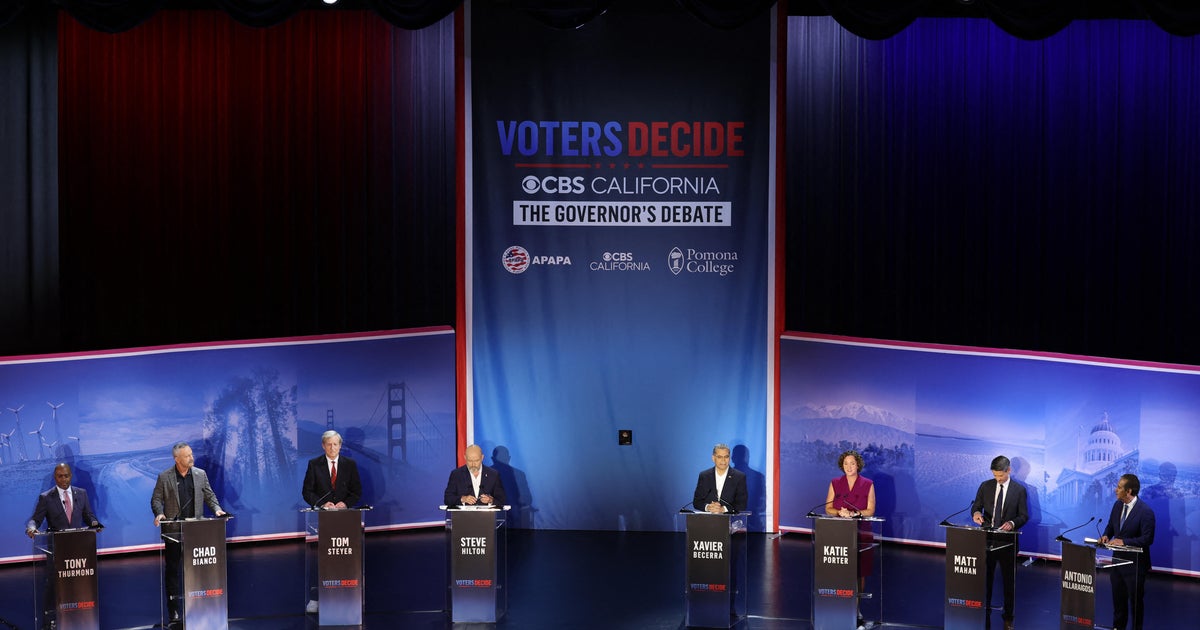
On April 28, 2026, CBS News California hosted a televised debate among major candidates in the California governor’s race. Key exchanges included: Katie Porter and Chad Bianco clashing over the state’s FAIR Plan (Porter called it a “huge financial liability”; Bianco labeled it “single-payer” and a “failed environmental policy”); Porter proposing that the state help lower reinsurance costs to bring insurers back to California; Tom Steyer attributing high gas prices to President Trump and the war with Iran and saying California should be able to outsource refining because of alleged price gouging; Xavier Becerra calling for a temporary freeze on homeowners’ insurance rates and threatening investigations, while a moderator noted a California Supreme Court ruling could make such a freeze unconstitutional; Matt Mahan proposing suspension of the gas tax; Becerra arguing that cutting the gas tax would imperil infrastructure funding and proposing instead housing and prescription drug pricing initiatives; Tony Thurmond proposing a “Pay it Forward” tuition deferral program and aggressive homebuilding targets using surplus school property; Antonio Villaraigosa and Katie Porter proposing different forms of first-time buyer or tuition relief; candidates broadly emphasized solutions for housing, insurance, education, health care and public safety. The debate included back-and-forth partisan rhetoric about President Trump and state vs. federal responsibility. CBS released a new poll showing a close primary: Steve Hilton 16%, Tom Steyer 15%, Xavier Becerra 13%, Chad Bianco 10%, Katie Porter 9%, Matt Mahan 4%, Antonio Villaraigosa 4%, Tony Thurmond 1%, and 26% undecided. CBS News California also launched a candidate guide compiling interviews on major policy issues. The article is a highlights recap and notes recent campaign exits by Eric Swalwell and Betty Yee.
Biblical Reflection
This debate highlights familiar tensions in public life: competing priorities (market stability vs. consumer protection), differing diagnoses of root causes (federal policy, geopolitics, state regulation), and a mixture of concrete proposals and broad campaign rhetoric. From a Christian perspective, several things are noteworthy. First, truthful framing matters: shorthand labels (e.g., calling the FAIR Plan "single-payer") can simplify complex policy mechanisms and steer public sentiment without fully describing legal or fiscal realities. Christians are called to love truth (Ephesians 4:25) and to test claims carefully. Second, many proposals appeal to compassion for those harmed by rising costs — a biblical priority — but effective compassion requires prudence and stewardship: promising state subsidies or freezes without transparent accounting of long-term costs risks shifting burdens onto others, including the poor and future generations. Third, the debate underscores the need for wisdom and counsel in governing: complex problems (insurance markets, housing shortages, infrastructure funding) typically require technical expertise, negotiation among stakeholders, and humility about trade-offs, rather than purely partisan or theatrical solutions. Finally, watchfulness for who gains and who loses with each policy matters morally: are policies protecting the vulnerable, ensuring fairness, and promoting flourishing? Christians should press candidates for clarity, evidence, and a posture of service rather than simple scoring of political points.
Scripture in context
This outlook does not yet include contextual Scripture citations. Do not treat a general biblical theme as an exegetical conclusion.
Faithful Response
No prescribed response is offered. Consider the reflection prompts below in your own church context.
Reflection and Discussion
- 1Which claims in the debate are descriptive (facts about causes and legal constraints) and which are prescriptive or rhetorical (campaign promises or labels meant to persuade)?
- 2What trade-offs does each major proposal imply for vulnerable people, public budgets, and long-term infrastructure or market stability?
- 3Are candidates offering evidence and concrete implementation details, or mainly appeals to emotion and partisanship — and how should that shape my assessment of their trustworthiness?
Sources
Reporting links are evidence inputs; Sanctuary News' biblical reflection is commentary.
This outlook currently relies on fewer than two linked sources. Broaden verification before teaching from it.
- 1.Original reportprimary