News Summary
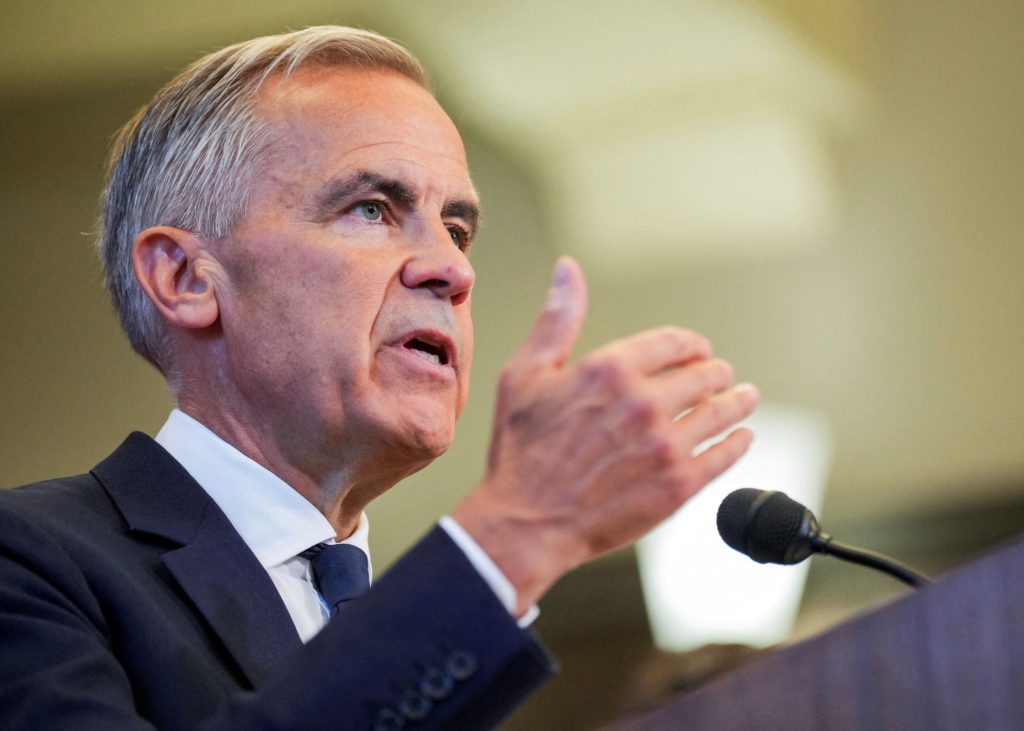
PBS NewsHour reports that former central banker Mark Carney has long warned about the risk of economic coercion by great powers and argues that middle powers should resist such pressure even when it carries costs. The PBS piece frames a current confrontation involving former U.S. President Donald Trump and Canadian Prime Minister Justin Trudeau as the clearest test yet of Carney’s argument, and it names the United States and China as examples of great powers able to exert such pressure. The supplied excerpt does not include Carney’s direct quotations, specific actions by Trump that are said to constitute coercion, nor on-the-record responses from Trudeau, Trump, or other officials.
Source and Framing Analysis
Source: PBS NewsHour (single supplied article). The story is framed as an interpretive test of a normative argument — that middle powers should stand up to economic coercion by great powers — and it attributes that framing to Mark Carney. Strengths: the framing helps readers see this bilateral episode in a broader international-power context and raises ethical and strategic stakes. Limitations and omissions: the supplied text is short and lacks primary-source detail (no direct Carney quotes), no concrete description of the allegedly coercive measures by Trump, no documented costs or impacts, and no recorded responses from Canadian, U.S., or Chinese officials. Because the piece functions primarily as context-setting, readers should treat the central causal claim (that Trump is 'testing' Trudeau in a manner that validates Carney’s thesis) as an interpretive assertion by the reporter and attributed commentators rather than as a fully documented factual account.
How sources covered this story
Sanctuary separately assesses reporting quality and alignment with Christian virtues. The virtues assessment considers truthfulness, dignity, compassion, justice, peacemaking, humility, and care for vulnerable people. It does not assess a publisher's faith or reward religious language.
Compare 1 reports
Reporting 72/100Virtues 76/100
- Distinctive contribution
- Presents the showdown as a clear test of the thesis that middle powers must stand up to economic pressure from great powers (U.S., China), and notes that doing so can come at a cost.
- Framing
- Frames the incident not merely as a bilateral dispute but as a validation test of a policy argument about how middle powers should respond to economic coercion by larger powers.
- Omissions or uncertainty
- Does not specify which actions by Trump are referenced, what concrete economic coercion is alleged, what costs might be incurred, or provide direct quotes or evidence supporting the claim. The excerpt does not identify when or where Carney made the argument or provide counterviews.
- Why these scores
- The sentence offers clear, useful framing and attributes the view to Carney, which is appropriate for context-setting. However, as an isolated excerpt it lacks supporting specifics, sourcing (quotes or examples), and detail about the events being described. For a short contextual line this is adequate and responsibly worded, but limited. The framing supports principles of justice and courage by highlighting resistance to coercion and does so in a neutral, non-sensational manner that respects actors' dignity. The excerpt is concise and does not exploit suffering or dehumanize, though it offers limited moral analysis or explicit compassion.
Biblical Reflection
From a Christian ethical standpoint, the frame that names economic coercion as a misuse of power rightly draws attention to how wealth and influence can harm vulnerable people and limit a nation’s ability to pursue justice. Christians should welcome analysis that highlights moral costs and calls for courage in defending principles of justice and dignity, even when resistance entails sacrifice. At the same time, Christian prudence and humility require withholding firm moral judgments until fuller facts are available: accountability requires clear evidence, not inference alone. The Christian response should combine a commitment to truth-seeking with prayerful concern for those who may suffer from economic pressure, advocating responses that seek justice while minimizing harm and cultivating avenues for reconciliation and peacemaking.
Scripture in context
- 1Luke 6:27-36 — Jesus’ teaching that calls followers to love enemies, show mercy, and act differently than worldly power systems that repay force with force. — This passage invites a posture that resists injustice while refusing vindictiveness: Christians engaged with questions of national power should seek justice tempered by mercy, aim to protect the vulnerable, and pursue reconciliation where possible.
Faithful Response
Pray for clarity and for leaders on all sides (Canadian, U.S., and others) and for vulnerable people likely affected by economic disputes.
Seek fuller, corroborated reporting before making or sharing strong public judgments; encourage sourcing of direct quotes and official responses.
Support and advocate for policies or relief that protect ordinary people (workers, small businesses, migrants) from being collateral victims of great-power disputes.
Encourage civic and church leaders to model humility and peacemaking—pursuing justice that minimizes harm and prioritizes human dignity.
Reflection and Discussion
- 1Which concrete actions by President Trump, if any, are being described as coercive in this account, and where can we find documented evidence of them?
- 2Who stands to lose the most if economic coercion is used as a political tool between great and middle powers, and are their voices present in coverage?
- 3What additional sources, direct statements, or data would help confirm whether this episode truly 'tests' Carney’s argument?
- 4How can Christian communities balance solidarity with their nation and a prophetic critique of power when national policy risks harming vulnerable neighbors?
Sources
Reporting links are evidence inputs; Sanctuary News' biblical reflection is commentary.
This outlook currently relies on fewer than two linked sources. Broaden verification before teaching from it.
- 1.Carney warned about economic coercion. Now Trump is testing the Canadian prime ministerprimary_reporting