News Summary
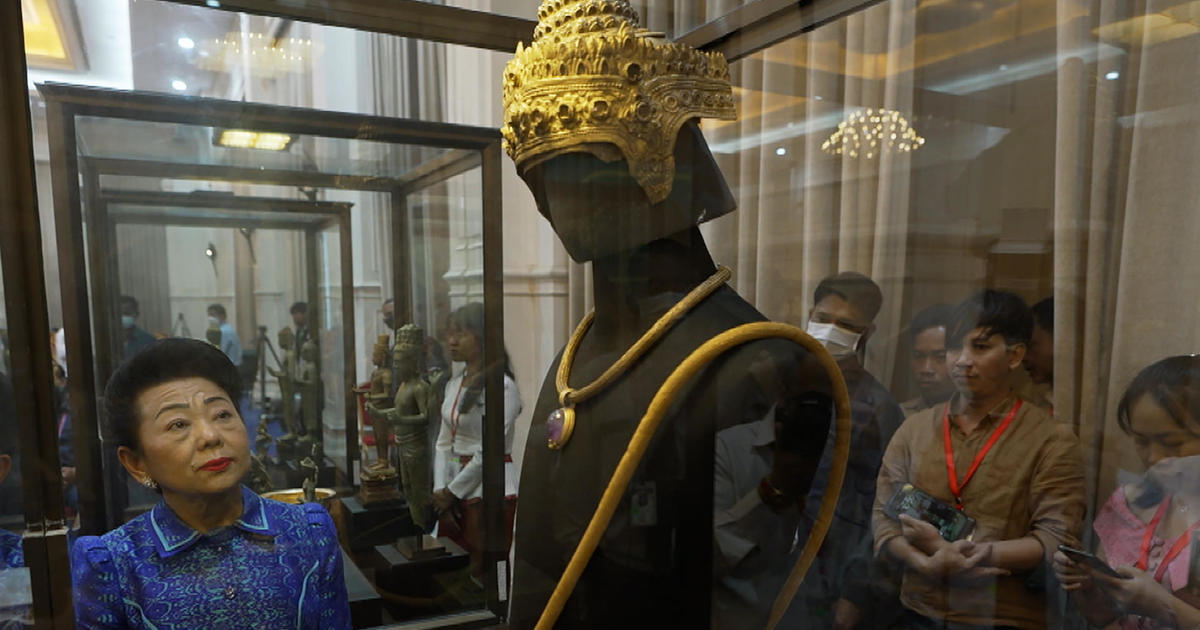
CBS News' 60 Minutes revisited a multi-decade pattern of looting at Cambodian temples, much of it taking place during and after the Khmer Rouge era when instability left sites unprotected. American lawyer Brad Gordon, hired by the Cambodian government, investigated the illicit trade and traced stolen objects—crowns, necklaces, rings and other gold jewelry believed to be royal regalia—back to published photographs in books by British dealer Douglas Latchford. A former Khmer Rouge child soldier, identified in reporting as Toek Tik, recognized many pieces he had looted at a remote temple on Sandak Mountain and helped investigators link them to Latchford. Prosecutors in the Southern District of New York built a criminal case against Latchford, who died before extradition from Thailand. In a negotiated settlement, Latchford’s family returned the collection to Cambodia, where the pieces were publicly received in a ceremony with Buddhist blessings. The reporting frames the recovered objects as culturally and nationally significant, and describes the antiquities trade as violent and exploitative; the video was originally published in December 2023 and republished by CBS in June 2026.
Biblical Reflection
The story documents a clear moral wrong—cultural treasures taken amid war, genocide, and lawlessness and moved through a market that often enabled violence and exploitation. Reporting appears focused on reconstruction of provenance through documentary evidence and witnesses; however, it largely centers the investigators and Western legal processes, which can obscure Cambodian voices and agency except where they appear as victims or recipients. From a Christian perspective, the narrative raises core concerns of justice, restitution, and human dignity: stolen heritage tied to genocide calls for restoration, honest accounting, and protection of vulnerable communities. Christians should welcome efforts to return stolen goods and pursue legal accountability, while remaining wary of any framing that treats other peoples’ history as objects for collectors. The piece invites repentance for greed that profits from others’ suffering and calls the church to stand for truth, stewardship, and the dignity of cultural memory.
Scripture in context
This outlook does not yet include contextual Scripture citations. Do not treat a general biblical theme as an exegetical conclusion.
Faithful Response
No prescribed response is offered. Consider the reflection prompts below in your own church context.
Reflection and Discussion
- 1Whose stories are centered in this reporting—the survivors and source communities, or the investigators and collectors—and how does that framing shape our understanding of justice?
- 2What systems (war, poverty, international markets, museum practices) made this theft possible, and which of those systems should be reformed to prevent future cultural plunder?
- 3When treasures cross borders because of violence, what does rightful restitution look like—legal return, public acknowledgment, reparative support—and who should decide?
Sources
Reporting links are evidence inputs; Sanctuary News' biblical reflection is commentary.
This outlook currently relies on fewer than two linked sources. Broaden verification before teaching from it.
- 1.Original reportprimary