News Summary
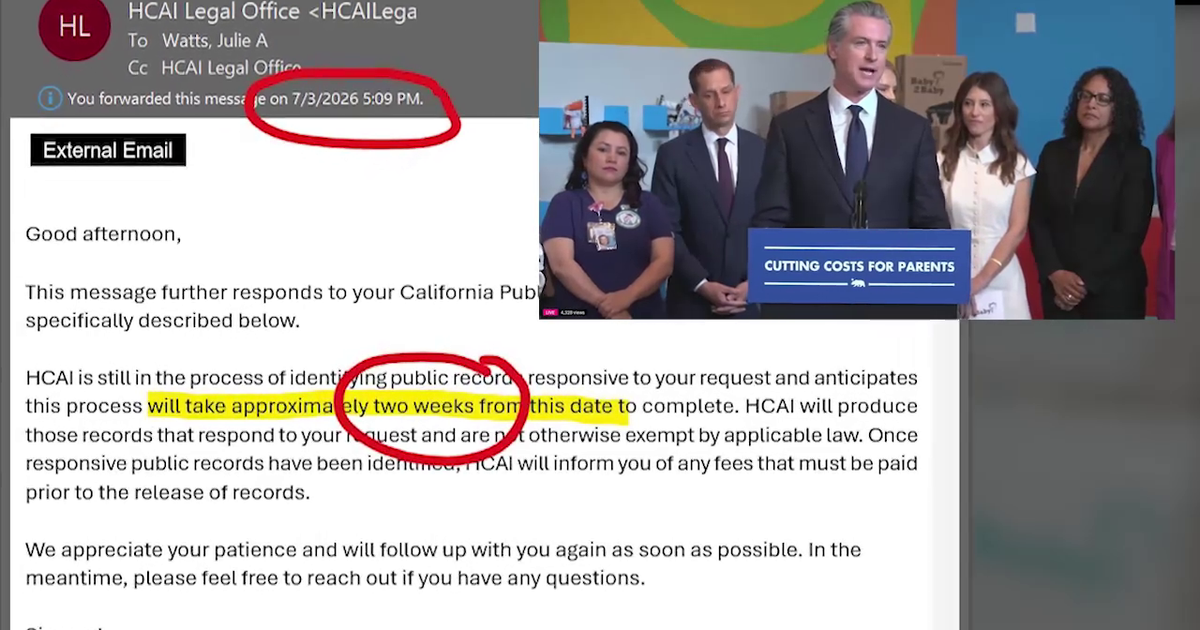
In May 2026 Governor Gavin Newsom publicly announced a multimillion-dollar partnership with the nonprofit Baby2Baby to supply California co-branded free diapers to new parents. CBS California Investigates requested the contract and procurement records on May 12. The state—through the Department of Health Care Access and Information (HCAI)—took 24 days to determine whether the records were disclosable under the California Public Records Act, invoked the law’s "unusual circumstances" extension, then confirmed the contract, procurement packet, scope of work, bid scoring sheets and vendor award documents are public. HCAI subsequently set production windows but delayed release multiple times; as of the July 8, 2026 article the records had not been produced and could be 66–70 days from the request and announcement before release if the latest deadlines hold. Meanwhile Assembly Bill 1821, introduced by Assemblymember Blanca Pacheco, originally proposed broader changes to the CPRA (including mechanisms to charge for requests and sue over "malicious" requests) but was amended after pushback; the amended bill still lengthens the legal window for agencies to respond to public records requests. Transparency advocates and civil liberties groups argued for proactive publication of finalized agreements and opposed parts of the bill; proponents cite administrative burdens from an increased volume of requests. The article notes Baby2Baby’s existing ties to the First Partner and frames delays as raising questions about how the contract was awarded and scored.
Biblical Reflection
From a Christian perspective the situation raises core concerns about stewardship, truth, and public trust. The factual record in the article shows procedural delays in complying with a transparency law for a multimillion-dollar public contract and legislative movement that would extend response windows—matters that legitimately call for scrutiny because they affect accountability for public resources directed at families in need. At the same time, the article’s emphasis on ties between the nonprofit and the First Partner invites readers to infer improper motive; Christians should avoid rushing to judgment about personal motives when documentation and facts are still withheld. The biblical impulse is to seek truth, protect the vulnerable, and hold leaders accountable with fairness and humility. Practically that means supporting clear, timely disclosure of public contracts (which honors stewardship and protects the common good), while reading coverage critically for rhetorical framing that may amplify suspicion before evidence is produced. The debate between administrative capacity and public access also matters morally: burdens on agency staff are real, but they are not an adequate substitute for systems that prioritize proactive transparency, reduce ad hoc discretion, and safeguard trust in institutions entrusted with serving neighbors in need.
Scripture in context
This outlook does not yet include contextual Scripture citations. Do not treat a general biblical theme as an exegetical conclusion.
Faithful Response
No prescribed response is offered. Consider the reflection prompts below in your own church context.
Reflection and Discussion
- 1Am I presuming improper motive because the records are delayed, or am I withholding judgment until the contract and scoring documents are available?
- 2Do proposed changes to public-records timelines balance legitimate administrative burden against the public’s right to timely oversight of taxpayer-funded programs?
- 3How would proactive publication of finalized contracts change the public’s ability to evaluate stewardship, reduce suspicion, and protect vulnerable beneficiaries?
Sources
Reporting links are evidence inputs; Sanctuary News' biblical reflection is commentary.
This outlook currently relies on fewer than two linked sources. Broaden verification before teaching from it.
- 1.Original reportprimary