News Summary
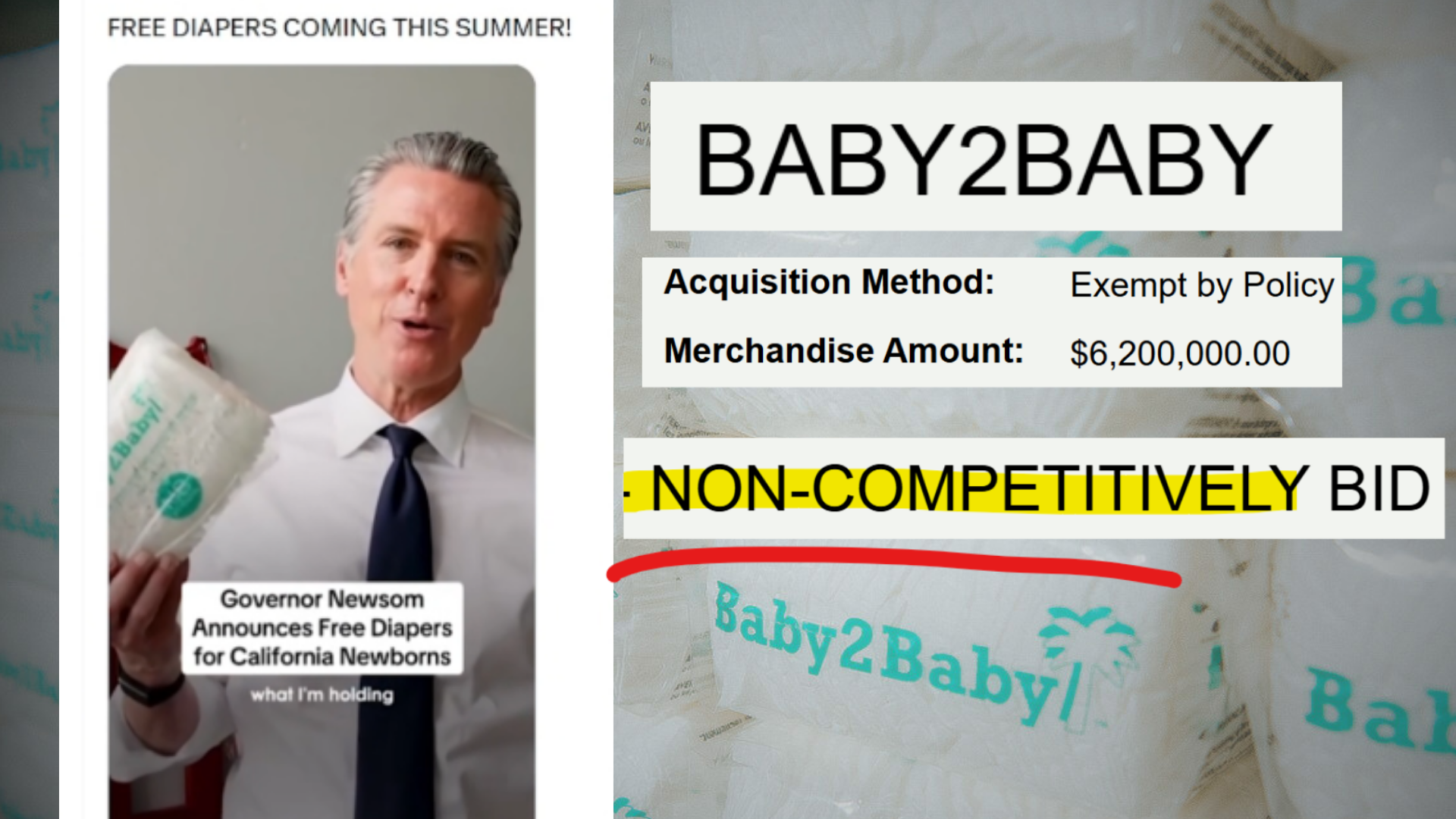
Reported facts: CBS News documents more than two dozen budget clauses in California's 2025–2026 budget that exempt specific programs from the state's competitive-bidding law and from DGS review, totaling over $1 billion in appropriations; the Baby2Baby diaper contract is listed as "NON-COMPETITIVELY BID" in the state's contract database; the budget bill inserted the diaper exemption, and the administration issued an RFI (not a solicitation) to diaper manufacturers; 15 organizations responded and the state later negotiated a contract with Baby2Baby; CBS attempted California Public Records Act requests for contract and bid records and reports delays in production; the Governor's office and Baby2Baby did not reply to CBS's requests for comment. Attributed claims and uncertainty: the governor described the Baby2Baby arrangement as having "gone through a competitive bidding process," a characterization that CBS contrasts with state contract coding and procurement documents; the administration described the RFI as part of a competitive "nature" but CBS reports the RFI language stated responses could not form a binding contract and pricing would not be considered a proposal/bid. Uncertainties: the actual contract text, bid scoring sheets, and fuller documentation of evaluation criteria and notifications to RFI respondents were not produced to CBS in the reporting and remain unreleased in the public record according to the article.
Source and Framing Analysis
Source role: CBS News conducted an investigative report using state contract databases, budget bills, RFI text, and legislative hearing testimony; the piece functions as watchdog journalism focused on procurement transparency. Missing voices: the article notes the Governor's office and Baby2Baby did not respond to requests for comment and therefore their full explanations and any additional documentation are absent. Incentives and framing: CBS frames the story around accountability and the contrast between public statements and procurement records; this framing is consistent with public-interest oversight but emphasizes procedural questions over program outcomes. Disputed claims and verification needs: the governor's public characterization of the process as "competitive" is directly disputed by contract coding and RFI language; key items requiring independent verification include the full Baby2Baby contract, any evaluation/scoring sheets, formal DGS exemption approvals (if any), and contemporaneous communications with RFI respondents. Because the reporting rests largely on public records assembled by one outlet, independent confirmation from the administration or the contract documents would strengthen the account.
Biblical Reflection
From a Christian perspective, this story raises concerns about stewardship, transparency, and the common good. The arrangement appears legal, and some exempted funds support important services for vulnerable people, but legality does not remove the moral obligation for accountable stewardship of public resources. Secrecy and bypassing ordinary oversight—even when intended to speed delivery—erode public trust and make it harder to evaluate whether funds serve neighbors fairly and effectively. The repeated use of exemptions, long-duration secrecy clauses, and selection processes that look like bids but lack formal criteria suggest a governance approach that privileges expediency and discretion over openness and contestability. Christians should be wary of narratives that present institutions or individuals as above normal checks because doing so can harm the weakest who rely on fair distribution and effective programs. At the same time, the article notes Baby2Baby is a reputable charity and that some programs funded are vital; the pastoral posture is to press for truth and reform without rushing to cynical accusation. Faith calls for courageous accountability, protecting those served by these programs, and ensuring leaders practice humble, transparent stewardship so the resources entrusted to them bless rather than harm the community.
Scripture in context
- 1Proverbs 11:1 — In Proverbs, the saying about 'honest scales' occurs within a collection of wisdom proverbs that contrast righteous behavior with dishonest gain and emphasize fairness in community and commerce. — This passage calls believers to insist on fair measures and honest dealings; applied to public budgets, it presses Christians to support transparency and processes that ensure resources are distributed justly.
Faithful Response
Pray for discernment and for public officials to act with integrity.
Request accountability: contact local legislators for the missing contract documents and ask how competitive criteria were applied.
Support and partner with transparent local service providers (e.g., named diaper banks) so aid reaches neighbors while advocating for fair procurement.
Educate yourself about public-records rights and encourage others to use them.
Reflection and Discussion
- 1What evidence would you require to accept the administration's claim that a process was truly competitive rather than negotiated?
- 2How does secrecy in spending affect the ability of citizens and churches to serve the vulnerable well?
- 3Who benefits from exempt, non-competitive contracting, and who risks losing out when transparency is reduced?
Sources
Reporting links are evidence inputs; Sanctuary News' biblical reflection is commentary.
This outlook currently relies on fewer than two linked sources. Broaden verification before teaching from it.
- 1.California Budget Includes Dozens of No-Bid Exemptionsprimary_reporting