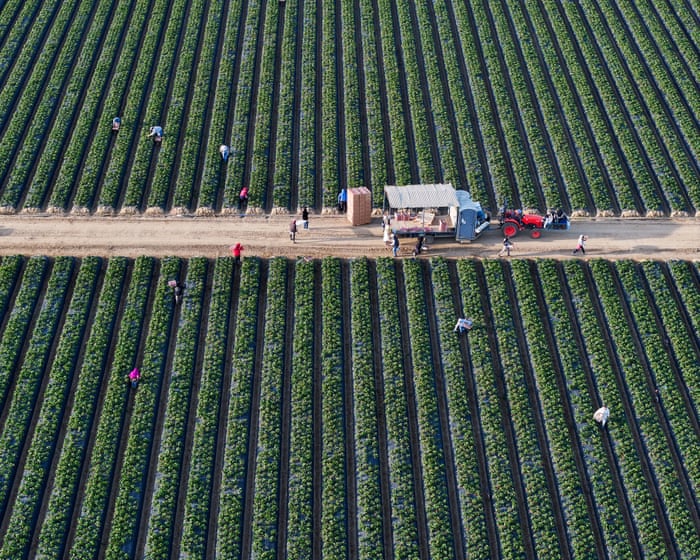
News Summary
The Guardian reports that California has enacted a ban on paraquat, a widely used herbicide that the article describes as highly toxic. The piece says paraquat has been used across millions of U.S. cropland acres, that California was previously the largest U.S. user, and that the chemical is outlawed in more than 70 countries (including China, the UK and the EU). The article attributes a strong health claim—public-health advocates saying paraquat is "virtually proven" to cause Parkinson’s disease—to advocacy groups. The report also notes that the U.S. Environmental Protection Agency reapproved paraquat for use in 2021 and again in 2024. The article does not provide the ban’s legal text, effective date, exemptions or enforcement details, primary scientific studies, or quantified estimates of economic or public-health impacts.
Source and Framing Analysis
Primary source: The Guardian. The article emphasizes public-health advocacy and international regulatory comparisons to frame paraquat as a toxic and controversial chemical. It attributes the most definitive health claim ("virtually proven" to cause Parkinson’s) to public-health advocates rather than presenting a detailed scientific review or regulatory documents. The report highlights contrast between international bans and recent U.S. EPA reapprovals, which foregrounds regulatory disagreement. Notable omissions: the piece does not publish the text of California’s regulatory action, implementation timeline, exemptions, voices from regulators, agricultural representatives, manufacturers, or independent scientific summaries. Those gaps matter for readers trying to judge legal effect, scientific consensus, and economic consequences. In short, the coverage is useful for reporting a policy action and advocacy framing but leaves open important factual and technical questions that other sources or primary documents would need to address.
How sources covered this story
Sanctuary separately assesses reporting quality and alignment with Christian virtues. The virtues assessment considers truthfulness, dignity, compassion, justice, peacemaking, humility, and care for vulnerable people. It does not assess a publisher's faith or reward religious language.
Compare 1 reports
Rank 1
The Guardian: California bans paraquat, highly toxic herbicide outlawed in more than 70 countriesReporting 72/100Virtues 78/100
- Distinctive contribution
- States that California—previously the largest U.S. user of paraquat—is banning the herbicide; relays the public-health advocate claim that it is 'virtually proven' to cause Parkinson’s; notes that paraquat is already banned in 70+ countries (including China, the UK, and the EU).
- Framing
- Frames paraquat negatively, emphasizing toxicity and controversy. Uses advocacy-sourced language ('public health advocates characterize it as a deadly substance' and 'virtually proven to cause Parkinson’s disease') and highlights international regulatory rejection to underscore seriousness.
- Omissions or uncertainty
- No specifics on the ban’s legal mechanism, effective date, exemptions, or enforcement. Lacks scientific citation or degrees of consensus behind the Parkinson’s claim. No quotes from regulators, farmers, manufacturers, or independent scientists. No data on acreage affected or economic impacts. The phrase 'virtually proven' is strong but not substantiated in the excerpt.
- Why these scores
- Concise and informative for a brief lead: it identifies the policy action, scale, and major health concern while attributing the strongest health claim to advocates. However, the excerpt omits key specifics (dates, legal details, counterviews, scientific sourcing) and leans toward advocacy framing without presenting balancing evidence or expert attribution beyond 'public health advocates.' For a short news brief this is acceptable but limited. The excerpt centers public-health and vulnerable-population concerns, aligning with care for human dignity and protection of the vulnerable (e.g., farmworkers). It attributes claims rather than asserting unqualified scientific certainty, which shows some humility. It does not dehumanize or exploit suffering. Score reduced somewhat because the excerpt lacks broader context, restorative-justice framing, or voices from affected communities and opposing perspectives.
Biblical Reflection
A Christian response centers care for vulnerable neighbors, truthful inquiry, and just stewardship of creation. Genesis’ charge to tend and keep the earth calls Christians to weigh both human health and agricultural livelihoods. Mercy and justice call us to protect farmworkers and nearby communities from toxic exposures; humility and truth-seeking call us to press for transparent, evidence-based review rather than accepting advocacy claims or regulatory decisions uncritically. Practically that means advocating for policies that prioritize health, demanding clear scientific documentation and open regulatory processes, and pressing for equitable transition assistance and viable alternatives for farmers whose practices must change.
Scripture in context
- 1Genesis 2:15 — In the creation narrative, God assigns humans to tend and keep the garden, establishing responsible stewardship of the earth. — This commission supports treating environmental policy and public health as moral responsibilities: protecting creation and the health of workers and communities is part of faithful stewardship rather than a merely technical or economic matter.
Faithful Response
Pray for scientists, regulators, farmworkers, farmers, and community leaders to have wisdom, integrity, and compassionate discernment.
Seek reliable information before drawing final conclusions: read California’s regulatory text when available, consult peer-reviewed studies, and review statements from regulators, independent scientists, worker advocates, and agricultural stakeholders.
Advocate compassionately: support measures that protect health while also pressing for transition assistance, training, and practical, affordable alternatives for farmers.
Center the vulnerable: prioritize listening to and elevating the experiences and needs of farmworkers and communities nearest to application sites.
Model humility and peacemaking: avoid partisan reductionism, encourage civil deliberation, and press for transparent processes that build trust.
Reflection and Discussion
- 1How does our calling to tend and keep creation shape our response to chemical risks in agriculture?
- 2When scientific and regulatory claims conflict, how can our congregations responsibly balance concern for safety with care for livelihoods?
- 3What concrete steps can our church take to support farmworkers, their families, and small farmers affected by regulatory change?
- 4How do we practice truth-seeking and mercy together in public advocacy—pressing for accountability while avoiding demonization?
Sources
Reporting links are evidence inputs; Sanctuary News' biblical reflection is commentary.
This outlook currently relies on fewer than two linked sources. Broaden verification before teaching from it.
- 1.California bans paraquat, highly toxic herbicide outlawed in more than 70 countriesprimary_reporting