News Summary
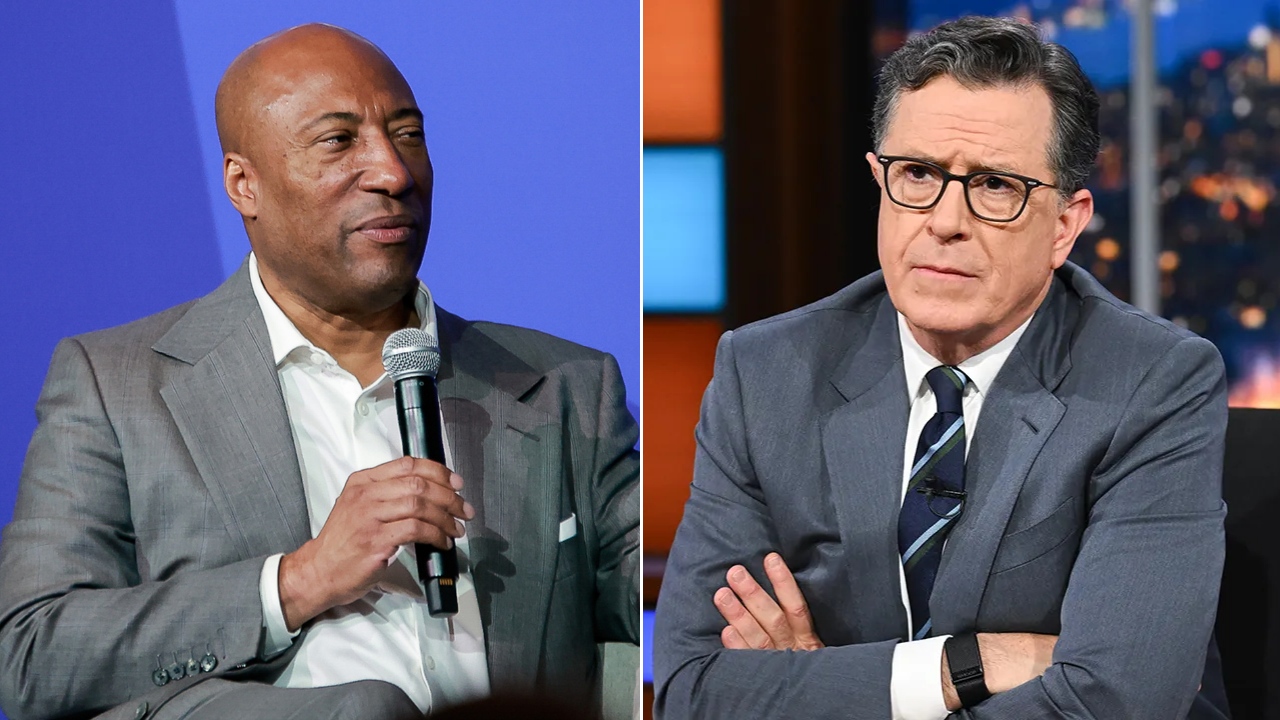
Byron Allen told CNN that his program Comics Unleashed will avoid politics and topical commentary when it moves into the Friday late-night time slot currently occupied by Stephen Colbert on CBS. Allen said the show will focus on humor and will not include racist, sexist, antisemitic, or homophobic material. He was quoted saying, “I don’t care who you vote for…I’m here to make people laugh.” CBS announced that Comics Unleashed will air Monday through Friday with back-to-back half-hour episodes beginning May 22, 2026, followed by Allen’s game show Funny You Should Ask. Stephen Colbert announced in July 2025 that CBS would end The Late Show with Stephen Colbert after the current season; his final show is scheduled for May 21, 2026. The article notes that some liberal critics have accused CBS and Paramount of canceling Colbert’s show for political reasons tied to a proposed merger with Skydance Media — a claim presented as criticism rather than verified fact. Allen said he models Comics Unleashed in part on Norman Lear’s approach and compared his apolitical stance to a business model he associates with Michael Jordan. The piece quotes Allen’s intent to provide a platform for stand-up comedians and emphasizes his desire to make viewers laugh rather than engage in partisan commentary.
Biblical Reflection
From a Christian perspective, Allen’s stated aim to provide nonpartisan entertainment and to create a platform for comedians speaks to the positive uses of humor and common grace — laughter can heal, unite, and relieve burdens (Proverbs acknowledges the value of joy). Avoiding divisive political content can reduce immediate conflict and invite a broader audience. However, silence about moral and social issues is itself a posture that can have consequences. Declaring an apolitical stance is a choice shaped by marketplace pressures, risk aversion, and a desire for broad appeal; it may reflect a worldview that separates public, moral discourse from commercial entertainment. Media framing also matters: the article — appearing on a partisan outlet — highlights the contrast with Colbert’s politically engaged approach and reports critics’ claims about the cancellation and merger, but presents those claims without independent verification. Christians should note two tensions: (1) the legitimate pastoral value of fostering unity through humor and avoiding gratuitous offense; and (2) the biblical mandate to speak truth and love where injustice or falsehoods persist. Entertainment that deliberately refrains from addressing public moral questions may steward peace in one sense while forfeiting opportunities for prophetic witness in another. Finally, recognize media incentives: networks often program to minimize controversy for commercial or corporate reasons, and reporters choose which contrasts and criticisms to emphasize — so read coverage with attention to source and motive.
Scripture in context
This outlook does not yet include contextual Scripture citations. Do not treat a general biblical theme as an exegetical conclusion.
Faithful Response
No prescribed response is offered. Consider the reflection prompts below in your own church context.
Reflection and Discussion
- 1When a public platform promises to be apolitical, whose interests or fears might that reflect (audience, advertisers, corporate owners), and how does that shape what information or moral witness is offered?
- 2Can intentionally avoiding political topics produce neutrality, or does it function as a distinct kind of cultural stance? What are the spiritual implications of choosing silence over engagement?
- 3How should Christians weigh the pastoral value of unity and laughter against the call to speak truth in love when entertainment intersects with moral and social realities?
Sources
Reporting links are evidence inputs; Sanctuary News' biblical reflection is commentary.
This outlook currently relies on fewer than two linked sources. Broaden verification before teaching from it.
- 1.Original reportprimary