News Summary
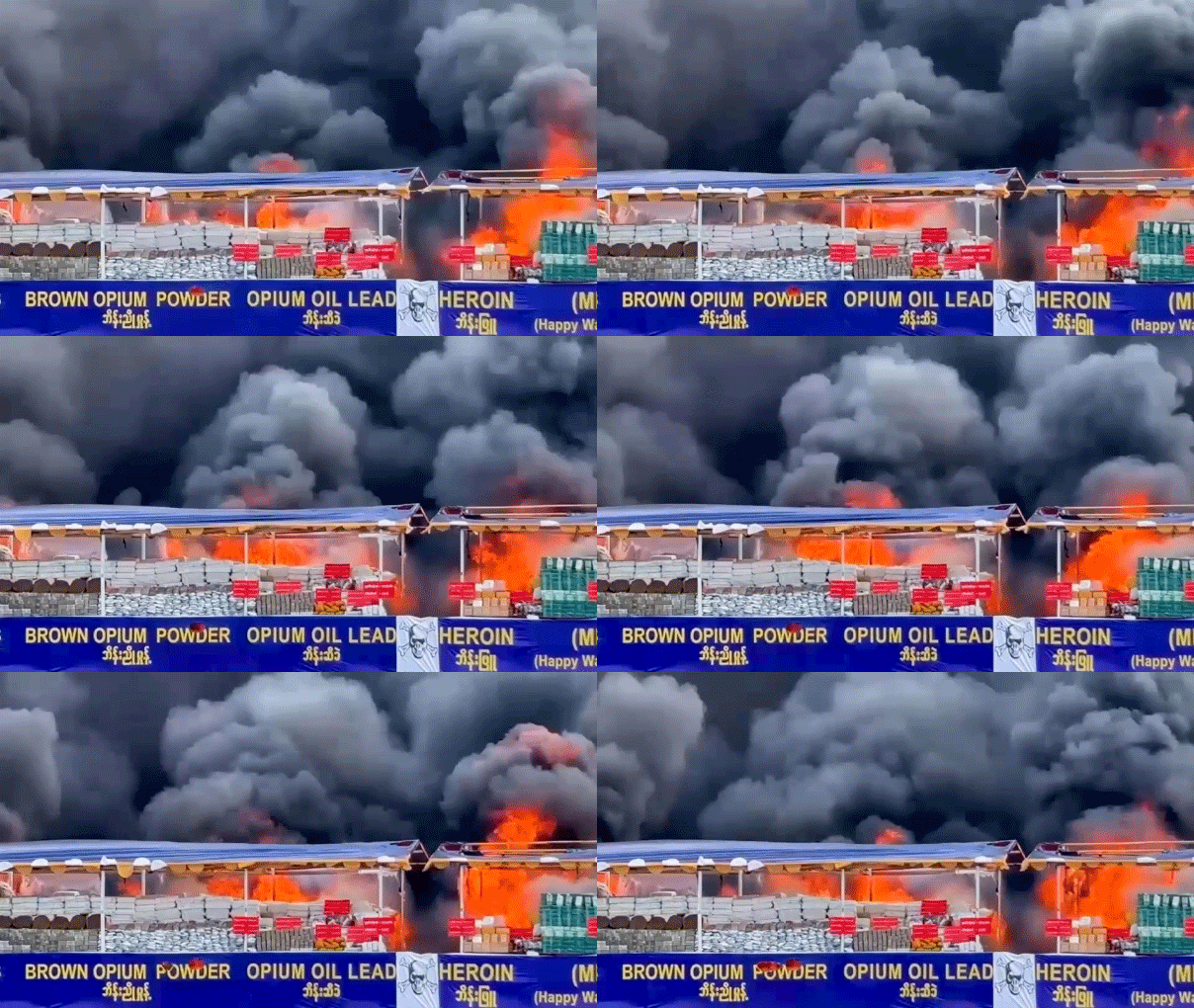
On June 26, 2026, Burmese authorities publicly burned more than 50 tons of seized illegal drugs — including heroin, opium, ketamine, methamphetamine, marijuana and crystal meth — in a destruction ceremony timed to the U.N.'s International Day Against Drug Abuse and Illicit Trafficking. Officials estimated the street value of the destroyed drugs at about $600 million, with Yangon alone accounting for roughly $321 million worth across 31 drug types. Video and photos showed large piles of narcotics set alight with thick smoke. Authorities and experts cited an increase in drug production following violent unrest after the 2021 military takeover and the ongoing civil conflict. The military government has reported large seizures and raids (including a January operation in northern Shan state). The U.N. observance frames the action as part of global efforts to raise awareness about illicit drugs.
Biblical Reflection
The destruction of seized narcotics addresses an immediate public-safety concern and signals government action against illegal drug flows. From a pastoral perspective, this event raises mixed convictions. The public burning can be a legitimate step to prevent reentry of dangerous substances into communities, but the spectacle risks serving political messaging — especially when carried out by a military regime engaged in conflict and seeking legitimacy. The article is largely factual about quantities and timing, yet it relies on official statements and offers limited independent verification of motives or outcomes. Christians should hold both truth and mercy: truth demands scrutiny of whether the action reduces harm or primarily boosts political credibility; mercy calls us to remember the people harmed by addiction and the socioeconomic forces — conflict, displacement, poverty, weak governance — that feed illicit economies. A faithful response prizes justice that protects communities, compassion that seeks the recovery of those addicted, and wisdom that looks beyond symbolic acts to systemic solutions.
Scripture in context
This outlook does not yet include contextual Scripture citations. Do not treat a general biblical theme as an exegetical conclusion.
Faithful Response
No prescribed response is offered. Consider the reflection prompts below in your own church context.
Reflection and Discussion
- 1Does the public spectacle of destroying drugs advance public safety, or does it risk being used as political theater without addressing root causes?
- 2How does ongoing conflict and weak governance in a country create conditions for illicit economies, and what does that mean for efforts to reduce harm?
- 3Whose voices are missing from this report — victims, people with addiction, local communities — and how would including them change our understanding of ‘success’?
Sources
Reporting links are evidence inputs; Sanctuary News' biblical reflection is commentary.
This outlook currently relies on fewer than two linked sources. Broaden verification before teaching from it.
- 1.Original reportprimary