News Summary
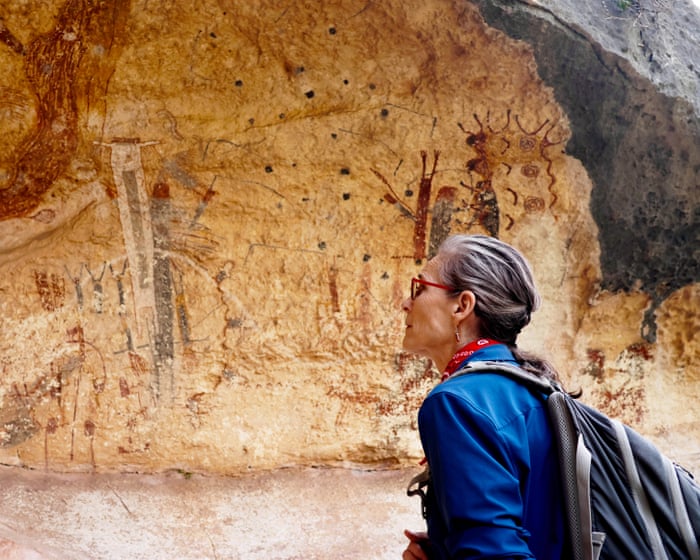
The Guardian reports that planned construction of sections of the U.S.–Mexico border wall could damage or destroy ancient Indigenous rock‑art sites in west Texas near where the Pecos River meets the Rio Grande. On‑site reporting names archaeologist Carolyn Boyd and describes large murals painted with pigments such as gypsum, hematite, limonite, and manganese. The article conveys concerns from archaeologists and Indigenous advocates that construction activity, heavy equipment, removal of overhangs, or altered drainage and access could cause irreparable harm to irreplaceable cultural heritage. The supplied reporting does not include a government or contractor response, formal cultural‑resource survey documents, a detailed construction timetable, or independent scientific reports fully substantiating age estimates or the precise scope of sites at risk.
Source and Framing Analysis
Source: The Guardian. The piece relies on on‑site reporting and interviews with archaeologists and Indigenous advocates; it foregrounds the cultural and moral stakes of potential loss. Framing: The article humanizes the rock art (invoking ancestors and deep time) and casts the border wall project as posing a risk to cultural memory rather than treating the story as a narrow engineering dispute. Strengths: vivid on‑site detail, named expert (Carolyn Boyd), and specific pigment materials that support the claim that the sites are archaeologically significant. Gaps and uncertainties: the supplied text lacks an official government or contractor response, formal cultural‑resource or environmental impact reports, explicit construction segment identifiers or timelines, and independent dating documentation for superlative claims (e.g., ‘‘oldest‑known books in North America’’). Why these gaps matter: without formal survey and project documentation, readers cannot fully judge legal obligations, mitigation options, or how imminent the physical threat is. Readers should treat evocative interpretive language as perspective and seek corroborating technical reports for policy or legal conclusions.
How sources covered this story
Sanctuary separately assesses reporting quality and alignment with Christian virtues. The virtues assessment considers truthfulness, dignity, compassion, justice, peacemaking, humility, and care for vulnerable people. It does not assess a publisher's faith or reward religious language.
Compare 1 reports
Reporting 75/100Virtues 82/100
- Distinctive contribution
- Describes a specific archaeological site (west Texas cave near where the Pecos River meets the Rio Grande), evokes the age and cultural importance of the rock art ('the oldest-known books in North America'), and provides sensory/material detail (pigments: gypsum, hematite, limonite, manganese) plus an on‑the‑ground witness (archaeologist Carolyn Boyd).
- Framing
- Frames the story as cultural-heritage loss caused by a political infrastructure project; humanizes the site with an archaeologist’s presence and evocative language (ancestors, ‘oldest-known books’), signaling moral and historical stakes rather than a purely technical or legal dispute.
- Omissions or uncertainty
- The excerpt does not specify which segments of the wall project would threaten the site, what construction activities would cause damage, any archaeological surveys or mitigation plans, whether Indigenous communities or government agencies have been consulted, or independent dating/evidence supporting the claim that these are among the 'oldest-known books in North America.'
- Why these scores
- The supplied text is vivid, includes on-site observation and attribution to a named archaeologist, and situates the cultural value of the site. As an excerpt it responsibly signals concern without definitive technical claims. It is limited, however, by lack of specifics about the project scope, official statements, and independent evidence for the superlative claim; for a fuller assessment those elements would be needed. The excerpt treats Indigenous cultural heritage with respect and dignity, centers voices connected to the site, and highlights the need to protect vulnerable cultural resources—aligning with virtues of compassion, care for the vulnerable, and justice. The language is empathetic rather than exploitative or dehumanizing. Score reflects positive moral framing while acknowledging limited detail in the excerpt.
Biblical Reflection
Christians should receive this story with humility and a commitment to justice and care for vulnerable neighbors. The threatened rock art represents communal memory and dignity for Indigenous peoples; protecting that heritage aligns with calling to steward God’s creation and to treat strangers and marginalized communities with respect. This calls for careful listening to Indigenous leaders and archaeologists, pursuing transparent and just processes for cultural‑resource review, and advocating for mitigation, rerouting, or preservation where projects risk erasing irreplaceable history. Such advocacy should combine truth‑seeking (supporting independent assessment), mercy (attending to grief and loss), peacemaking (pursuing solutions that reduce harm), and respect for human dignity.
Scripture in context
- 1Genesis 2:15 — Genesis places the first human in a garden 'to work it and keep it' and is often read as assigning responsibility to care for creation. — This biblical motif supports a theological rationale for stewardship: Christians are called to protect land and the cultural artifacts it contains, avoiding actions that needlessly destroy what has been entrusted to human care.
- 2Leviticus 19:33–34 — Leviticus instructs a community to treat resident aliens with justice and love, recalling that Israel lived as strangers in another land. — Applied to this situation, the passage encourages policies and civic practices that respect the dignity, memory, and heritage of marginalized peoples whose cultural sites are at risk.
Faithful Response
Pray for wisdom for decision‑makers, protection and comfort for affected Indigenous communities, and discernment for specialists documenting the sites.
Listen and learn: prioritize the testimony of Indigenous descendants and qualified archaeologists; support requests for transparent, independent cultural‑resource surveys and peer review before construction proceeds in sensitive areas.
Advocate non‑violently: contact local and federal representatives asking for meaningful consultation with Indigenous communities, disclosure of survey findings, and consideration of alternatives (mitigation, rerouting, or preservation) where damage is likely.
Support preservation: contribute time, funds, or visibility to museums, tribal cultural centers, or nonprofits working to document and conserve at‑risk sites; encourage churches to host informational or listening events if invited by Indigenous partners.
Practice peacemaking: seek collaborative solutions that respect community memory and public safety concerns, resist partisan escalation, and prioritize restitution and repair where harm has occurred.
Reflection and Discussion
- 1How does a Christian ethic of stewardship shape our civic engagement when development threatens irreplaceable cultural heritage?
- 2Whose histories and memories are most vulnerable in our public‑policy choices, and how are those communities heard (or not) in decision processes?
- 3When cultural loss is possible or has occurred, what practices of repentance, restitution, and repair are appropriate for Christians and civic institutions?
Sources
Reporting links are evidence inputs; Sanctuary News' biblical reflection is commentary.
This outlook currently relies on fewer than two linked sources. Broaden verification before teaching from it.
- 1.Trump’s border wall construction threatens rock art as old as the pyramids: ‘The ancestors are still here’primary_reporting