News Summary
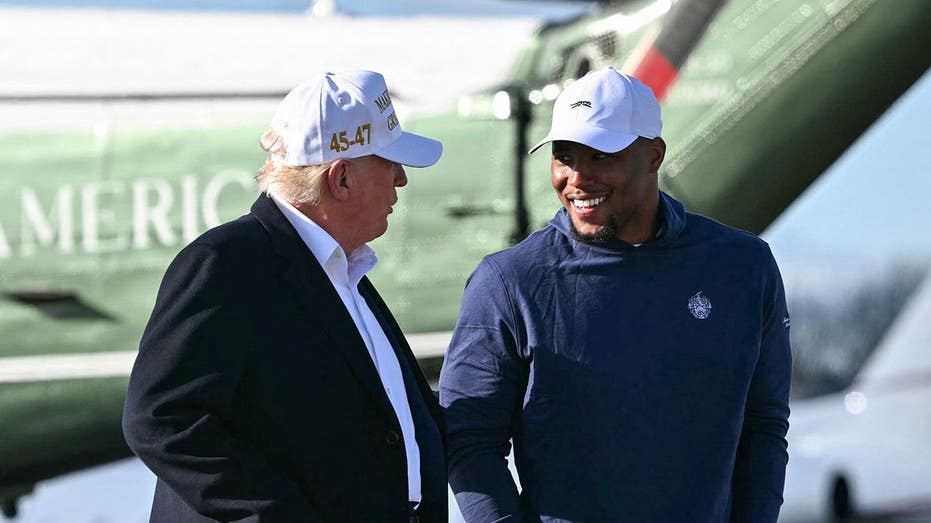
Reported facts: Saquon Barkley said he can understand backlash to his golfing with former President Donald Trump, and he expressed that he was glad New York Giants players had conversations and resolved differences regarding Jaxson Dart introducing him. Attributed claims: the descriptions and quotations are credited to Barkley through the Fox News article. Uncertainty: the article provides no direct quotes transcript, no statements from other Giants players, no dates or context for the golf outing, and no independent corroboration of the conversations described.
Source and Framing Analysis
The article is short and framed around Barkley’s reaction to public response and teammate reconciliation. Material uncertainties include timing and context of the golf outing, who specifically objected to the introduction, and what was said in the teammates' conversations. The piece centers a player’s personal remarks rather than broader political implications, which reduces policy relevance but increases cultural and relational significance.
Biblical Reflection
As Christians we should notice two predictable human dynamics in this story: first, public figures' private interactions with political leaders often become litmus tests for supporters on both sides; second, such interactions frequently strain personal relationships inside institutions like a sports team. Barkley’s willingness to acknowledge that people were upset and to welcome reconciliation among teammates shows humility and a desire for unity—qualities Christians are called to encourage.
The article itself is brief and focused on interpersonal reaction rather than policy. Its primary effect is cultural: it highlights polarization and the pastoral need for bridge-building when political identity spills into everyday life. Christians should neither reflexively condemn nor uncritically celebrate a private meeting with a political figure; instead, we can model listening, restraint, and a priority for peace within our communities.
Practically, the story invites believers to remember that loyalty to Christ and neighbor-love should temper political zeal. When disagreements arise over political associations, aim for patient conversation, honest listening, and repair where relationships have been damaged—seeking truth and justice but pursuing mercy and humility as well.
Scripture in context
- 1Matthew 5:9 — Part of the Sermon on the Mount where Jesus teaches about attitudes and the character of those blessed in the kingdom; the passage calls believers to be peacemakers amid conflict. — Encourages Christians to pursue reconciliation and to act as mediators in disputes that arise from political or social differences, valuing relationships over partisan victory.
- 2Romans 12:17-18 — Paul instructs the community to live peaceably with all, to not repay evil for evil, and to pursue harmony where possible within the Christian community. — Reminds believers to seek peaceful coexistence and to handle offenses with restraint and a posture that seeks understanding and reconciliation.
Faithful Response
Pray for humility before forming public judgments about private meetings between public figures and politicians.
Practice listening and asking questions rather than spreading unverified reports about teammates or colleagues.
Model and encourage face-to-face reconciliation when political differences strain relationships, prioritizing repair over public shaming.
Avoid weaponizing a person's political encounters as an identity test; focus on concrete harms and calls to justice when they are present.
Reflection and Discussion
- 1How would Jesus’ command to love your neighbor shape our response to a teammate or public figure whose political associations upset others?
- 2Are we quick to judge someone's character by one public interaction, and how can Scripture reframe that impulse?
- 3What practices can a Christian community adopt to repair trust when political disagreement fractures relationships?
Sources
Reporting links are evidence inputs; Sanctuary News' biblical reflection is commentary.
This outlook currently relies on fewer than two linked sources. Broaden verification before teaching from it.
- 1.Saquon Barkley 'can understand' backlash for his Trump hangout, 'glad' Giants stars worked out differencesprimary_reporting