News Summary
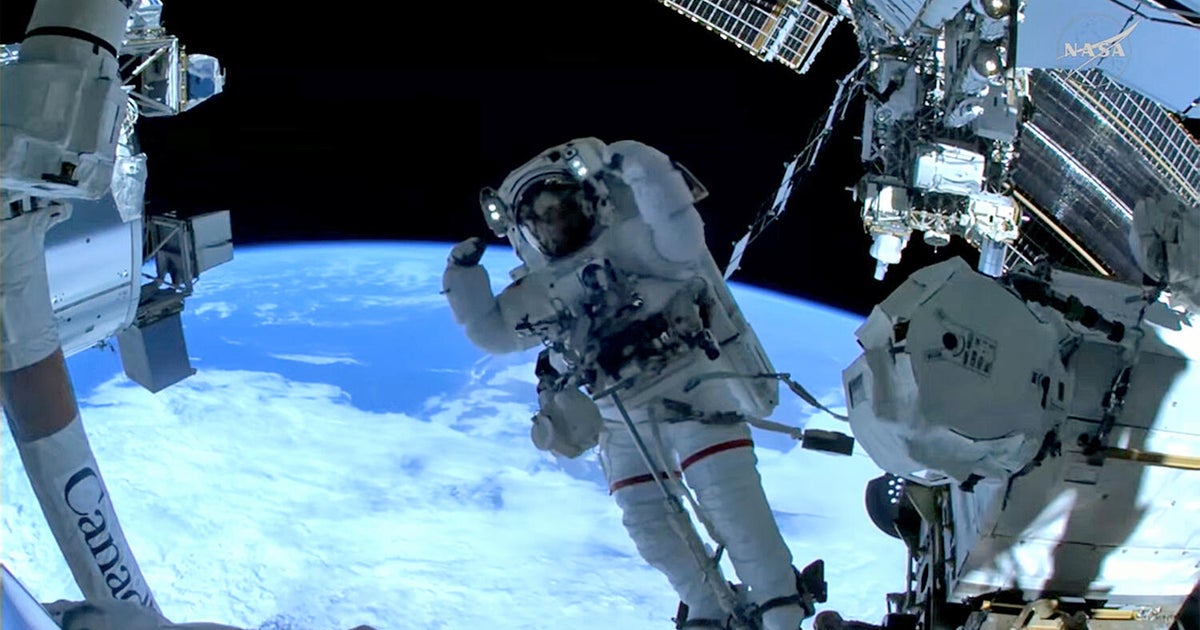
On June 30, 2026, two NASA astronauts conducted a seven-hour, 20-minute spacewalk to replace a failed wrist joint (joint No. 5) on the Canadian-built Canadarm2 robotic arm attached to the International Space Station. Controllers had detected on May 27 that the joint was drawing excess current and not moving normally; after telemetry review, NASA and the Canadian Space Agency determined the joint needed replacement. Astronauts Jessica Meir and Chris Williams switched their suits to battery power at 8:20 a.m. ET, detached the arm’s latching end effector (LEE) and two other joints, temporarily stowed the 900-pound assembly, removed the 200-pound failed wrist joint, and installed a spare from an external stowage platform about four-and-a-half hours into the EVA. They reattached the LEE roughly five-and-a-half hours after starting, controllers powered up the arm and verified two good strings of power and data through the new joint, and the failed joint was brought back to the airlock for return to Earth and repair. NASA emphasized that the Canadarm2 was designed for in‑orbit maintenance and that the arm will be maintained through the planned ISS retirement around 2030 because it remains critical to station operations such as berthing cargo ships and moving equipment and crew.
Biblical Reflection
This report highlights technical competence, international cooperation, and careful stewardship of shared assets. The article presents a straightforward operational success without partisan framing; its intent is to inform about a maintenance milestone and reassure that a vital system has been restored. From a Christian perspective, we can appreciate the self-giving service of skilled workers and scientists who accept risk to sustain a cooperative endeavor that benefits research and human presence in space. The piece largely omits broader questions about cost, risk trade-offs, or long-term planning for human spaceflight; readers should note the positive framing emphasizes success and reliability while downplaying the dangers and expense involved. Christians should celebrate human ingenuity and collaboration, remain humble about limits and risks, and advocate responsible stewardship of resources that serve the common good.
Scripture in context
This outlook does not yet include contextual Scripture citations. Do not treat a general biblical theme as an exegetical conclusion.
Faithful Response
No prescribed response is offered. Consider the reflection prompts below in your own church context.
Reflection and Discussion
- 1What do we admire about technological achievement here, and what practical costs or risks might be less visible in this success story?
- 2How does international cooperation in projects like the ISS reflect the Christian call to work together for the common good?
- 3When reporting celebrates technical fixes, whose perspectives (e.g., safety, long-term planning, budgets) might be missing and worth asking about?
Sources
Reporting links are evidence inputs; Sanctuary News' biblical reflection is commentary.
This outlook currently relies on fewer than two linked sources. Broaden verification before teaching from it.
- 1.Original reportprimary