News Summary
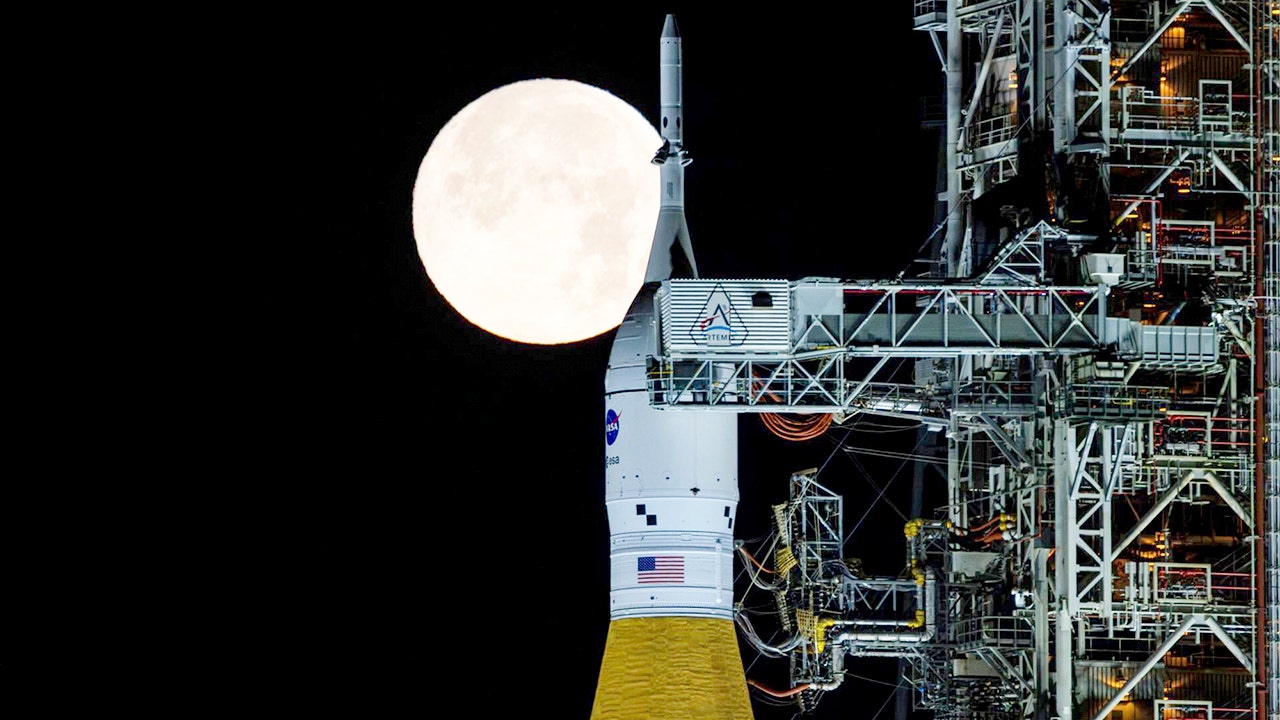
Artemis II is a crewed 10-day lunar flyby mission scheduled for early April 2026. Four astronauts — Jeremy Hansen, Christina Koch, Reid Wiseman and Victor Glover — will ride the Orion spacecraft launched by the Space Launch System (SLS). The flight follows a ‘‘free-return’’ trajectory that uses Earth and Moon gravity to carry Orion around the far side of the Moon and back to Earth without requiring major course corrections. The mission will not include a lunar landing; instead it is a full-up test with crew on board to validate navigation, life support, communications, and other deep-space systems and to study crew operations during extended time away from Earth. Flight experiments include biological research such as the AVATAR organ-on-a-chip radiation and microgravity study. NASA describes Artemis II as a necessary step toward future crewed lunar landings and eventually missions to Mars.
Biblical Reflection
The article reports a technical, programmatic step in human spaceflight: a crewed lunar flyby intended to validate spacecraft and human systems before landing attempts. The piece is primarily informational, though national competition and prestige appear as subtext in portions of the coverage. From a Christian perspective, human curiosity and the development of scientific knowledge can reflect God-given capacities for reason, creativity and stewardship of creation. Scripture commends seeking wisdom (Proverbs) and stewarding resources responsibly. At the same time, Christians should watch for two temptations: (1) conflating technological progress with ultimate meaning or salvation, and (2) allowing nationalistic rivalry or pride to overshadow cooperation and the common good. Evaluate priorities: celebrate the skill, courage and humility of those who explore, insist that scientific advances serve human flourishing, and pray for wise stewardship of resources and motives. The article’s factual claims about mission trajectory, crew, vehicle and objectives align with standard NASA descriptions; its framing occasionally leans toward national achievement and program promotion, so read with awareness of that emphasis.
Scripture in context
This outlook does not yet include contextual Scripture citations. Do not treat a general biblical theme as an exegetical conclusion.
Faithful Response
No prescribed response is offered. Consider the reflection prompts below in your own church context.
Reflection and Discussion
- 1Does the article treat space exploration primarily as scientific progress, national prestige, or both — and how does that framing shape our moral view of the mission?
- 2How should Christians balance admiration for human ingenuity with humility before God and concern for using resources in ways that love our neighbors?
- 3What signs would indicate that scientific endeavors are being pursued for the common good rather than for pride, rivalry, or profit?
Sources
Reporting links are evidence inputs; Sanctuary News' biblical reflection is commentary.
This outlook currently relies on fewer than two linked sources. Broaden verification before teaching from it.
- 1.Original reportprimary