News Summary
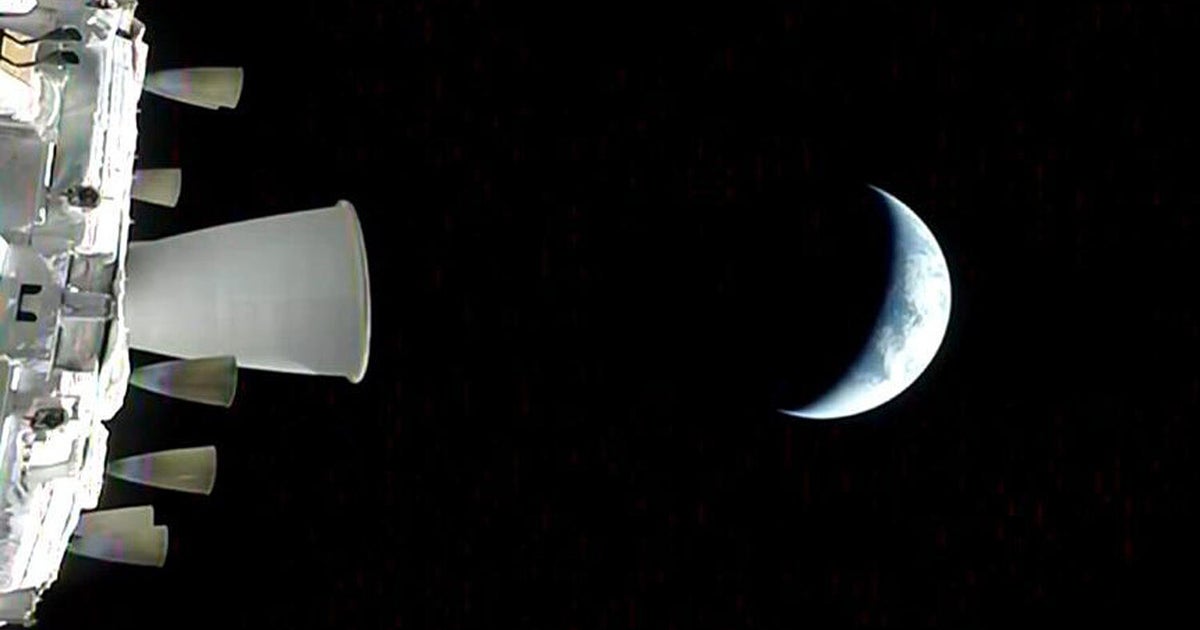
Artemis II's Orion spacecraft completed a nearly six-minute trans-lunar injection (TLI) burn of its service-module main engine on April 2–3, 2026, adding about 867 mph and bringing the vehicle to roughly 24,500 mph, the velocity needed to escape Earth's gravity. The burn placed the crew on a free-return trajectory that will carry commander Reid Wiseman, Victor Glover, Christina Koch and Canadian astronaut Jeremy Hansen around the far side of the Moon Monday and then back toward Earth without additional major propulsion maneuvers. The mission spent its first day testing Orion systems and adjusting its orbit; NASA's Mission Management Team reviewed the vehicle's performance and cleared it for TLI. The flight is the first crewed use of Lockheed Martin's Orion capsule and the first U.S. lunar crew flight since Apollo (1972). NASA says Artemis II will travel farther from Earth than any previous human mission, and that data from this flight will inform plans for more frequent moon missions, potential lunar landings near the south pole in 2028, and a proposed cadence of regular launches while investing in infrastructure and rendezvous/docking rehearsals with commercial landers.
Biblical Reflection
The article reports a technical milestone and celebrates human ingenuity and perseverance. From a Christian perspective, such achievements can inspire reverent wonder at God's creation and the abilities He has given people to understand and explore it. Scripture affirms that humans are created with capacity to work, learn, and steward creation (Genesis 1:26–28), so scientific and engineering accomplishments are not inherently wrong. At the same time, the coverage centers human capability, technological triumph, and programmatic ambition while giving little attention to ethical, economic, or spiritual questions raised by grand projects—such as how public resources are prioritized, how commercialization shapes exploration, or whether national prestige and personal fame drive decision-making. Christians should celebrate the legitimate goods here: careful teamwork, risk management, and the pursuit of knowledge that can benefit humanity. But we should also be mindful of tendencies toward pride and myth-making about human mastery. The article frames Artemis II positively and emphasizes record-setting and future cadence of launches, which reflects a worldview of progress and human control. A biblical tempering would hold wonder and praise for God alongside sober reflection about motives, stewardship of resources, care for the vulnerable, and humility about limits. In practical discernment, ask whether the narrative uncritically accepts technological optimism or whether it includes accountability about costs, risks, and long-term benefits for all people.
Scripture in context
This outlook does not yet include contextual Scripture citations. Do not treat a general biblical theme as an exegetical conclusion.
Faithful Response
No prescribed response is offered. Consider the reflection prompts below in your own church context.
Reflection and Discussion
- 1What assumptions about human progress and mastery of nature shape the article's tone, and where might a posture of biblical humility be needed?
- 2Whose interests and costs are not visible in this coverage—financial, ethical, or social—and how should Christians weigh public investment in big science projects?
- 3Does the story prompt awe that leads to worship of the Creator and gratitude for human gifts, or does it risk feeding pride in human accomplishment alone?
Sources
Reporting links are evidence inputs; Sanctuary News' biblical reflection is commentary.
This outlook currently relies on fewer than two linked sources. Broaden verification before teaching from it.
- 1.Original reportprimary