News Summary
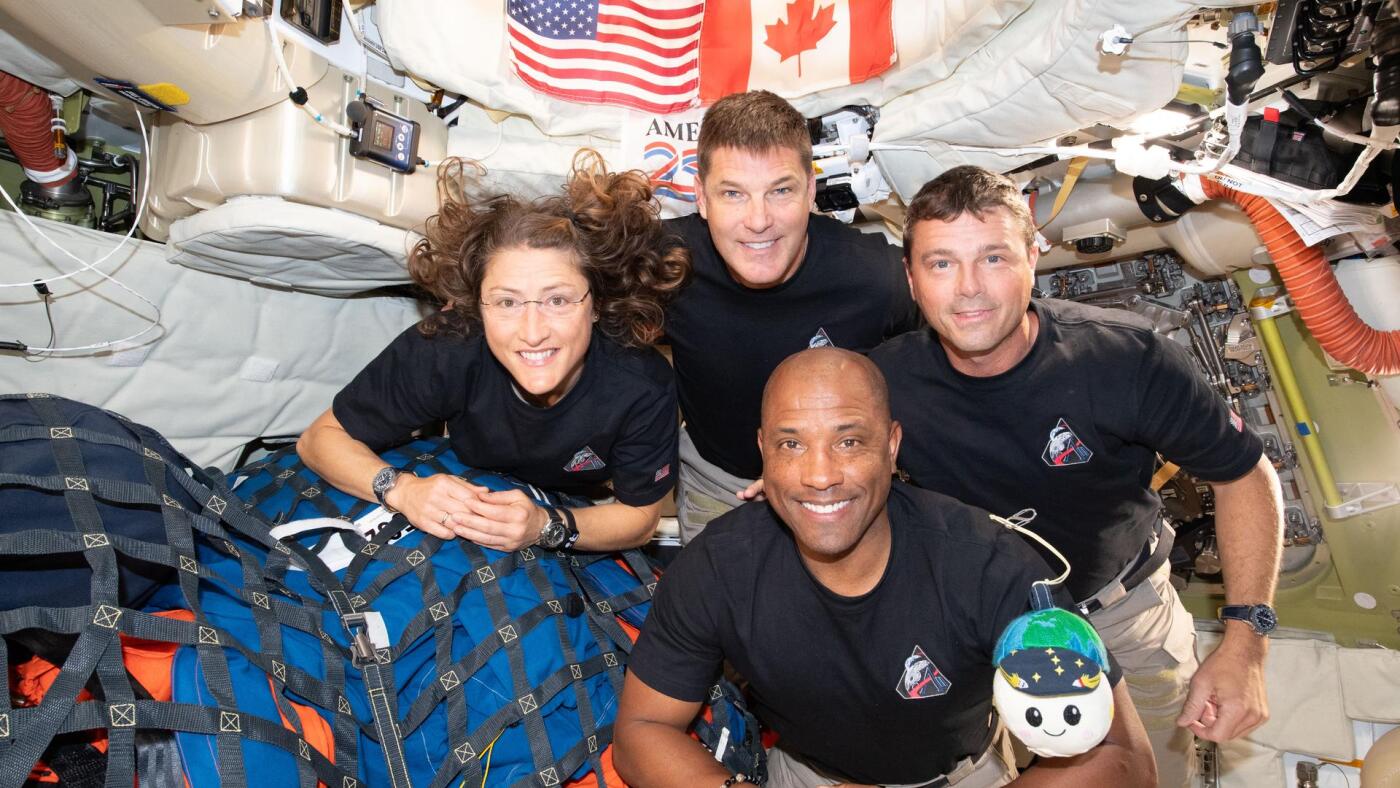
The Artemis II crew—Christina Koch, Jeremy Hansen, Victor Glover and Reid Wiseman—used a compact flywheel exercise device aboard the Orion spacecraft to perform cardiovascular and resistance workouts in the capsule's confined 316-cubic-foot space. The flywheel is a small, cable-based machine that generates resistance by spinning a rotor; users strap their feet and pull a handle, and resistance increases with the user's effort. Designed to deliver up to 400 pounds of resistance, it can be used for movements such as squats, deadlifts and curls and was developed to mitigate rapid muscle and bone loss in microgravity. Early testing included long-duration bed-rest studies (70 days) with control and exercise groups; researchers reported that the flywheel prevented declines in muscle and bone comparable to a full gym. NASA and involved researchers say the device shows promise for shorter missions and possibly longer durations, and they note broader potential applications on Earth for people with limited space or mobility, and for aging-related bone loss.
Biblical Reflection
This article reports a factual, practical innovation: engineers and exercise scientists have developed a compact device to address a real physiological problem in microgravity—rapid muscle and bone loss. The narrative largely celebrates human ingenuity and the translational benefits of space research for earthly health challenges (e.g., aging-related bone loss, constrained living spaces). From a Christian perspective, this is a reminder that God has given humans creative capacity to steward knowledge and alleviate suffering (Genesis 1:28—mandate to steward creation through responsible work). The piece is generally truthful about results and caveats (it notes the device hasn't been tested for very long missions), but it emphasizes positive outcomes and future promise more than limits, costs, or potential trade-offs (such as long-duration efficacy, resource and mission priorities, or equitable access if spun into consumer products). The article's worldview leans toward technological optimism—trusting science and engineering to solve biological problems—without engaging broader questions of purpose, stewardship priorities, or the dignity of aging bodies. Biblically faithful readers can appreciate the good gift of scientific insight while resisting any implication that technology is ultimate. We should celebrate such innovations as tools to serve human flourishing, remain humble about human limits, and ensure new technologies serve the vulnerable and honor God rather than become idols.
Scripture in context
This outlook does not yet include contextual Scripture citations. Do not treat a general biblical theme as an exegetical conclusion.
Faithful Response
No prescribed response is offered. Consider the reflection prompts below in your own church context.
Reflection and Discussion
- 1Does the article present technology as an unqualified good, and how should Christians balance gratitude for scientific advances with humility about their limits?
- 2Whom do innovations like the flywheel ultimately serve—astronauts, consumers, the elderly, or commercial interests—and how should stewardship and justice shape the development and distribution of such technologies?
- 3What spiritual and pastoral priorities should accompany medical and fitness solutions that extend physical capability or mitigate decline (e.g., care for the elderly, recognizing the body’s worth regardless of performance)?
Sources
Reporting links are evidence inputs; Sanctuary News' biblical reflection is commentary.
This outlook currently relies on fewer than two linked sources. Broaden verification before teaching from it.
- 1.Original reportprimary