News Summary
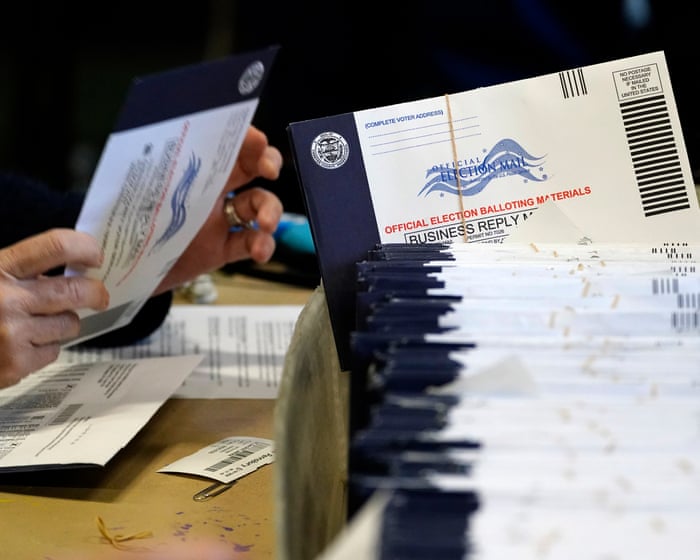
Reported facts: The First Circuit Court of Appeals declined on July 25, 2026, to lift an injunction that prevents the Trump administration’s executive order tightening mail-in voting rules from being implemented in 23 states. The injunction was issued after Democratic-led states sued and a U.S. district judge, Indira Talwani, ruled that key parts of the order were unconstitutional. DOJ sought a stay of Talwani’s ruling, arguing litigation was premature because implementing actions were not finalized. The appeals court refused the DOJ's request, keeping the injunction in place while the appeal proceeds. Attributed claims: The article reports the DOJ’s assertion that agency actions were incomplete and that the lower-court ruling should be stayed; it reports the lower court’s constitutional finding without detailing which specific provisions were deemed unconstitutional. Uncertainty: The article does not provide the text of the executive order, the district court opinion's detailed reasoning, the appeals court's written opinion, nor a list of the 23 states affected.
Source and Framing Analysis
The Guardian article reports the procedural outcome and summarizes positions from both sides (the Democratic-led states’ injunction and the DOJ’s argument). Material uncertainties that affect the story include the absence of the executive order text, the district court’s detailed legal reasoning, and any written opinion from the appeals court explaining its refusal to stay the injunction. The framing emphasizes the clash between the administration and states over voting rules but does not include detailed legal analysis or responses from the affected states or courts beyond the basic positions.
Biblical Reflection
The court's decision underscores the tension between executive action and judicial review in protecting voting access. From a Christian perspective, this story invites attention to the biblical commitments to truth, just procedures, and the protection of neighbors’ civic participation. The legal process—courts reviewing whether an executive order exceeds constitutional limits—reflects a system designed to restrain power and protect rights; Christians who care about justice should be glad when institutional checks function to protect lawful processes and the vulnerable from arbitrary changes.
At the same time, partisan language around voting policy can inflame fear and division. Christians are called to pursue truth and to speak and act with humility and mercy. That means evaluating claims on their merits, resisting inflammatory assumptions about motives, and caring particularly for those whose access to voting could be impaired by administrative changes. The story does not resolve the legal questions; it shows the courts exercising caution while more formal rulings and appeals proceed.
Scripture in context
- 1Romans 13:1-7 — In its historical context, Romans 13 addresses the role of governing authorities in maintaining order and justice in a pagan-dominated Roman Empire, urging submission to lawful authority while recognizing that rulers bear responsibility to do what is right. — This passage helps Christians remember that civil institutions exist for order and justice; when courts check potential abuses of power, Christians can see that as part of God’s provision for accountable governance—while also recognizing that obedience to authority is not unconditional when authorities act unjustly.
- 2Matthew 5:9 — This beatitude occurs within the Sermon on the Mount, where Jesus outlines the character of those who belong to God's kingdom, valuing peacemakers and those who pursue reconciliation under God's rule. — Christians involved in heated civic disputes are called to be peacemakers—working to de-escalate hostility, preserve neighborly relationships, and pursue truthful dialogue even while vigorously defending justice and rights.
Faithful Response
Pray for impartial justice and for all parties—judges, officials, and voters—to act with integrity.
Seek accurate sources: read the executive order, the district court opinion, and the appeals court filings before forming definitive public conclusions.
Engage in civil, constructive advocacy to protect voting access—volunteer at elections, support nonpartisan voter assistance, and help neighbors register and vote.
Speak with humility: avoid amplifying unverified claims about motives and focus on defending the common good and lawful procedures.
Reflection and Discussion
- 1In this case of contested voting rules, how should the call to love our neighbor shape our evaluation of policy means and ends?
- 2What habits of discernment (scripture study, prayer, verification of facts, listening to officials) should Christians strengthen when civic trust is low?
- 3When courts and public institutions check executive power, how can Christians praise accountability while also praying for charity among adversaries?
Sources
Reporting links are evidence inputs; Sanctuary News' biblical reflection is commentary.
This outlook currently relies on fewer than two linked sources. Broaden verification before teaching from it.
- 1.Appeals court rejects Trump bid to curb mail-in voting in 23 statesprimary_reporting