News Summary
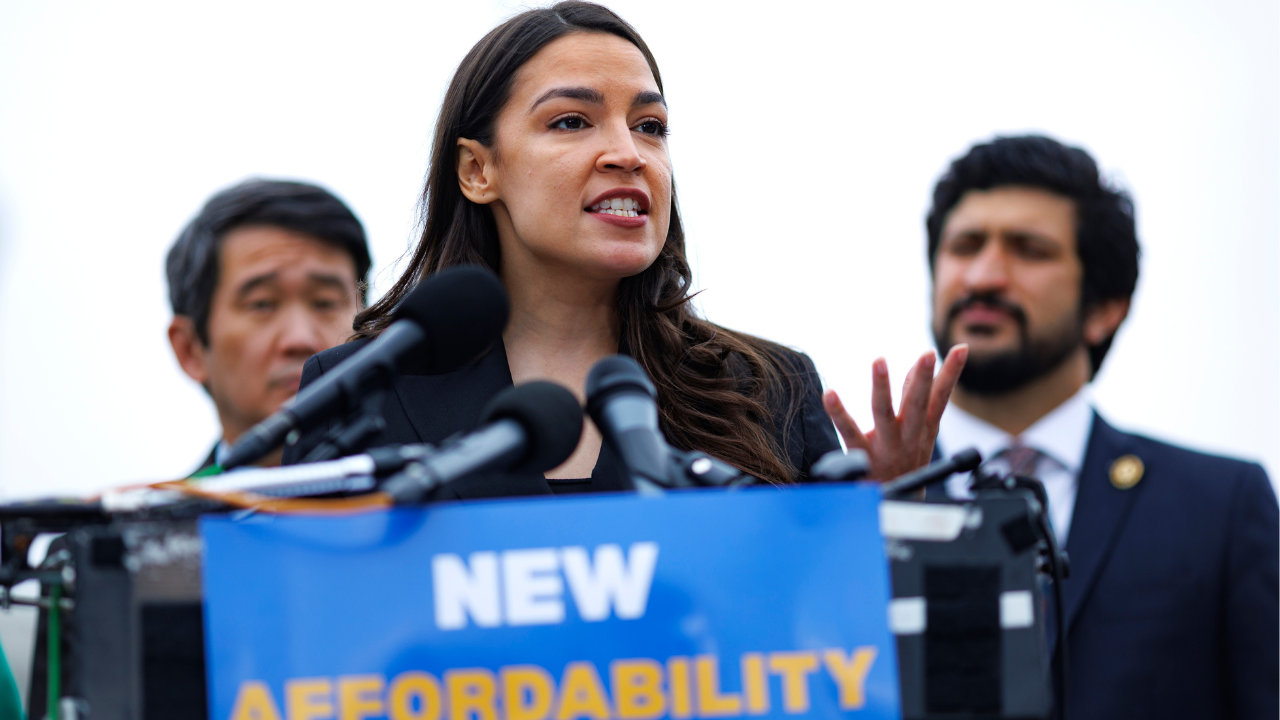
This is an opinion essay published by Fox News (author: Douglas MacKinnon) responding to remarks made by Representative Alexandria Ocasio-Cortez during an interview at the University of Chicago’s Institute of Politics. In that interview AOC said, “The American Revolution was against the billionaires of their time, and we are declaring independence from such an extreme marriage of wealth and the state….” The essay disputes AOC’s characterization, argues the Revolution was against British governmental authority and taxation, and notes that many Revolutionary-era leaders were wealthy. It quotes Republican senators Mike Lee and Ted Cruz criticizing AOC’s statement. The author frames AOC’s comments as either historically ignorant or politically strategic, warns that left-wing actors are trying to vilify the Founding Fathers and “rewrite” history, and urges defenders of the Republic to push back. The piece also references the author’s book about the signers of the Declaration of Independence and marks the commentary against the backdrop of the nation’s 250th anniversary.
Biblical Reflection
From a Christian vantage point, there are several things to disentangle. First, the factual claim: historians overwhelmingly agree the American Revolution targeted British governance, taxation without representation, and imperial control; describing it as a revolt specifically "against the billionaires of their time" is anachronistic and functions as rhetorical shorthand rather than a precise historical summary. At the same time, it is true that many colonial leaders were economically well-off and that economic interests shaped politics—so the simpler binary offered by either side flattens a more complex reality.
Second, the piece is an opinion column with clear persuasive intent and partisan framing. It uses charged language (e.g., "far left," "cancel") to mobilize readers’ anxieties, and it marshals historical references to defend a particular political vision. Christians are called to pursue truth (John 8:32) and to test claims (1 Thessalonians 5:21). That requires separating verifiable history from rhetorical use of history, and noticing where moral truths (concerns about concentrated power, accountability, and justice) are being used as partisan cudgels rather than opened for honest discussion.
Third, the broader spiritual and civic concerns raised are legitimate if pursued with humility: disputes over the relation of wealth and state power, the proper scope of government, and how we remember the past all matter for the common good. Yet Christian virtue calls us to avoid demonizing opponents, to judge statements by their truthfulness and context, and to seek charity and prudence in public discourse. Beware both of simplistic historical claims used to justify modern policy and of partisan rhetoric that frames complex questions as existential moral crises.
Scripture in context
This outlook does not yet include contextual Scripture citations. Do not treat a general biblical theme as an exegetical conclusion.
Faithful Response
No prescribed response is offered. Consider the reflection prompts below in your own church context.
Reflection and Discussion
- 1Is the article presenting a historically precise account or using historical language rhetorically to score current political points?
- 2What assumptions about power and motive (in both the quoted politician and the opinion writer) shape how the story is framed, and which voices or facts are left out?
- 3How does the impulse to vilify historical figures affect our ability to engage honestly with policy questions about wealth, government, and the common good?
Sources
Reporting links are evidence inputs; Sanctuary News' biblical reflection is commentary.
This outlook currently relies on fewer than two linked sources. Broaden verification before teaching from it.
- 1.Original reportprimary