News Summary
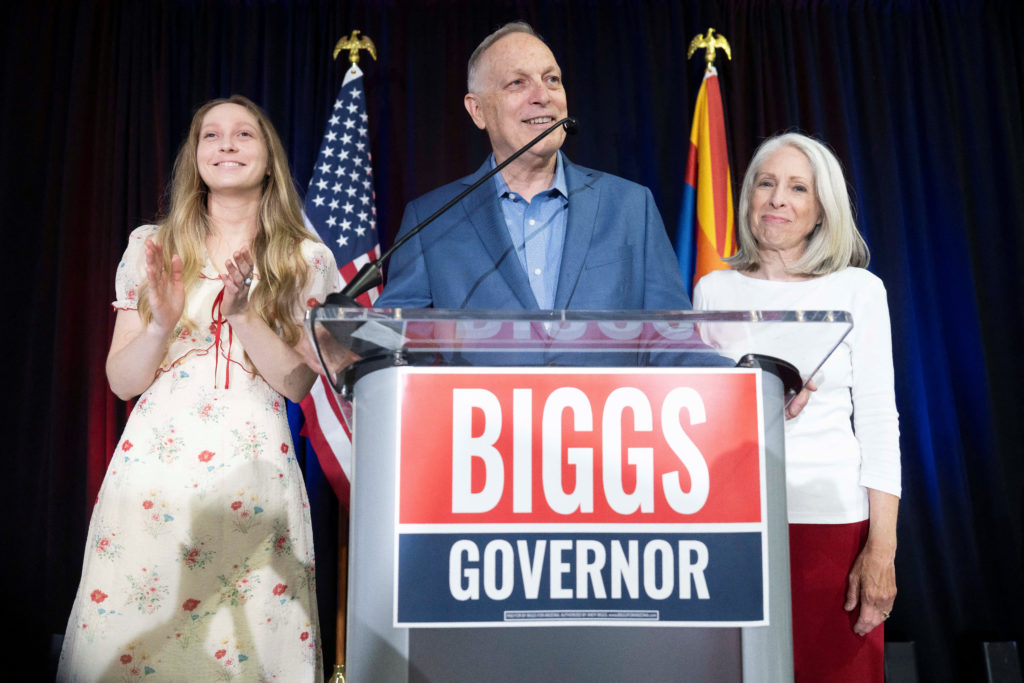
Reported facts: Andy Biggs won the Republican nomination for Arizona governor and will face Democratic incumbent Katie Hobbs; the report describes Biggs as a close ally of Donald Trump and a former head of the House Freedom Caucus. Attributed claims: the article attributes the descriptions of Biggs’s political alignment and past role to reporting language. Uncertainties: the article does not provide vote totals, margin of victory, the date of the primary beyond 'Tuesday,' specific policy positions, or broader electoral context such as turnout or endorsements.
Source and Framing Analysis
The supplied PBS NewsHour item is short and factual; it states the nomination result and offers two descriptive points about Biggs’s political alignment and leadership role. Material uncertainties remain because the report omits vote counts, margin, precinct or demographic breakdowns, policy platforms, and reactions from voters or other political actors. The phrase 'fierce ally' is characterizing language that, while likely reflective of Biggs’s public record, signals a tone that could shape readers’ impressions; readers should seek additional reporting for detail on policy implications and electoral dynamics.
Biblical Reflection
This article reports a political outcome with clear civic consequences for Arizona. Christians should weigh such news by focusing first on truthfulness and the real human consequences of political leadership: policies and rhetoric shape public life, affect vulnerable neighbors, and influence the health of civic institutions. The short report provides the electoral fact but little on policy, temperament, or governing priorities, so prudence calls for seeking fuller information about what the nominee proposes and how his record has affected constituents.
Spiritually, Christians are called to pray for those in authority and to pursue the common good regardless of party. That means evaluating candidates by how their priorities align with mercy, justice, humility, and care for neighbor rather than by personality or partisan loyalty alone. It also means resisting fear-driven or demonizing language about political opponents; the gospel summons believers to speak truth in love and to work for peace and justice in public life.
Practically, this result matters for state policy in areas like elections administration, education, health, and social services; believers should therefore inform their civic engagement by examining concrete policy proposals and by supporting actions that protect the poor, defend the vulnerable, and preserve civic truth-telling. Christians should also model respectful civic discourse even when politics are sharp, remembering that public policy affects real people and communities God loves.
Scripture in context
- 1Romans 13:1-7 — In its historical context, Paul is addressing Christians in the Roman Empire about how to live under governing authorities, emphasizing order, duty, and the role of government in maintaining public welfare. — This passage encourages Christians to pray for and submit to civic authorities insofar as conscience allows, to seek the common good, and to hold leaders accountable by lawful means — reminding believers that involvement in elections can be a faithful exercise of stewardship and care for neighbors.
- 2Matthew 5:9 — Part of the Sermon on the Mount, this beatitude calls followers of Jesus to be peacemakers — active agents of reconciliation within communities. — As political tensions rise, Christians are urged to pursue reconciliation and civil discourse, resisting dehumanizing rhetoric and working toward peaceful solutions that protect the vulnerable.
Faithful Response
Pray specifically for state leaders, candidates, and election integrity.
Research the nominee’s policy record and stated priorities, focusing on concrete effects for the poor, immigrants, children, and the vulnerable.
Engage in civil conversation within your community and congregation, prioritizing truth, mercy, and humility over partisan triumphalism.
Vote, volunteer, or support civic organizations that promote the common good and protect democratic institutions.
Reflection and Discussion
- 1How will I measure a candidate’s fitness to govern: by rhetoric, party loyalty, or measurable care for the vulnerable?
- 2Where might my own fears or loyalties be shaping my view of this race, and how can Scripture reorient me toward love and truth?
- 3What civic actions (beyond voting) will best serve my neighbors in response to this political development?
Sources
Reporting links are evidence inputs; Sanctuary News' biblical reflection is commentary.
This outlook currently relies on fewer than two linked sources. Broaden verification before teaching from it.
- 1.Andy Biggs wins Republican nomination to challenge Democrat Katie Hobbs for Arizona governorprimary_reporting