News Summary
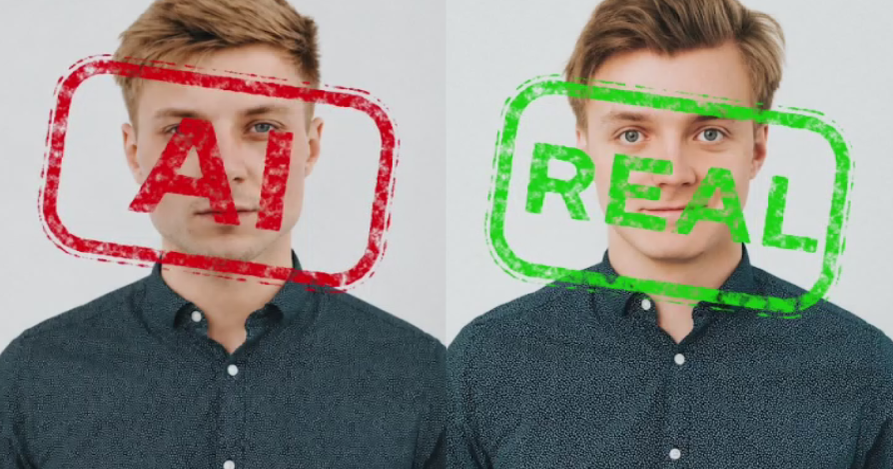
An identity verification company, Veriff, surveyed Americans and found that people's ability to distinguish AI-generated images and videos from real ones was roughly equivalent to guessing. CBS LA consumer investigator Kristine Lazar took Veriff's side-by-side AI detection quiz and initially identified only 3 of 12 items correctly (33%). Veriff's product director said common visual cues people once relied on—distorted fingers, odd eyes, missing details—have largely disappeared as generative AI has improved. He advised looking for subtle inconsistencies (uneven earrings, texture shifts, limited blinking, inconsistent motion) and recommended using specialized detection tools or verification apps because even experts cannot identify every fake reliably. After receiving guidance, Lazar retook the quiz and improved to 8 of 12 correct. The piece emphasizes that visual inspection alone is increasingly unreliable and encourages using technical verification aids.
Biblical Reflection
This report highlights a real and growing challenge to truth and trust in a media-saturated world. From a Christian perspective, the loss of confidence in what our eyes tell us should push us toward humility and prudence—not paranoia. The article accurately communicates that generative AI has advanced to a point where casual visual cues are insufficient; it also points readers to practical steps (expert advice and verification tools). What it downplays are broader systemic questions: who controls verification tools, how false positives might harm innocent people, and how commercial interests (a verification firm) may shape the proposed solutions. Christians should resist cynicism that erodes neighbor-love and civic trust while advocating for transparency, ethical limits on deceptive technologies, and public institutions that protect vulnerable people from fraud and disinformation. In short: cultivate discernment, support truthful systems, and remember that technology can both harm and help the pursuit of truth.
Scripture in context
This outlook does not yet include contextual Scripture citations. Do not treat a general biblical theme as an exegetical conclusion.
Faithful Response
No prescribed response is offered. Consider the reflection prompts below in your own church context.
Reflection and Discussion
- 1How does assuming 'seeing is believing' set us up for deception, and where should we place our ultimate trust when senses fail?
- 2Whose interests are advanced by commercially available verification tools, and how might that shape which 'truths' become certifiable?
- 3Could a widespread posture of suspicion damage neighbor-love or civic life, and how can Christians balance skepticism with mercy?
Sources
Reporting links are evidence inputs; Sanctuary News' biblical reflection is commentary.
This outlook currently relies on fewer than two linked sources. Broaden verification before teaching from it.
- 1.Original reportprimary