A little more detail
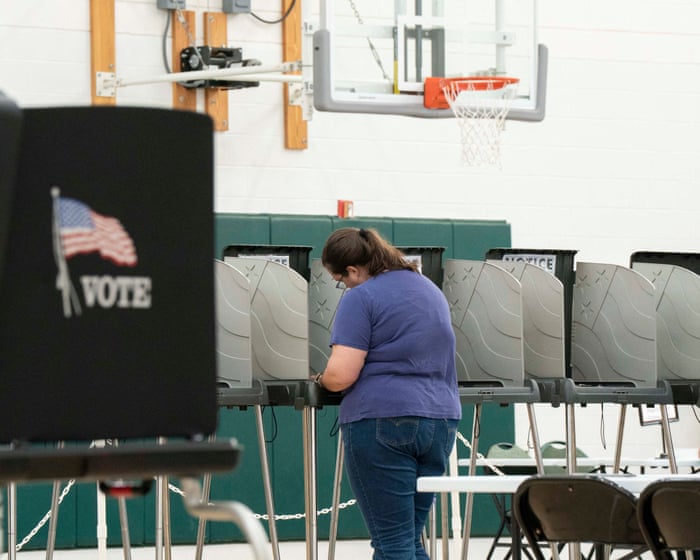
The Guardian reports that millions of Americans will vote on 3 November 2026 to decide control of the Republican-held House, the Senate, and 36 governorships. The piece summarizes reader-reported concerns—affordability and rising cost of living, immigration, climate change, artificial intelligence and big tech, and overseas wars (including worries about Iran)—and it cites a New York Times/Siena poll showing former President Trump’s approval at about 36%. The article aggregates public worries and reader testimony rather than presenting a systematic, representative ranking of voter priorities.
Source and Framing Analysis
Primary source: The Guardian reader-voices piece titled 'Affordability, AI and Iran: Americans on the key issues guiding their midterm votes.' The Guardian frames the story as a snapshot of public mood and lists multiple issues voters say are shaping their choices. The article explicitly aggregates reader responses and links broad voter anxieties to the stakes of the 3 November elections. It also cites a New York Times/Siena poll for the specific figure on Trump’s approval (36%).
Framing strengths: clear linkage of multiple policy and technological concerns to voter sentiment; situates the midterms as consequential (control of House, Senate, 36 governorships).
Limitations and uncertainties: the report is based on reader testimony and journalistic synthesis rather than a single representative poll of issue priorities; it provides no demographic or geographic breakdown of who raised which concerns; it does not supply quantified rankings for the issues it lists (no nationally representative poll numbers for each concern); and the article’s characterization of 'mounting public frustration' is not accompanied by cited, systematic evidence within the piece. More sources (representative polling, cross‑sectional surveys, or official turnout data) would be needed to confirm how broadly these concerns map onto the electorate and how they predict actual votes.
How sources covered this story
Sanctuary separately assesses reporting quality and alignment with Christian virtues. The virtues assessment considers truthfulness, dignity, compassion, justice, peacemaking, humility, and care for vulnerable people. It does not assess a publisher's faith or reward religious language.
Compare 1 reports
Rank 1
The Guardian: Affordability, AI and Iran: Americans on the key issues guiding their midterm votesReporting 72/100Virtues 75/100
- Distinctive contribution
- Summarizes the public mood as 'concerns and disillusionment' and enumerates several contemporary policy and technological issues (including AI and big tech) that are shaping voter thinking, offering a compact snapshot of topics animating the electorate.
- Framing
- Presents the election as consequential (control of House, Senate, many governorships) and frames public sentiment as mounting frustration and disillusionment, linking a range of domestic and international issues to voters' motivations.
- Omissions or uncertainty
- No polling data, no sources or attribution for the claim of 'mounting public frustration,' no demographic or geographic breakdown of which voters hold these concerns, no direct quotes or examples from readers, and no evidence linking specific issues to voting behavior.
- Why these scores
- Clear and neutral concise summary appropriate for a brief lead or reader-voices piece. It responsibly identifies several relevant issues and the stakes of the election, but it lacks attribution, supporting data, and specifics that would strengthen its evidentiary value. The excerpt uses neutral, non-dehumanizing language and acknowledges public concerns and disillusionment without sensationalism. It neither exploits suffering nor omits the relevance of voters' grievances, but it also does not explicitly highlight compassion, justice, or protections for vulnerable groups beyond listing policy areas.
Biblical Reflection
Factual reporting: Voters report a mix of material anxieties (cost of living, jobs) and concerns about technological and geopolitical change (AI, big tech, Iran and overseas conflicts). The Guardian piece communicates these as motivating factors for voters heading into the 2026 midterms.
Christian outlook (distinct from the factual report): Christians are called to combine truth and mercy when engaging this moment. Practically that means listening humbly to neighbors who face real economic hardship, resisting scapegoating when fears are stoked by rapid technological and geopolitical change, and insisting on policies that protect the vulnerable and uphold human dignity. Pursue peacemaking in conversations about foreign conflict, pursue justice for those harmed by economic dislocation, and practice humility in public claims about complex policy trade-offs. Scripture invites us to consider others' needs and to speak the truth in love (cf. –4 as a guiding posture), so faithful civic engagement will center care for those most at risk while testing political claims against facts and the common good.
Scripture in context
- 1 — Paul urges humility and looking to others' interests in a letter encouraging unity and Christlike behavior among a divided early Christian community. — This passage reminds Christians to listen humbly to neighbors' material needs and fears, to avoid self-promotion in political debate, and to seek policies that protect the vulnerable rather than score partisan points.
Faithful Response
Pray regularly for leaders, neighbors, and truth in public discourse.
Listen to people whose economic and security fears differ from your own, especially those materially vulnerable.
Fact-check major policy claims and use trusted summaries before sharing or deciding.
Vote thoughtfully, weighing mercy, justice, and the common good rather than cultural identity alone.
Reflection and Discussion
- 1How should Christians weigh personal economic need against broader societal fears when deciding how to vote?
- 2Where are we tempted to prioritize identity or cultural anxiety over concrete acts of neighborly care?
- 3What practical steps can our congregation take to relieve material pressures that shape political anxiety (e.g., food, housing, job support)?
- 4How can we hold differing political convictions in our community with dignity and humility while pursuing justice and truth?
Sources
Reporting links are evidence inputs; Sanctuary News' biblical reflection is commentary.
This is a developing, single-source report. Details may change as more reporting becomes available.
- 1.Affordability, AI and Iran: Americans on the key issues guiding their midterm votesprimary_reporting