News Summary
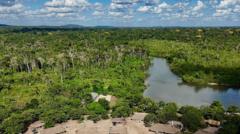
Reported fact: MapBiomas data (as reported by BBC) show that the area burned in the Amazon in 2025 was the smallest recorded since MapBiomas' dataset begins in 1985. Attributed claim: the article attributes the finding to MapBiomas. Uncertainties: the BBC summary does not include exact burned-area figures, country-level or state-level breakdowns, causes for the decline (e.g., policy enforcement, rainfall patterns, reduced deforestation), or independent corroboration.
Source and Framing Analysis
The article is a brief factual summary relying on MapBiomas as the data source; it does not provide the underlying dataset, methodology, or contextual details about drivers of fires. That leaves key uncertainties: whether the decline is geographically uniform, whether it reflects a durable trend or a single-year anomaly, and what role policy, market conditions, or weather played. These gaps materially affect how to interpret the importance and causes of the decline.
Biblical Reflection
This development invites a Christian response shaped by truth, mercy, and stewardship. Truth: seek careful, evidence-based understanding rather than assuming immediate causes or permanence; single-year improvements do not guarantee long-term recovery, and the BBC report lacks detail about drivers and geographic distribution. Mercy and justice: reductions in fires often mean less immediate harm to people—less smoke, fewer health impacts, and lower threat to homes and livelihoods—so we should feel relief while remaining attentive to communities who have historically borne the brunt of environmental harm. Stewardship: Scripture presents creation as entrusted to human care; good news about fewer fires should spur continued commitments to protect forests, support sustainable livelihoods for Indigenous and local communities, and advocate for policies that reduce destructive land-clearing practices. Humility: avoid using hopeful data to score political points or to downplay continuing threats from deforestation, agriculture-driven burning, and climate-driven extremes. Finally, peacemaking: where land conflict and economic pressure fuel fires, pursue solutions that respect human dignity and ecological limits.
Scripture in context
- 1Genesis 2:15 — In the opening chapters of Genesis, the text describes God placing the first humans in the garden to tend and keep it; the passage sets an early theological groundwork for human responsibility toward the created order. — This passage grounds a Christian ethic of environmental stewardship: improvements in the Amazon are reasons for gratitude and renewed responsibility, not for neglecting care or the welfare of people who depend on the forest.
Faithful Response
Pray for local communities and for wisdom for leaders and scientists interpreting the data.
Support and learn from Indigenous and local organizations working on forest protection and sustainable livelihoods.
Encourage one’s congregation to reduce consumption that drives destructive land use and to back policies that incentivize forest conservation.
Stay informed and advocate for transparent data and accountability about land use, fires, and enforcement.
Reflection and Discussion
- 1Does this single-year decline change how we weigh long-term policies about land use and development in the Amazon region?
- 2Who benefits and who remains at risk when fires decrease — are Indigenous and poor communities experiencing less harm, or are gains concentrated elsewhere?
- 3How should a Christian community measure success in environmental care: by headline-year improvements, by systemic changes in governance, or by protection of vulnerable neighbors?
Sources
Reporting links are evidence inputs; Sanctuary News' biblical reflection is commentary.
This outlook currently relies on fewer than two linked sources. Broaden verification before teaching from it.
- 1.Brazil's Amazon sees sharp decline in size of area burned in 2025primary_reporting