News Summary
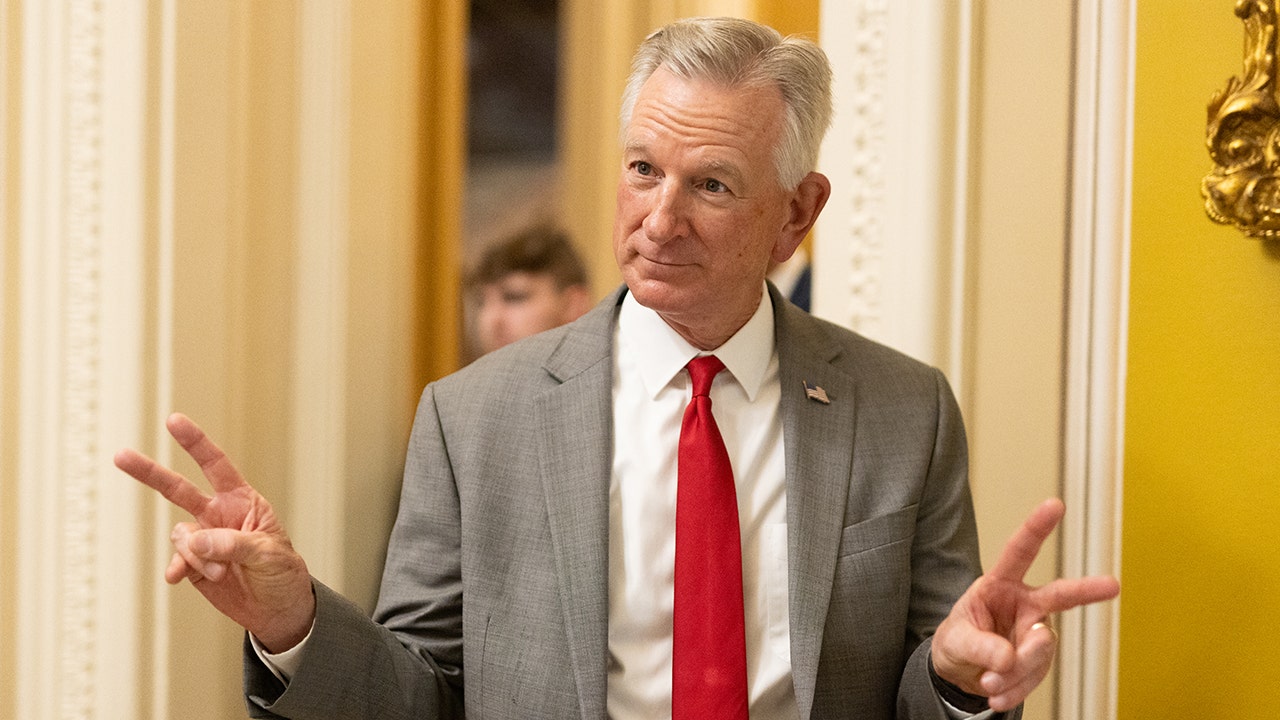
Sen. Tommy Tuberville (R–Ala.) is vacating his U.S. Senate seat to run for governor of Alabama, prompting competitive primary fields in both parties. In the Democratic primary, Everett Wess and Dakarai Lariett — neither of whom have previously held elected office — were the top vote-getters and will face each other in an Alabama runoff on June 16 under state rules requiring a majority to avoid a runoff. In the Republican primary, Rep. Barry Moore and Alabama Attorney General Steve Marshall emerged from a seven-candidate field and likewise advanced to a June 16 runoff. President Donald Trump has endorsed Rep. Barry Moore and publicly campaigned for him by tele-rally. The article notes Alabama's recent history of reliably Republican U.S. Senate representation (with the exception of Doug Jones’ 2017–2021 special-election term) and describes a difficult general-election environment for Democrats in the state.
Biblical Reflection
This article is principally a straightforward report on primary outcomes and upcoming runoffs. Its framing emphasizes electoral mechanics, candidate advancement, and the significance of high-profile endorsements (notably President Trump’s). That focus reflects the practical realities of partisan politics — who advances matters more than in-depth policy comparison at this stage — but it also narrows the reader’s view. Important contextual items are largely absent: substantive policy positions of the candidates, local issues that motivate Alabama voters (economy, education, healthcare, religious liberty, etc.), and character background beyond officeholding history. The piece implicitly centers partisan power and endorsement influence as primary drivers of political momentum. From a Christian perspective the chief concerns are (1) not allowing partisan tribalism or celebrity endorsements to eclipse assessment of character and policy in light of Scripture, and (2) remembering that political outcomes are means, not ends — they shape public life but do not ultimately save or define our hope. Christians should notice media tendencies to treat endorsements and electability as proxies for moral or practical fitness; instead, Scripture calls us to evaluate leaders by justice, humility, and service (e.g., the welfare of the vulnerable, truthfulness, stewardship). Finally, the article’s factual claim that Alabama is a difficult terrain for Democrats is consistent with electoral history, but readers should beware of defeatist assumptions that neglect faithful engagement and witness in civic life.
Scripture in context
This outlook does not yet include contextual Scripture citations. Do not treat a general biblical theme as an exegetical conclusion.
Faithful Response
No prescribed response is offered. Consider the reflection prompts below in your own church context.
Reflection and Discussion
- 1What assumptions about political success and legitimacy does the article make by foregrounding endorsements and runoff mechanics over candidates’ policies and character?
- 2How might media focus on electability or high-profile backers shape a Christian’s view of civic responsibility — does it encourage service or tribalism?
- 3Are there moral and practical criteria (justice, care for the vulnerable, truthfulness, humility) that the article omits but should be central when Christians evaluate candidates?
Sources
Reporting links are evidence inputs; Sanctuary News' biblical reflection is commentary.
This outlook currently relies on fewer than two linked sources. Broaden verification before teaching from it.
- 1.Original reportprimary