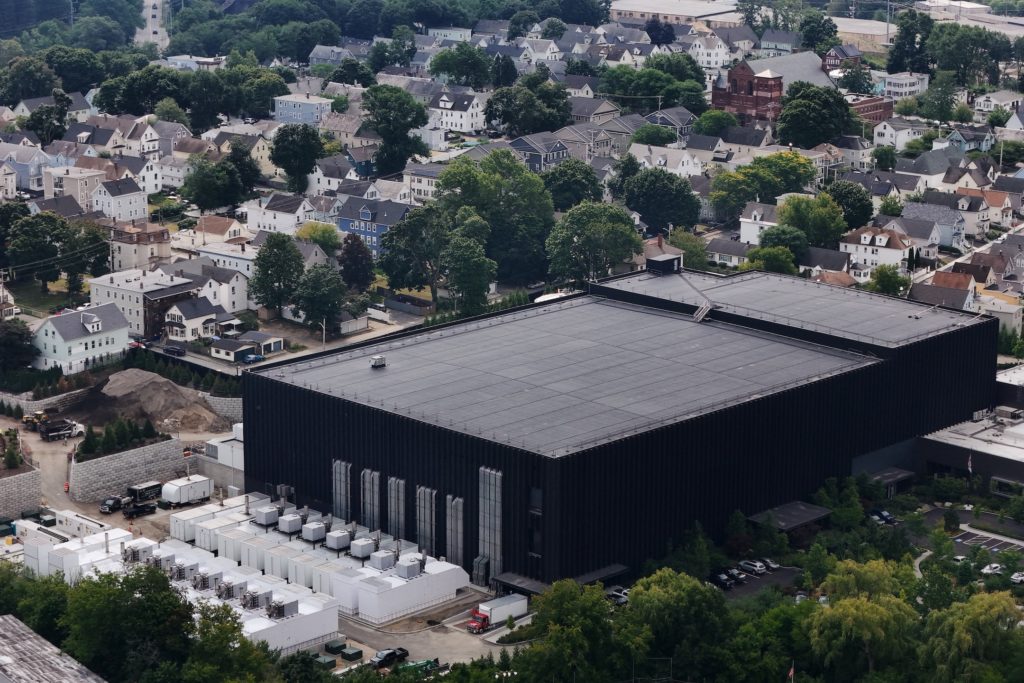
News Summary
PBS NewsHour reports that opposition to AI data centers has emerged as a notable issue in the 2026 midterm season. The piece says candidates have begun proposing and competing over policies governing data centers and that the topic could be a defining issue in some local races. The segment attributes the assessment to a conversation between Lisa Desjardins and Clara Ence Morse (The Washington Post). The report makes no polling claims, does not name specific races or jurisdictions where the issue is determinative, and provides no empirical evidence about the scale, causes, or distribution of voter opposition.
Source and Framing Analysis
Source: PBS NewsHour (segment described in the supplied excerpt). Framing: the item frames AI data centers primarily as a rising political and campaign issue with potential electoral consequences, emphasizing salience and urgency. Strengths: concise, appropriately attributed to named journalists, signals a civic development relevant to voters and candidates. Limitations and omissions: the excerpt offers no polling data, no named races or jurisdictions where the issue is decisive, no quotes from affected residents, regulators, utilities, or industry, and no detailed description of the specific policy proposals candidates are advancing. As presented, the claim that opposition is "uniting" voters and could be "defining" in some races is plausible but under-sourced in this piece; readers should seek local reporting, municipal planning and permitting records, utility analyses, candidate platforms, and polling to assess scale and local impact. Recommended additional sources to consult: local news coverage of contested zoning or permitting fights; city/county planning or utility filings; independent environmental or water/energy impact analyses; public meeting minutes; and polling or voter-attitude research where available. No direct factual disputes are reported in the excerpt itself, but material uncertainties remain about scope and causal factors.
How sources covered this story
Sanctuary separately assesses reporting quality and alignment with Christian virtues. The virtues assessment considers truthfulness, dignity, compassion, justice, peacemaking, humility, and care for vulnerable people. It does not assess a publisher's faith or reward religious language.
Compare 1 reports
Reporting 74/100Virtues 75/100
- Distinctive contribution
- Frames AI data centers as a potentially defining midterm issue and notes that candidates are racing to shape policy, signaling electoral and policy stakes beyond technical or economic impacts.
- Framing
- Presents data centers primarily as a political issue that unites diverse voters and drives campaign activity; emphasizes urgency and salience for midterm races.
- Omissions or uncertainty
- No concrete examples (which races, which candidates), no geographic scope, no evidence or polling data supporting the claim, no specific policy proposals or impacts described, and no voices from affected communities or industry included in the excerpt.
- Why these scores
- As a short show blurb, it responsibly attributes the discussion to named journalists and a program segment and clearly states the claim being examined. However, the excerpt lacks specificity, sourcing (polls, examples), and supporting detail that would be expected for a fuller report; for its promotional/contextual purpose it is adequate but limited. The excerpt is neutral, non-sensational, and does not dehumanize or exploit anyone; it points listeners toward civic-relevant information. It lacks explicit attention to vulnerable people or moral framing but does not display dishonesty or injustice in the supplied text.
Biblical Reflection
Theologically, this development invites Christians to practice stewardship of creation, neighbor-love, and prophetic discernment. Genesis's ethic of responsible care for the earth calls the church to take seriously environmental and resource concerns that large industrial projects may impose on local communities. At the same time, Christian engagement requires humility and careful inquiry: not every technological advance is intrinsic wrongdoing, nor is every corporate actor uniquely villainous. Practically, Jesus modeled holding power to account with courage and mercy; apply that posture here by supporting transparent public processes, evidence-based regulation that protects common goods, and resisting the political exploitation of community anxieties. Where data centers bring legitimate benefits—jobs, infrastructure investments, services—Christians can welcome those goods while insisting that burdens (water use, energy demand, noise, land use) not fall disproportionately on the poor or otherwise vulnerable. Pastorally, congregations should listen to neighbors, convene informed discussion with neutral experts, and offer care to those anxious or harmed by local developments.
Scripture in context
- 1Genesis 2:15 — The creation narrative establishes an ethic of responsible care for the earth. — Use this passage as a theological prompt to prioritize policies and practices that steward shared environmental resources (water, energy, land) when local communities assess the impact of large-scale infrastructure such as AI data centers.
- 2Philippians 2:3-4 — Paul urges humility and attention to the interests of others within community life. — Apply this guidance to civic engagement: Christians should weigh neighbor welfare ahead of partisan scoring, seeking solutions that protect vulnerable residents who may bear the costs of industrial development.
Faithful Response
Pray for civic leaders, affected neighbors, technical experts, and those employed in the industry to have wisdom and integrity.
Inform congregations and members by reviewing local planning and permitting records, independent environmental analyses, and candidate policy proposals rather than relying solely on campaign rhetoric.
Host informational forums with neutral experts and listening sessions for neighbors to surface concerns and evidence.
Attend public hearings or town halls, amplify voices of those most affected, and advocate for equitable, evidence-based regulations (on water, energy, noise, land use, and labor protections).
Practice pastoral care for parishioners anxious about local changes and cultivate humility in political conversations—prioritizing truth, mercy, and justice over partisan advantage.
Reflection and Discussion
- 1Am I reacting from careful evidence about local impacts, or from generalized fear or partisan framing?
- 2Whose voices are absent in this coverage—local residents, workers, utility regulators, Indigenous communities, or small-business owners—and how should that absence shape my judgment and action?
- 3What concrete harms (water strain, higher utility costs, lost land, noise, jobs) and benefits (employment, tax revenue, infrastructure) are at stake in my community, and who bears them?
- 4How can my congregation contribute to a public process that balances innovation with protection for the vulnerable?
Sources
Reporting links are evidence inputs; Sanctuary News' biblical reflection is commentary.
This outlook currently relies on fewer than two linked sources. Broaden verification before teaching from it.
- 1.How data centers became a major issue in the midtermsprimary_reporting