News Summary
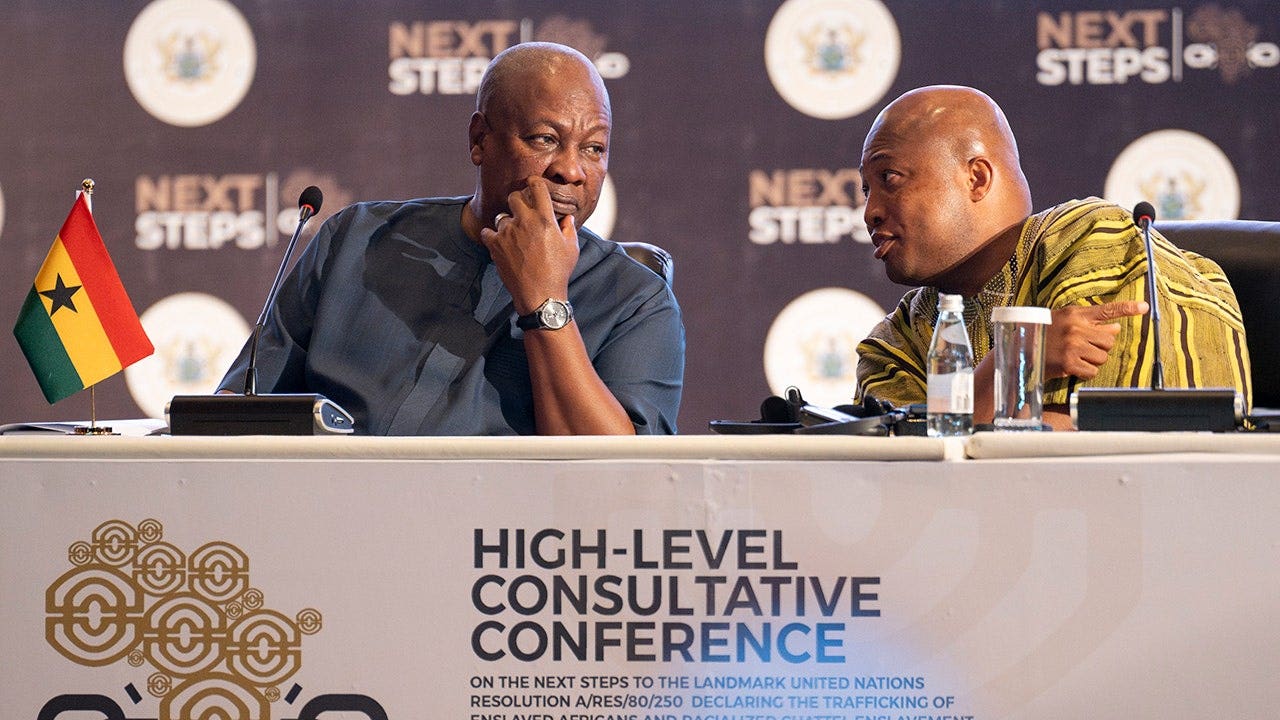
At a three-day consultative conference in Accra, Ghana, the African Union and the CARICOM Commission on Reparatory Justice adopted a 19-point reparations framework. The plan calls for financial compensation, debt cancellation, a proposed Global Reparations Fund, return of looted cultural artifacts and ancestral remains, reforms to international financial institutions, climate justice financing, expanded citizenship pathways for the African diaspora, and preservation of former slave forts as memorials. The document does not name specific countries required to pay or apologize. Organizers plan to present the proposal to the United Nations General Assembly. The conference followed a March UN vote that recognized transatlantic slavery as a grave crime against humanity; that resolution passed with 123 votes in favor while the U.S., Israel and 52 other countries either voted against or abstained. Heads of state and senior officials from multiple African and Caribbean nations attended; French President Emmanuel Macron spoke virtually and acknowledged the suffering caused by slavery. Reuters contributed reporting to the article.
Biblical Reflection
The initiative represents a coordinated political and moral appeal for recognition, redress, and structural change rooted in a long history of exploitation. From a Christian perspective, the call for accountability, restitution, and remembrance resonates with biblical concerns for justice and the dignity of the oppressed. At the same time, practical and ethical questions remain: who has legal or fiscal responsibility across generations, how would amounts and mechanisms be determined, and how will the process center the voices of those most harmed rather than political agendas? Christians should affirm the pursuit of truth, repentance, and restorative measures while testing proposed remedies for fairness, feasibility, and the aim of genuine reconciliation. Be attentive to narratives that simplify causality or instrumentalize suffering for political gain, and press for processes that pair justice with mercy and concrete pathways to heal communities materially and spiritually.
Scripture in context
This outlook does not yet include contextual Scripture citations. Do not treat a general biblical theme as an exegetical conclusion.
Faithful Response
No prescribed response is offered. Consider the reflection prompts below in your own church context.
Reflection and Discussion
- 1Which voices and experiences are centered in this proposal, and which are likely to be marginalized as negotiations proceed?
- 2How do we distinguish legitimate moral responsibility for historic wrongs from impractical or symbolic remedies that do little to repair lives?
- 3Does the plan aim primarily at restitution, structural reform, or international political leverage—and how should that shape our assessment?
Sources
Reporting links are evidence inputs; Sanctuary News' biblical reflection is commentary.
This outlook currently relies on fewer than two linked sources. Broaden verification before teaching from it.
- 1.Original reportprimary