News Summary
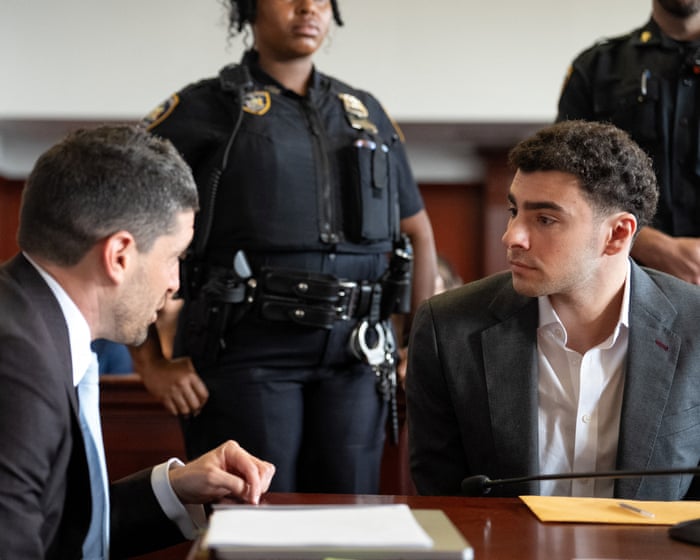
Luigi Mangione, accused by prosecutors of shooting UnitedHealthcare CEO Brian Thompson outside a New York City hotel in December 2024, appeared in Manhattan state court on 11 August 2026 for a final pre-trial conference. Judge Gregory Carro announced an overflow courtroom for the state trial scheduled to begin 8 September 2026. Separately, multiple outlets report that Mangione entered a guilty plea in federal court in Manhattan: NPR and other reporting say the plea was to stalking-related federal charges connected to the death, CBS and Fox report that Mangione admitted to shooting Thompson and that he told a federal judge he travelled with intent to shoot. Those latter details are reported with different emphases across outlets and are not fully reconciled in the public record excerpted here. The federal plea raises immediate questions about how, and whether, the scheduled state trial will proceed.
Source and Framing Analysis
This cluster contains two complementary lines of reporting. The Guardian supplies detailed, corroborated coverage of the Manhattan state-court proceedings: a final pre-trial conference on 11 August 2026, Judge Gregory Carro's announcement of an overflow courtroom, and a state-trial date of 8 September 2026, with specific attention to media-access planning. Separately, multiple U.S. outlets (NPR, CBS, Fox, PBS) report federal-court developments: PBS anticipated a federal guilty plea (attributing that expectation to a person familiar with the matter), and CBS, NPR, and Fox report that Mangione entered a guilty plea in federal court. NPR identifies the federal charge as stalking connected to the death and notes that a separate judge will decide the state trial’s future. CBS and Fox add more consequential detail — that Mangione admitted to shooting Thompson or told the judge he intended to shoot — details that are material if confirmed but are reported with varying levels of sourcing and corroboration. Framing differences matter: the Guardian centers courtroom logistics and public access (procedural, institutional reporting); NPR frames legal consequences (charge type and interplay of federal/state proceedings); CBS and Fox emphasize admissions and intent (which are legally consequential but require close verification against court records). Key evidentiary gaps across sources include the text of federal and state charging instruments, the precise plea allocution language (what facts Mangione admitted under oath), any written plea agreement, and court rulings about the state trial’s fate. Readers should treat single-source or anonymous-source claims cautiously until supported by court filings or public minutes, and should note how media-access coverage can shape public attention toward spectacle rather than evidentiary detail.
How sources covered this story
Sanctuary separately assesses reporting quality and alignment with Christian virtues. The virtues assessment considers truthfulness, dignity, compassion, justice, peacemaking, humility, and care for vulnerable people. It does not assess a publisher's faith or reward religious language.
Compare 5 reports
Rank 1
The Guardian: Luigi Mangione appears in court over healthcare CEO’s killing with trial a month awayReporting 82/100Virtues 80/100
- Distinctive contribution
- Details a final pre-trial conference in state court, the judge's decision to provide an overflow courtroom for the Sept. 8 trial, and the allegation that Mangione gunned down Brian Thompson outside a New York-area hotel in December 2024; also notes media-access controversy and comparison to other high-profile trials.
- Framing
- Procedural and institutional: focuses on courthouse logistics, media access, and the preparation for a high-profile state trial, situating the case within broader norms for high-profile prosecutions.
- Omissions or uncertainty
- Does not report outcomes of federal proceedings or the status of any federal plea; supplied excerpt contains a minor textual run-on and does not include sourcing for some assertions within the excerpt.
- Why these scores
- The excerpt provides substantive procedural context and specific details (trial date, media plan, allegation specifics) that meaningfully deepen understanding of the case. The slight textual glitch in the supplied excerpt is a formatting issue but the reporting intent is clear and informative. Highlights transparency and public access (media access plan), treats legal process with seriousness, and avoids sensationalized language; offers context that supports public understanding and accountability.
Reporting 80/100Virtues 80/100
- Distinctive contribution
- Identifies the particular federal charge (stalking) and explicitly notes that the state trial's status will be decided separately, clarifying the interplay between federal and state proceedings.
- Framing
- Measured and procedural: links plea to a charge type and the broader prosecutorial context without sensational language.
- Omissions or uncertainty
- Doesn't state whether the stalking plea includes factual admissions about the killing, the potential penalties, or how/when the state judge will decide; no sourcing is shown in the supplied excerpt.
- Why these scores
- The excerpt is precise about charge type and immediate legal ramifications, giving useful context and avoiding overstatement. It responsibly frames uncertainty about the state trial, which is good practice. Balances truthfulness and humility by noting uncertainty about the state trial and avoids sensationalism; the language treats legal-process actors and the subject with restraint and respect.
Reporting 78/100Virtues 78/100
- Distinctive contribution
- Confirms that a guilty plea was expected at a specified hearing and links the plea to the 2024 killing, while showing the source as a person familiar with the matter (attribution).
- Framing
- Cautious and attribution-focused: emphasizes expectation rather than confirmation and cites a named source type rather than asserting facts without sourcing.
- Omissions or uncertainty
- As an 'expected' report, it does not confirm whether the plea occurred, the exact charges involved, or the legal consequences for state proceedings; the supplied excerpt does not identify the person familiar or provide documentation.
- Why these scores
- Good practice in attribution and cautious language; appropriate for pre-hearing coverage. Slightly limited because the excerpt is anticipatory rather than confirmatory. Shows humility and respect for due process by attributing expectations and avoiding definitive claims before a court event; language is measured and non-exploitative.
Reporting 75/100Virtues 75/100
- Distinctive contribution
- Concise confirmation that Mangione entered a guilty plea in federal court and that the appearance occurred in Manhattan on a Friday morning.
- Framing
- Straightforward factual reporting with no qualifying legal analysis or broader context in the supplied excerpt.
- Omissions or uncertainty
- Does not specify which federal charges were pleaded to, whether the plea included admissions about the killing, how this affects any state prosecution, or sources for the statement.
- Why these scores
- The sentence is clear and factual, accomplishing a basic news purpose. It is brief and lacks attribution or detail about the specific charges or legal implications, but it does not make unsupported claims and is appropriately concise for a lead sentence. Neutral, non-sensational language that avoids dehumanizing or exploitative phrasing. The excerpt respects factual accuracy without inflammatory detail; limitations are due to brevity rather than ethical lapses.
Reporting 70/100Virtues 70/100
- Distinctive contribution
- Reports an asserted admission of intent to shoot and explicitly connects that statement to potential double jeopardy implications for subsequent prosecutions.
- Framing
- Emphasizes the defendant's purported admission and the legal consequence (double jeopardy question), suggesting a focus on criminal intent and legal strategy.
- Omissions or uncertainty
- The supplied text does not quote the defendant, identify when/where the statement was made beyond 'told the federal judge,' nor specify the precise charges or whether the admission formed part of a plea allocution.
- Why these scores
- The excerpt provides a significant factual claim and raises a plausible legal issue, but it lacks detailed attribution (e.g., a direct quote or court record citation) and additional context that would strengthen verification and balance. The wording is relatively direct and legalistic rather than sensational, but the focus on an alleged intent-to-kill admission can be inflammatory if not fully substantiated; the excerpt neither dehumanizes nor shows evident bias.
Biblical Reflection
Christians should hold together two commitments in responding to Accused Luigi Mangione Appears in Manhattan Court: a commitment to truth and accountability through orderly, fair procedures; and a commitment to mercy and human dignity for people affected. That means supporting transparent court processes that seek facts and protect rights while resisting conversion of proceedings into public spectacle. Pastoral responses should prioritize care for the victim’s family and those close to the accused, provide grief and counseling resources, and protect the presumption of innocence where the law requires it. Public conversation ought to avoid amplifying uncorroborated or anonymous claims; civic engagement can responsibly advocate for balanced media access that preserves both public accountability and fair-trial safeguards. Grounded by humility, Christians should avoid turning preliminary reports into final moral judgments and should attend to the vulnerable people affected by the case.
Scripture in context
- 1Micah 6:8 — Micah critiques religious ritual untethered from ethical behavior and centers God's demand for right social practice, protection of the vulnerable, and modest living before God. — Use this passage as a guide for posture toward Accused Luigi Mangione Appears in Manhattan Court: advocate for procedural justice and transparency, practice mercy toward suffering people on all sides, and hold public opinions with humility until facts are established.
Faithful Response
Pray specifically for the victim’s family, for Luigi Mangione and his loved ones, for judges, lawyers, jurors, and court staff, and for wisdom in the pursuit of truth.
Do not share or amplify unverified or anonymous claims about the case on social media; prioritize information tied to court filings, official statements, or corroborated reporting.
Provide concrete pastoral care where the case touches the congregation: offer listening hours, grief-counseling referrals, and resources for those distressed by intense media coverage.
Support practices that promote fair access to court proceedings and discourage sensationalism; engage civilly with civic or court administrators if the congregation has concerns about public access or the effects of spectacle.
Reflection and Discussion
- 1How can the church uphold both a demand for justice and a posture of mercy when Accused Luigi Mangione Appears in Manhattan Court receives intense public attention?
- 2What habits help Christians resist premature moral certainty in high-profile criminal cases like this one?
- 3When transparency and fair-trial protections appear to conflict in cases that draw heavy media interest, how should Christian citizens weigh the competing goods of public accountability and the rights of the accused?
Sources
Reporting links are evidence inputs; Sanctuary News' biblical reflection is commentary.
This outlook currently relies on fewer than two linked sources. Broaden verification before teaching from it.
- 1.Luigi Mangione appears in court over healthcare CEO’s killing with trial a month awayprimary_reporting