News Summary
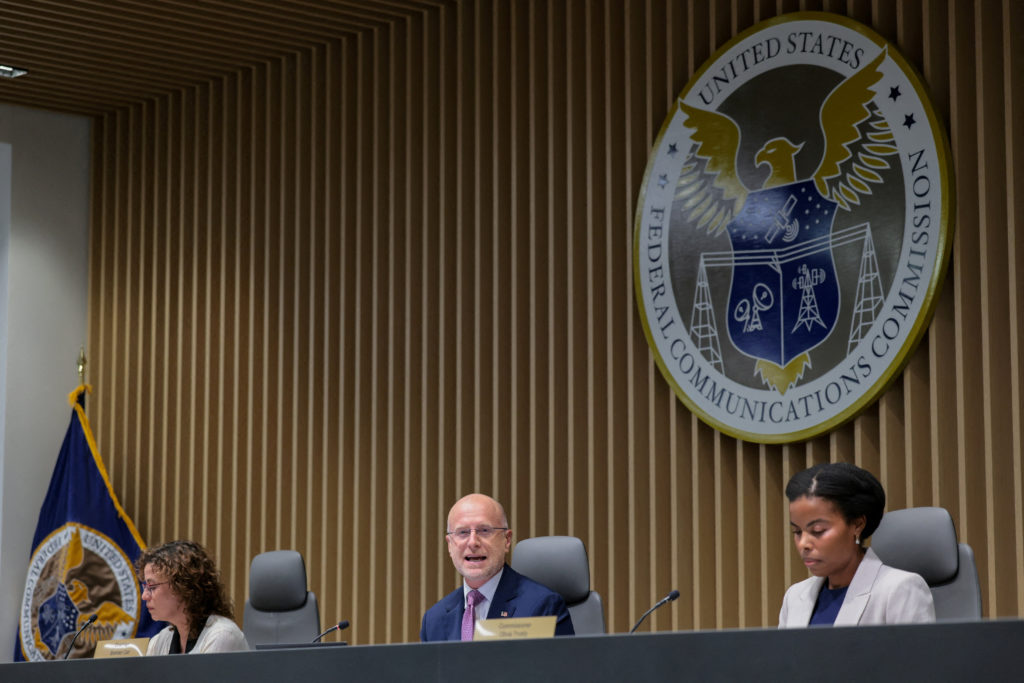
ABC has filed a lawsuit against the Federal Communications Commission (FCC), alleging the agency is conducting a retaliatory campaign that amounts to censorship and violates ABC's free-speech rights. The complaint, as reported by PBS NewsHour, claims the FCC has deployed regulatory tools — including investigations and threats to revoke or challenge local stations' broadcast licenses — to punish and pressure the network. The PBS segment notes the matter was discussed with FCC Commissioner Anna Gomez. The report summarizes ABC's legal claim but does not publish the full complaint, exhibits, or a detailed FCC rebuttal, leaving key evidentiary and motive questions open.
Source and Framing Analysis
The cluster relies on a single primary report (PBS NewsHour) that attributes the central allegations to ABC. The piece responsibly frames the claims as ABC's legal argument, but it does not include the underlying lawsuit text, documentary exhibits, or a comprehensive FCC response. Because motive (retaliation) and factual specifics (which investigations, what threats, documentary proof) are central to ABC's claim, the single-source framing leaves material uncertainty. Attribution is clear, but independent corroboration and primary documents are missing.
How sources covered this story
Sanctuary separately assesses reporting quality and alignment with Christian virtues. The virtues assessment considers truthfulness, dignity, compassion, justice, peacemaking, humility, and care for vulnerable people. It does not assess a publisher's faith or reward religious language.
Compare 1 reports
Reporting 70/100Virtues 70/100
- Distinctive contribution
- States that ABC filed a lawsuit against the FCC and summarizes ABC's central allegation (that the FCC is waging a retaliatory censorship campaign violating ABC's free-speech rights).
- Framing
- The sentence attributes the claim to ABC ("ABC sued... arguing"), presenting the allegation as the plaintiff's position rather than an established fact. It uses strong language ("retaliatory campaign of censorship") but correctly frames it as ABC's argument.
- Omissions or uncertainty
- No details on the legal basis, specific FCC actions alleged to be retaliatory, evidence cited, the court or filing date, or any FCC response or independent verification. The excerpt does not indicate whether PBS independently corroborated elements of the claim.
- Why these scores
- The excerpt is concise and properly attributes the claim to ABC, which is appropriate journalistic practice. However, it lacks context and specificity (dates, legal grounds, examples of alleged retaliation, FCC comment), so while adequate as a brief news item, it is limited in depth. The excerpt neutrally reports an allegation and attributes it to the plaintiff, avoiding dehumanizing language or sensationalism. It neither affirms nor critiques the claim and does not exploit suffering; however, it provides little additional context or attention to justice, reconciliation, or care for affected parties.
Biblical Reflection
Christians should care about both truth and institutional justice. If regulatory power is used vindictively, accountability is required; if the allegations are unproven, we still need transparent processes that protect free expression and prevent abuse. The faithful response balances insistence on truth with restraint from premature judgment. Pray for investigators, judges, and all parties to act with humility and fairness; encourage the church to model patient truth-seeking, protect vulnerable neighbors affected by institutional breakdown, and advocate for systems that uphold both free speech and impartial oversight.
Scripture in context
- 1John 8:31-36 — Jesus contrasts enslaving powers with the liberating truth of his teaching and calls disciples to live in truth that brings freedom. — This passage calls believers to pursue truth that frees rather than to rush to partisan certainties. Applied to the lawsuit, it means seeking documentary evidence and fair process, defending institutions that enable truthful public discourse, and resisting coercive uses of power that silence legitimate speech.
Faithful Response
Pray for clarity, justice, and humility for all parties and for those harmed by the dispute.
Seek primary sources before drawing firm conclusions: obtain the lawsuit filing, any exhibits, and formal FCC statements or filings.
Advocate for transparent, impartial investigations and due process whether wrongdoing is alleged by private media or by regulators.
Encourage community teaching on media literacy, civil discourse, and how to hold institutions accountable without demonizing individuals.
Reflection and Discussion
- 1What specific documentary evidence would you need to see before concluding the FCC acted retaliatorily, and how does a Christian commitment to truth shape that standard?
- 2How should Christians balance protecting free speech with demanding accountability from both media organizations and regulators?
- 3When public institutions appear to abuse power, who are the most vulnerable, and how should the church advocate for their protection?
- 4How can congregations model patient, fact-based discernment amid politically charged media narratives?
Sources
Reporting links are evidence inputs; Sanctuary News' biblical reflection is commentary.
This outlook currently relies on fewer than two linked sources. Broaden verification before teaching from it.
- 1.ABC says FCC waging a retaliatory campaign violating free speech rightsprimary_reporting