News Summary
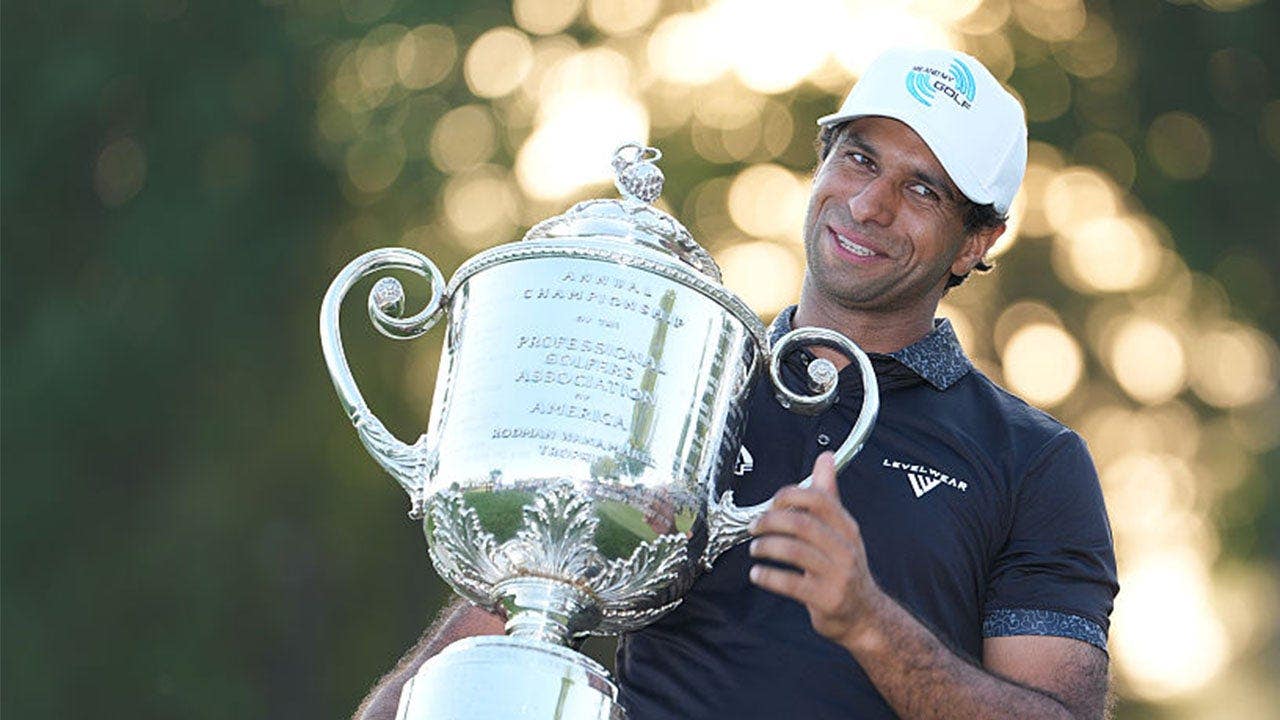
Aaron Rai won the 2026 PGA Championship at Aronimink Golf Club on May 17, 2026, closing with a final-round 65 to finish three strokes ahead of the field. Rai, a 31-year-old Englishman, finished the week second in strokes gained: approach, fourth in driving accuracy, hit 74% of greens in regulation, and led the field with 22 birdies or better. His week included a notable 70-foot birdie putt on the 17th and an aggressive recovery for birdie on the drivable par-4 13th. Rai is the first Englishman to win the Wanamaker Trophy since 1919. The article describes widespread debate among players and fans about Aronimink’s setup — several players (Shane Lowry, Rory McIlroy, Scottie Scheffler) criticized the setup as overly difficult or poorly configured, while many fans enjoyed the tighter scoring and closer leaderboard. The writer argues the course provided a good test and that complaints are not necessarily justified. The piece also includes subjective player grades for several top finishers (e.g., Jon Rahm B, Ludvig Aberg C-, Alex Smalley A-, Rory McIlroy C+, Scottie Scheffler C) and references the broader context of LIV Golf’s collapse and related commentary about the PGA and figures like Phil Mickelson and Stephen A. Smith.
Biblical Reflection
From a Christian perspective this article is primarily sports reporting mixed with opinion. Its factual core — Rai’s victory and the statistics — is straightforward. The opinion elements (player grades, characterization of the course controversy as “pointless,” and the writer’s delight in an unexpected, humble winner) reflect the writer’s values: admiration for discipline, precision, and composure under pressure, and impatience with prevailing narratives about power and spectacle. Two worldview observations matter for readers trying to think Christianly: (1) media and fan expectations often favor spectacle (distance, domination, drama) and can shape what counts as a “good” performance. That bias can cause commentators to overemphasize novelty or conformity to a trend rather than character and skill. (2) Competition reveals virtues and vices equally — humility, perseverance, and stewardship of gifts are commendable; pride, schadenfreude, or harsh public shaming of competitors are not. The brief mention of LIV Golf and Phil Mickelson points to how sports intersect with money, reputation, and loyalty. Christians should seek truth and compassion in these conversations: acknowledge legitimate critique where warranted, but avoid piling on personal attacks or turning athletes into symbols for broader resentments. Ultimately, the Gospel invites us to celebrate human excellence and perseverance while remembering that earthly success is provisional and that our highest loyalty is to Christ, who calls us to humility, thankfulness, and fairness.
Scripture in context
This outlook does not yet include contextual Scripture citations. Do not treat a general biblical theme as an exegetical conclusion.
Faithful Response
No prescribed response is offered. Consider the reflection prompts below in your own church context.
Reflection and Discussion
- 1How does the media’s expectation for spectacle (distance, dominance, novelty) shape which performances are praised or dismissed, and how can a Christian reader test those assumptions?
- 2When athletes or organizers criticize an event publicly, are we quick to align with the popular narrative or to seek a balanced view that honors both legitimate critique and humility?
- 3Does admiration for raw power or spectacular talent overshadow appreciation for discipline, patience, and character — and how should that affect how we celebrate sporting achievements?
Sources
Reporting links are evidence inputs; Sanctuary News' biblical reflection is commentary.
This outlook currently relies on fewer than two linked sources. Broaden verification before teaching from it.
- 1.Original reportprimary