News Summary
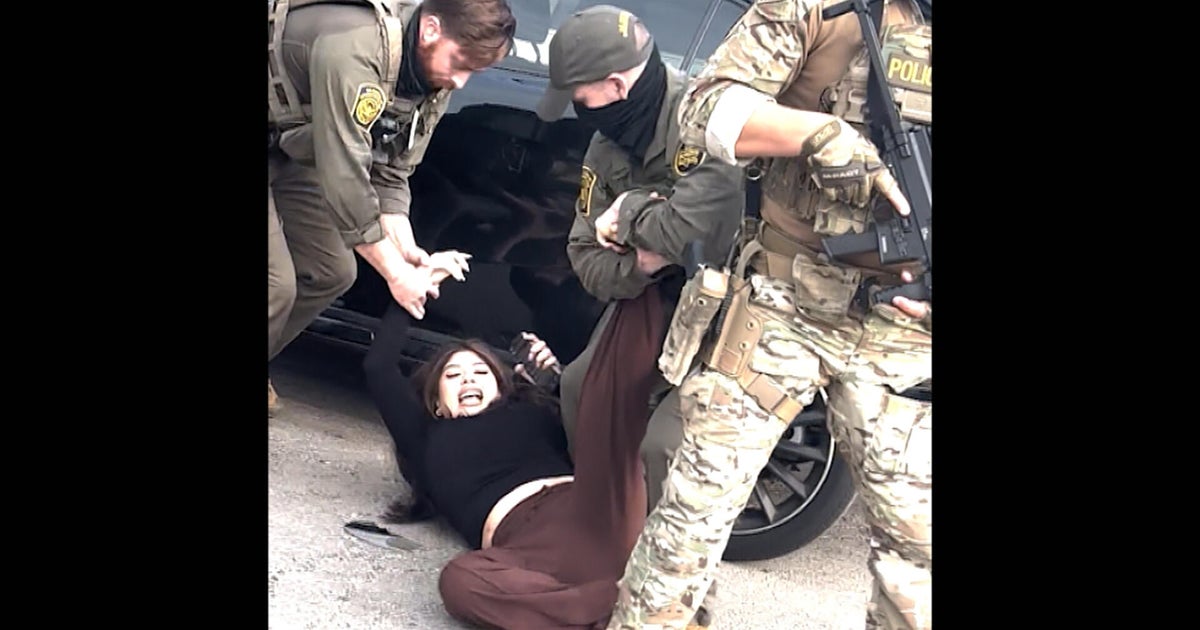
CBS News’ 60 Minutes and 60 Minutes Overtime compiled and broadcast multiple reports on U.S. border and immigration policy during President Donald Trump’s second term. Items highlighted include: (1) Trump’s October 2024 pledge to deport millions of undocumented migrants, a plan he said was inspired by a 1954 operation that historians have described as unsuccessful; (2) a March 2025 interview in which a self-described member of Mexico’s Sinaloa cartel told 60 Minutes that drugs and people move across both the U.S.–Mexico and U.S.–Canada borders; (3) coverage in 2025 of Venezuelan deportees sent from the U.S. to El Salvador, including photographs by Philip Holsinger showing many deportees, most without apparent criminal records, held in a notorious El Salvador prison; (4) reporting on an October 2025 incident in which Chicago teacher’s assistant Marimar Martinez was shot by a U.S. Border Patrol agent; Martinez’s lawyer provided 60 Minutes in January new video he said contradicts the Department of Homeland Security’s statement that agents were “boxed in” by vehicles; and (5) a January on-camera interview with Dayanne Figueroa, a U.S. citizen who described a separate October 2025 collision with a Border Patrol vehicle that she says escalated to agents drawing guns, removing her from her car, and arresting her. The piece notes photo and video sources and frames these items as part of 60 Minutes’ reporting on border enforcement and its human and policy effects.
Biblical Reflection
From a Christian perspective, this set of reports raises several overlapping concerns: the search for truthful accounting, the dignity of vulnerable people, and the role of government in enforcing law while protecting persons made in God’s image. The journalism aims to show concrete human consequences of immigration enforcement and policy promises; it highlights both alleged misconduct by enforcement agents and the broader policy push for large-scale deportations. Readers should note the difference between documented facts (dates, interviews, photographs) and allegations or interpretations (claims of being “boxed in,” assessments of policy effectiveness). Media outlets naturally select stories that illustrate a point; that does not make them false, but it does mean the coverage may emphasize particular patterns or individual harms rather than presenting a statistical or administrative overview of all enforcement outcomes. The worldview driving the administration’s approach appears security- and deterrence-oriented—prioritizing border control and removal as solutions—whereas the coverage emphasizes humanitarian concerns and possible abuses of power. Scripture calls Christians to hold both justice and mercy together: to support lawful order that protects communities while insisting on humane treatment, due process, and care for strangers and the oppressed. As you read such reporting, ask whether policies and practices honor both the rule of law and the dignity of persons; demand accurate evidence and accountability where misconduct is alleged; and resist binary thinking that pits safety against compassion. Christians can pray for truth, for leaders to pursue just and wise policies, and for institutions (media and government) to act transparently and accountably.
Scripture in context
This outlook does not yet include contextual Scripture citations. Do not treat a general biblical theme as an exegetical conclusion.
Faithful Response
No prescribed response is offered. Consider the reflection prompts below in your own church context.
Reflection and Discussion
- 1Which assumptions about security, deterrence, and human dignity are shaping both the policies reported and the selection of stories by the media?
- 2Are the incidents highlighted representative of broader patterns, or are they selected to illustrate particular failures or harms—how does that affect how I should interpret the reporting?
- 3How does the biblical call to 'act justly and love mercy' inform how Christians should evaluate immigration enforcement policies and demands for accountability?
Sources
Reporting links are evidence inputs; Sanctuary News' biblical reflection is commentary.
This outlook currently relies on fewer than two linked sources. Broaden verification before teaching from it.
- 1.Original reportprimary