News Summary
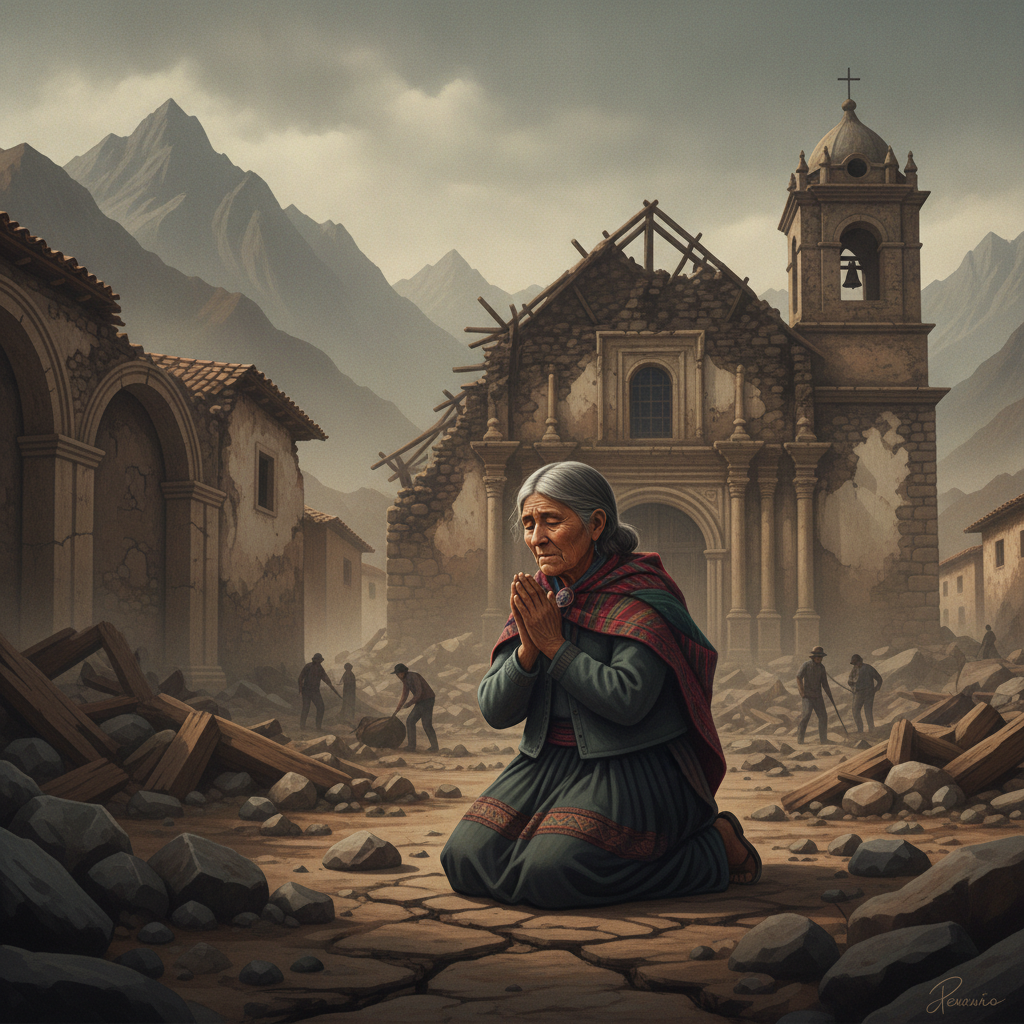
Reported facts: A magnitude-5.5 earthquake struck Peru's Andes region and at least six people died; several buildings, including a local church and convent, collapsed or were damaged. Attributed claims: Peru's National Civil Defense Institute stated the total number of missing remains unknown. Uncertainty: the full casualty and damage totals, the precise epicenter and depth, and the ongoing status of search and response operations were not provided in the report and may change.
Source and Framing Analysis
Source role: PBS NewsHour is acting as a national/international news outlet reporting from an original Civil Defense statement; the article is brief and factual. Missing voices: direct quotations or on-the-ground accounts from survivors, local emergency responders, health facilities, municipal officials, and international or local relief organizations are absent. Incentives and framing: the piece prioritizes immediate facts (magnitude, deaths, damaged buildings) appropriate to early disaster coverage; brevity can omit context about longer-term needs. Disputed claims and verification needs: casualty numbers and missing-person reports commonly change in the hours and days after a quake and require confirmation from multiple local agencies and hospitals. Independent verification needed: precise location/coordinates, time, depth of the quake, official casualty lists, injury counts, displacement figures, and descriptions of ongoing response efforts.
Biblical Reflection
The report presents a straightforward incident account focused on immediate human harm and structural damage. Its sparse detail highlights the urgency and uncertainty common in early disaster reporting. From a Christian pastoral perspective, the facts call us to compassionate response: prayer for victims and responders, practical support for survivors, and careful stewardship of truth — avoiding rumor while advocating for transparent, sustained relief. The article does not push a political or ideological interpretation; its primary worldview is humanitarian concern. Christians should resist reducing the story to spectacle, instead centering the dignity and needs of those affected and supporting accurate, verified information that helps relief efforts.
Scripture in context
- 1Galatians 6:2-5 — Paul's letter to the Galatians addresses community life after debates about law and freedom; these verses instruct believers to restore and support one another, contrasting personal responsibility with mutual care. — Applied to this earthquake, the passage emphasizes that believers should carry one another's burdens through practical aid, not merely words—supporting relief efforts, offering hospitality, and sharing resources without casting blame or seeking credit.
Faithful Response
Pray specifically for victims, families, and first responders and for wisdom for local authorities.
Give to reputable, established relief organizations working in Peru rather than sending unverified offers; prioritize organizations that coordinate with local churches and civil authorities.
Avoid sharing unconfirmed casualty counts or sensational images; wait for verified updates and help direct attention toward verified needs.
If you are locally connected (church-to-church), coordinate material support—financial gifts, fundraising, and logistical help—through existing humanitarian channels.
Reflection and Discussion
- 1What specific facts are missing from the report that you would need before sending help or making public appeals?
- 2Whose voices (survivors, local churches, emergency workers) are absent, and how might including them change the narrative?
- 3Is our emotional response being channeled into faithful, verified action or into performative gestures?
Sources
Reporting links are evidence inputs; Sanctuary News' biblical reflection is commentary.
This outlook currently relies on fewer than two linked sources. Broaden verification before teaching from it.
Download source notes